


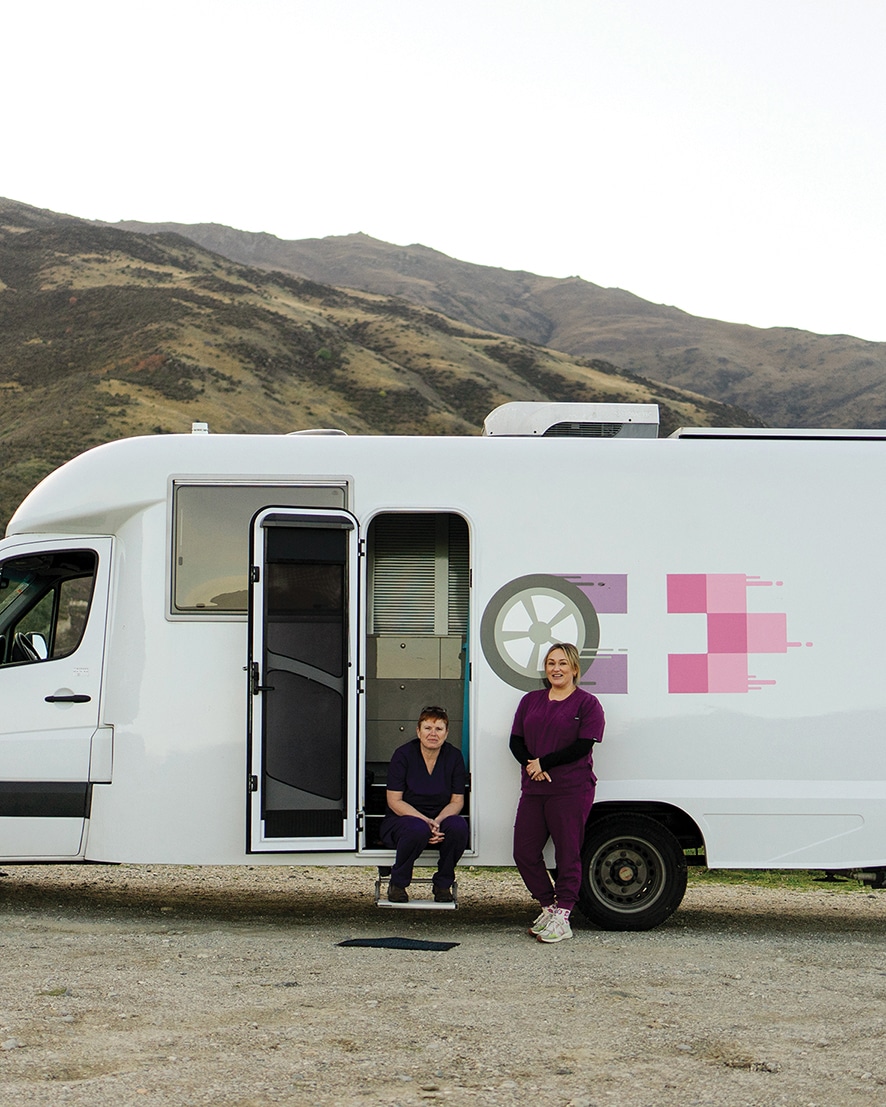
Helen: I guess women’s health was always the plan for me. I was born in England but brought up in Nepal, and I spent a lot of time with the person I called Aunty Joan, who was a World Health Organization employed midwife trying to improve maternal health. My grandmother was also a midwife. My interest in rural women’s healthcare definitely comes from my time in Nepal. For my research project at med school I went back to Nepal to look at how we could improve women’s healthcare and the answer, essentially, was to educate women.
I went to Greymouth at the end of my postgraduate obstetrics and gynaecology training, and that really brought home the issues of rural women’s healthcare and the difficulties in terms of distances. At my first antenatal clinic I said to a woman, “You really need to have daily blood pressures,” and she said “Daily? I don’t think I can do daily…” It turned out she lived three hours away in Karamea, so I just had to admit her to hospital!
I was doing remote clinics in my little Honda Jazz packed with supplies when Alice and her partner, Keith, a doctor, bought Junction Health in Cromwell. I told Alice and Keith about my idea of the bus and they said, “We need to do this.” The bus is very much set up like a normal clinic, so the only time it feels different to us is if, for example, we can’t find a flat spot to park. The other aspect that is different to a normal clinic is that generally people are more relaxed. I think we underestimate how stressful it is for people to go to hospital. So the whole idea of there not being a waiting room or that kind of thing can be a positive. People can pull up and have the kids in the car with the door open alongside, and we make it work. One of the things we do a lot of is colposcopy – what you have done if you’ve had an abnormal cervical screen.
As well as working in the bus, I’m acting head of department at Oranga Wahine Department of Obstetrics, Gynaecology and Women’s Health at the University of Otago. I did an interview for the job by Zoom in the front of the bus while someone set up the clinic behind me, so they knew what they were getting in for with me!
The way I describe it is that I have the dumb ideas and Alice makes them work. It’s just a dream when we’re working together. Sometimes I’m helping Alice and sometimes Alice is helping me – it’s kind of fifty-fifty. She’s just one of those people who makes everything easy.
Alice: I saw something online this week that said that it’s a seven-hour round trip for some specialist consultations if you live in Wānaka, because you have to drive to Dunedin and back. Women are doing this for short colposcopy appointments. Most people are quite anxious about these appointments, too, so to have to drive that far for it just makes that worse. It also limits people in terms of bringing a support person, because that person would also have to take a whole day off work.
The aim of the bus is to break down barriers for people accessing sexual and reproductive healthcare, making it easier and more accessible. We’re contracted by Te Whatu Ora to do colposcopy clinics, and we do those in Queenstown, Wānaka, Dunstan Hospital in Clyde, and Helen does them in Ōamaru as well. Those days are quite structured, and then when we have our private clinics we just do whatever is in our scope for those who are referred to us – routine cervical screenings, IUD insertions, colposcopy, perimenopause and menopause discussions – and then we do events like the Wānaka A&P Show, which are just walk-ins.
I have five children – Logan, 15, Archie, 14, Lawson, 9, Penelope, 8, and Goldie, 5 – and I think that gives you an ability to juggle. If you have a patient who requires you to think outside the box a bit I think it helps, as you have to do that all the time with kids. Helen is amazing – she’s so passionate. She genuinely is there for the people. She’s all about education and best experience. It’s not often you find someone with so much experience who is that patient and so happy to teach others. Her whole philosophy is that she wants to share her knowledge, and she does it in a really kind and respectful way. And she does it with her patients, too – educating them so they feel empowered.
This story appeared in our Takurua Winter 2025 Edition.
Related Stories
MAKE, a workshop series by Shepherdess
We're very excited to announce something we've been working away on for a little while now...
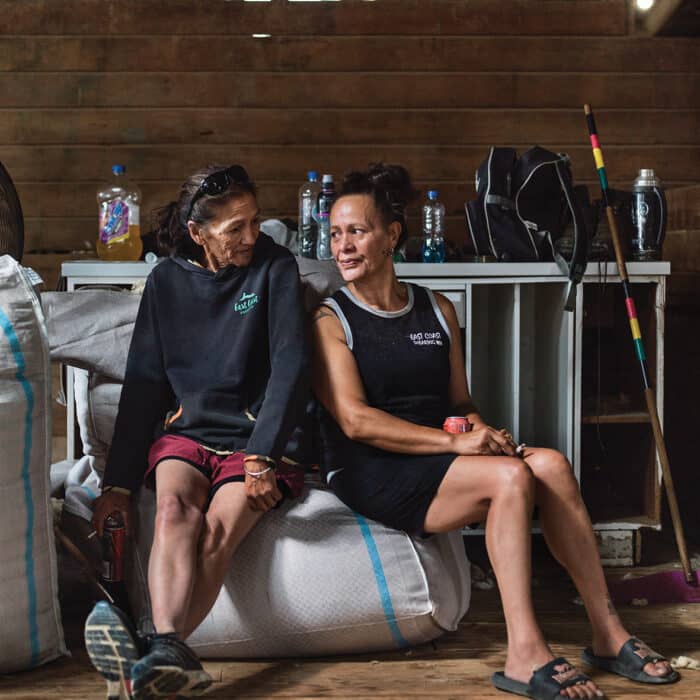
Shear Tradition
In this extract from Woolsheds, we take you inside the McNeil’s woolshed at Puketoro, a remote hill country station inland from Tokomaru Bay on the East Coast. This shed may
Out Now
Twenty-Sixth Edition
Our beautiful Takurua Winter 2026 Edition is out now.