


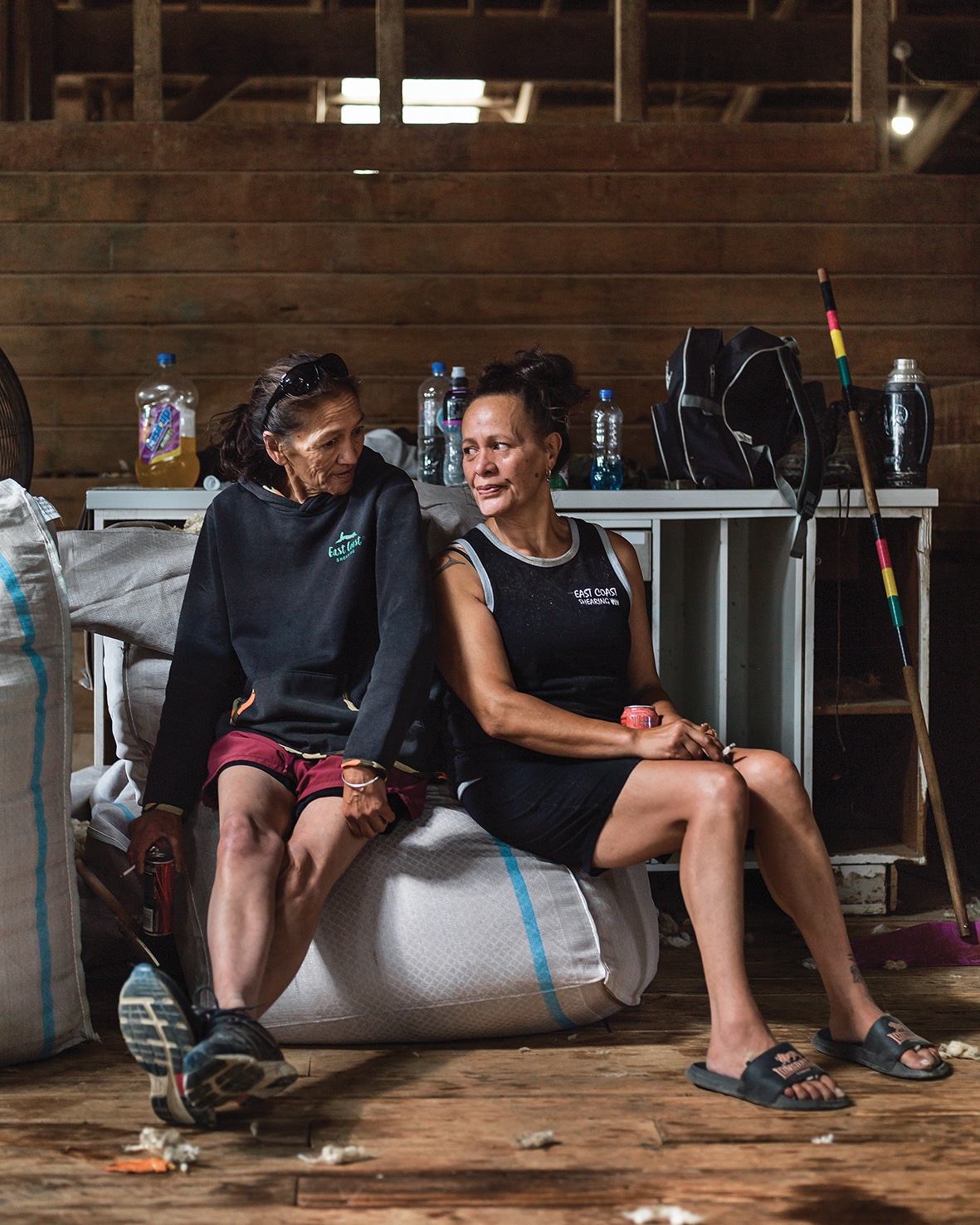
Puketoro is remote, and is one of the few hill country properties still farming sheep and beef in an area where so much farmland has been converted to forestry. Farmers of yore would recognise a lot of what goes on here: 15 permanent staff live on site, there’s a resident cook at the cookhouse, shepherds work on horseback and the shearing gang sleeps in the shearers’ quarters. It is a busy, vibrant, self-contained community.
The 14-stand Puketoro woolshed is thought to have been relocated onto the site in 1928 after a devastating gale caused extensive structural damage to the original building. Clad in corrugated iron and painted the ubiquitous red, it stands at the centre of a complex of farm buildings on a hillside looking out to Mount Hikurangi. In a lean-to next to the side entrance is the station office – the operational headquarters and meeting place for lunch and smoko. The wool room occupies part of the short section of the L-shaped building, and a lower level provides storage space for bales waiting to be loaded from the end door. Remnants of an iron winch for stacking bales on wagons or trucks sits on a platform by the door.
The long shearing board runs the length of the wall and at the far end the expert’s room still houses a large cast-iron, Birmingham-made Tangye engine that powered the shearing plant when machine shearing was introduced. Sheep pens behind the board occupy the rest of the building, with a space in the back corner for tending horses. There are 70 horses on the station and around five new foals arrive each year.
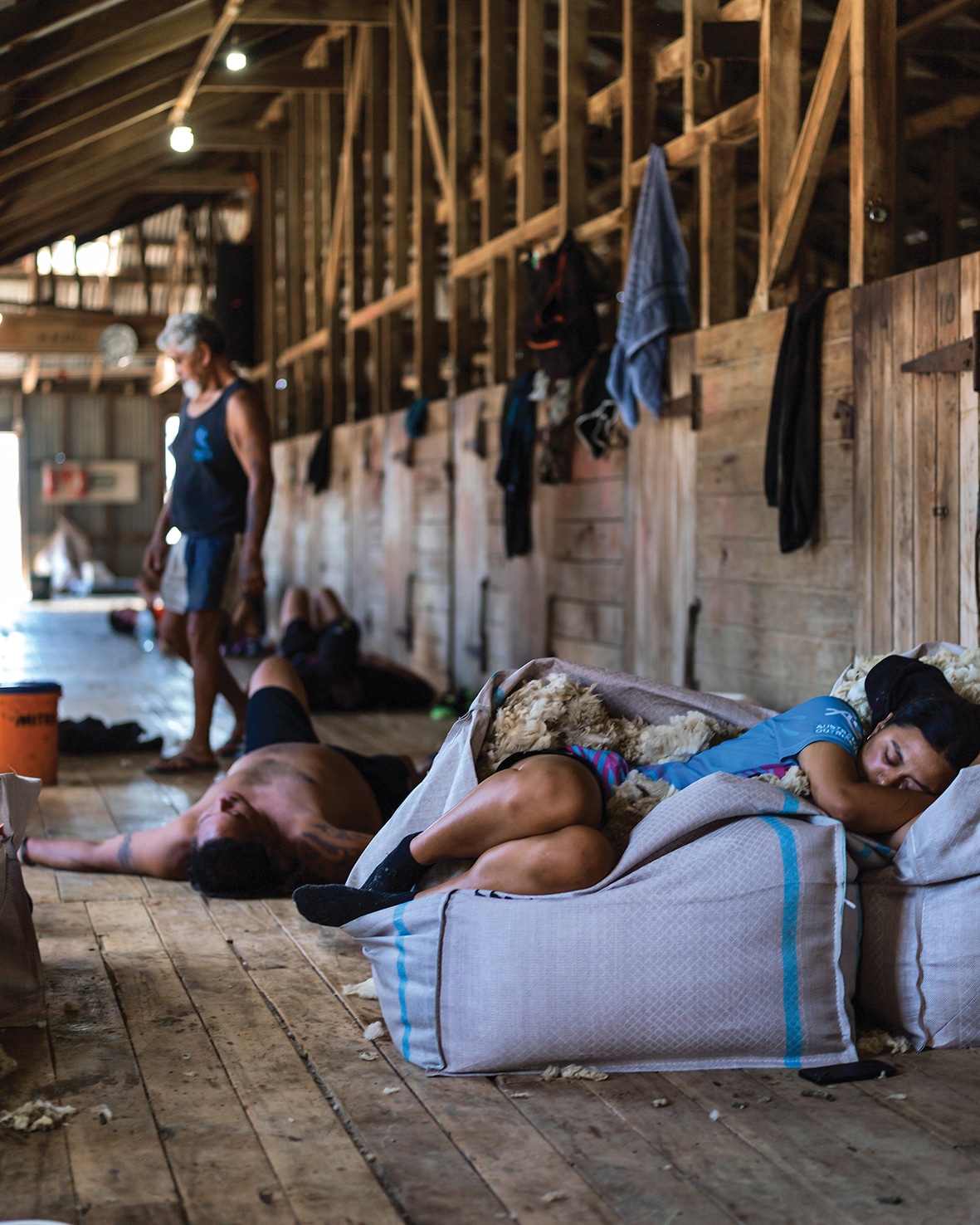
Down the hill, the historic shearers’ quarters and cookshop are in two long parallel buildings that date from the early 1900s. They are one room wide and, like the homestead and woolshed, completely clad in corrugated iron to protect their wooden interiors from bush fires, which ravaged the area in the early twentieth century. The lower building has a cooking and dining area at one end, with a huge open fireplace that takes up most of the end wall. Hinged iron pot hangers and hooks attached to the brick side walls and a large metal bar spanning the width of the fireplace were used for cooking in a bygone era. These days the shearing gang’s cook has a modern oven, and dinner is served at the dining table in the adjoining space.
The upper building has additional sleeping accommodation in a row of match-lined rooms. Together they can sleep up to 43 people. A new shower and toilet block were added at the end of the building, and decks were built onto the fronts, where the shearing gang can relax after a gruelling day, which starts at 5 a.m.
Up the hill is a cook’s house where a full-time cook caters for staff living on the station, with packed lunches and evening meals at a table that seats 22 people. This can be a challenging role. The farm sits between the Mata and Waitahaia rivers, and with a rainfall of 3000 millimetres per year there’s always a high risk that Puketoro will be cut off by slips and washed-out bridges. Jen Chrisp, the station cook, is prepared for the worst: there are generators, gas cookers and barbecues on site, and helicopters can drop in supplies if necessary. Normally, she does a big shop in Gisborne every three weeks and she also maintains a vegetable garden.
When we visit, shearing is in full swing. Dion Reedy’s Ruatoria Shearing is a family business, and all the employees are related in some way. Three generations of Mike Ratapu’s whānau are hard at work. Mike’s wife, Queenie, is his rousie, his son Rawiri is a shearer, and three of his mokopuna work in the sheds during their school holidays. Rakai and Rawiri junior are sheep-os, and Eruera catches sheep for his papa. Mike is a gun shearer – at Makarika Station southwest of Ruatoria on 4 February 2004, at the age of 42, he shore a record 703 lambs in a single nine-hour day. The feat is recorded in felt pen above the Makarika shearing board.
The previous year Mike shore 600 lambs in a day and set his challenge for a year later. By the middle of the day, he was finding it hard going until his whānau unexpectedly arrived from Te Whanganuia- Tara Wellington and Australia. When he reached his shearing record, he wrote the name of his father, from whom he learned to shear, in the air with his finger as a sign of gratitude and respect.
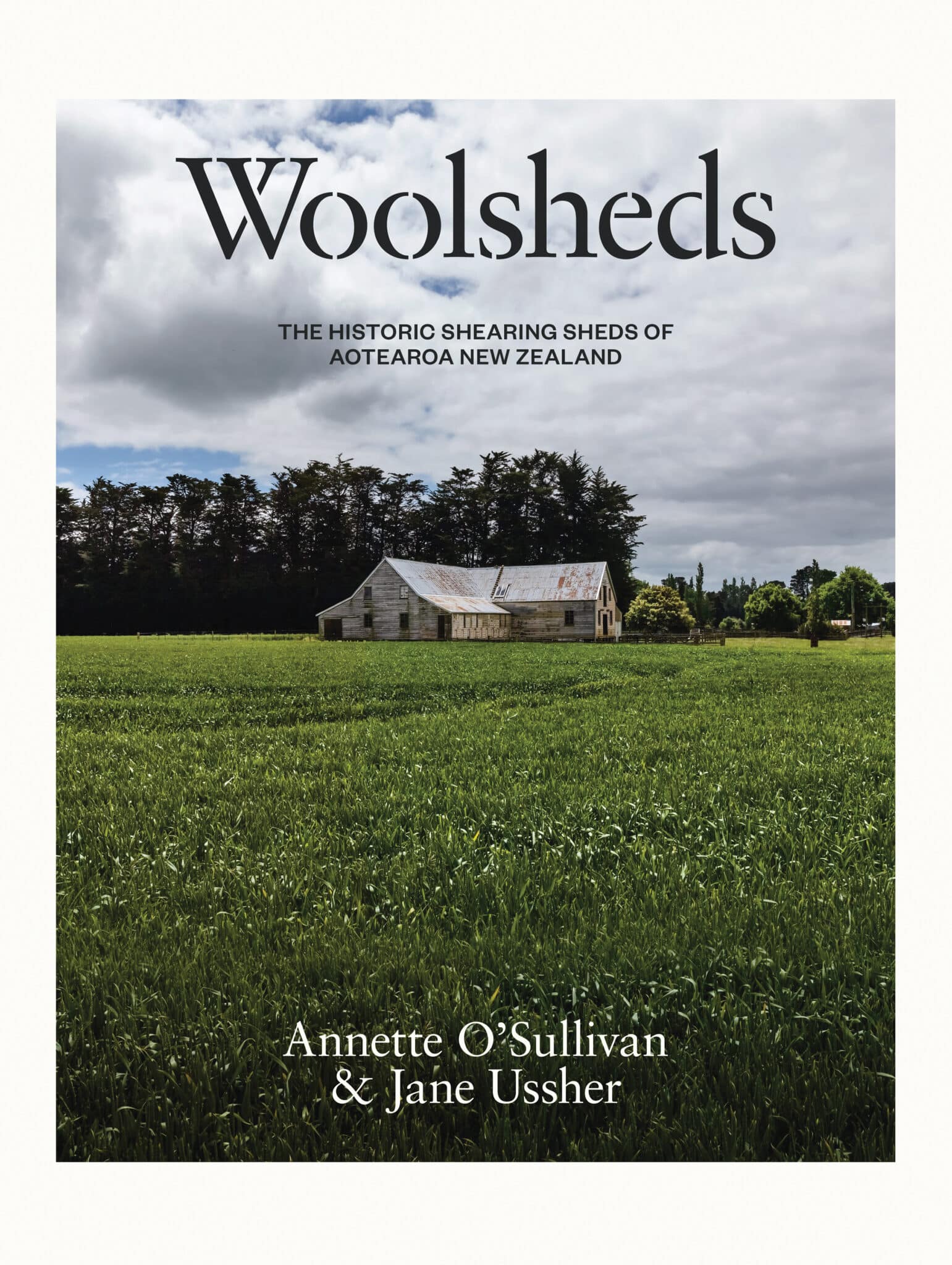
Edited extract from Woolsheds: The Historic Shearing Sheds of Aotearoa New Zealand by Annette O’Sullivan & Jane Ussher. Published by Massey University Press, 2024. Hardback, $85.
This extract featured in our Kōanga Spring Edition 2025.
Related Stories



Telling a Great Story
Kate Taylor knows how to spot a good story and tell a great yarn. As a journalist and writer, she’s been telling stories about rural life for over thirty years.

Ask The Flock
We asked our wonderful community to share with us any tips they have for ‘getting through’ isolation.

Out Now
Twenty-Sixth Edition
Our beautiful Takurua Winter 2026 Edition is out now.