


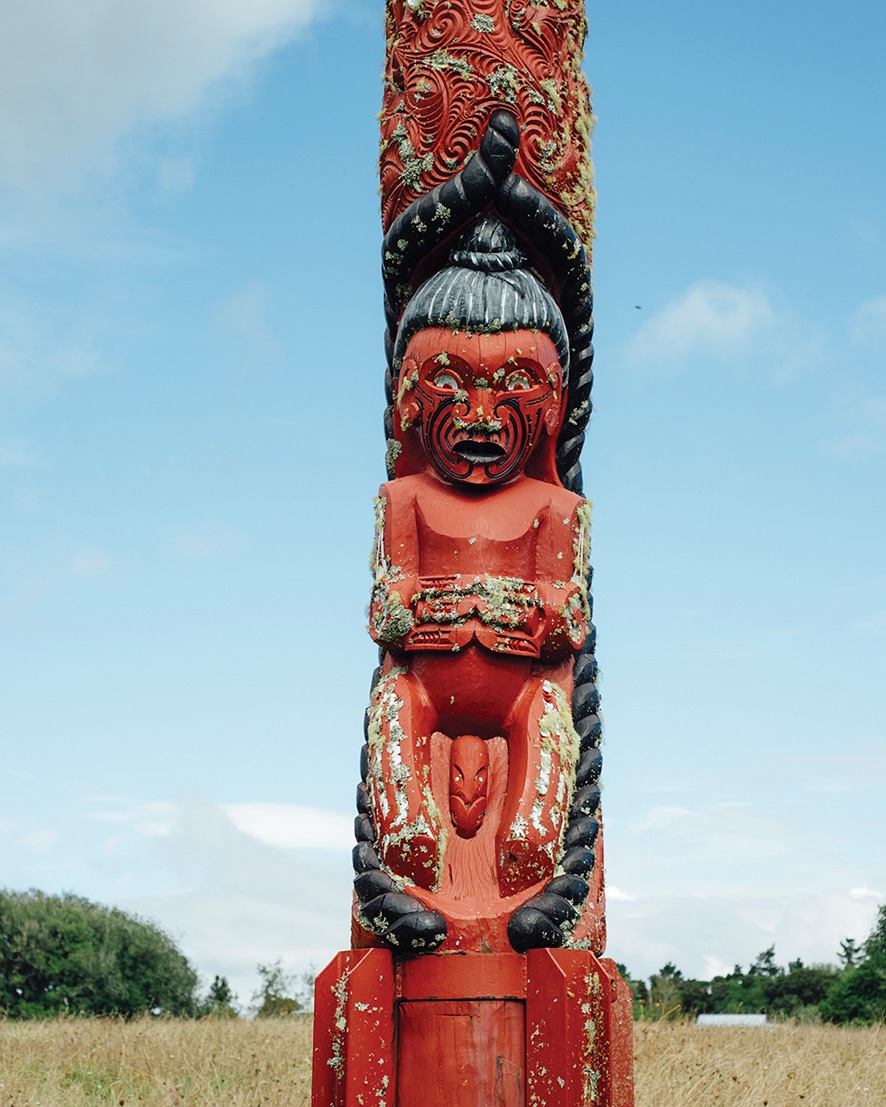
Our parents raised me and my three siblings in Touwai, although we spent a lot of time on the family farm, ten minutes up the road at Mōtatau. I come from a beautiful whānau who stand with pride within our identity as Ngāti Hine. Ngāti Hine is one of two hapū here in Touwai – the other is Ngāti Hau – and it was definitely grounding to grow up amongst my whānau and culture. I come from a long line of Māori dairy farmers, stretching back five generations, and even before that we were working the land, with stock and maara kai.
We had a beautiful upbringing – a real outdoors, country type of life. My dad was the local mechanic and engineer in Touwai for many years, and my mum raised us before starting a career as a nurse once all four of us were in school. We went to Towai Primary School, getting picked up each morning by the rural bus. The highlight was getting off at the shop across the road from home. The local shopkeeper was an auntie of ours so we always got treats there.
Next door sits Towai Tavern. It’s like a museum in there, showcasing everything from our sporting prowess to the forestry and railways which are a big part of local history as well. Touwai really is an amazing community. We have a gardening club, and the seasonal Touwai markets at the Towai Hall, which also hosts a whole bunch of events during the year. I joined the local f ire brigade last year as a bit of a tribute to my dad, who was a volunteer for nineteen years.
In many ways, Touwai is a typical country settlement, but it also has a strong cultural history. It’s known as the gateway to the north and played a key role in the pā wars. The last battle of the Northern War between Māori and the British happened in 1846 at Ruapekapeka Pā, which is still nestled up on the hill above Touwai. The Ngāti Hine rangatira Te Ruki Kawiti led the battle, and was known for his strategic mindset. Ruapekapeka Pā was known as the bats’ nest, and the way it was built helped maintain the warriors’ stand during the battle. The trenches – which mimic the way tuna travel – and the native flora defended against muskets and heavy artillery.
The battle has shaped our way of being as Ngāti Hine – the strategic mindset of our rangatira is drawn upon by uri and utilised for the betterment of our people today. It gives us the courage to acknowledge our past while creating a shared future with Māori and non-Māori alike here in Touwai. With State Highway 1 being a main artery of our country, Touwai sees a lot of visitors to the pā who come to pay their respects to an important piece of our national history.
I moved home in 2015, buying the property next door to my family home. Two of my siblings have also moved home. I came back for the primary reason of being close to my family and raising my three children the same way that I was. They have been able to go to a country school, to enjoy a slower, more thorough way of life. There’s a block of native bush with a spring out the back of our property, so they’ve grown up exploring, and living and breathing the land.
Living rurally, experiencing intergenerational living with our parents, grandparents and even our great grandparents, we had the best of all worlds. Being raised in a setting where environment and culture were symbiotic inspired me to continue looking after our whenua, awa, moana, and our taonga species. Our whānau are farmers and kaitiaki. I’ve worked for the Department of Conservation both locally and away in operational and advisory roles, and was selected torepresent the department at the World Ranger Congress in 2019 in Nepal – which was an awesome experience. I also work for our ha pū and iwi, and manage other environmental programmes through the Ministry for Primary Industries.
Our collective way of life here in Touwai is rewarding – our farmers aren’t just farmers, they’re also conservationists and sustainably minded families who are using traditional and innovative ways to improve their farming and reduce their ecological footprint. Other families who have been here for generations – farming families, Māori and non-Māori – all have a similar vision. If anyone needs help, our community comes together – baking, fundraising, supporting however we can. It’s just that typical country way of life.
Glossary. Awa, rivers. Hapū, sub-tribe. Iwi, extended kinship group. Kaitiaki, custodian of the natural world. Maara kai, food crops. Moana, ocean. Pā, fortified village. Rangatira, chief. Taonga, treasured. Tuna, eels. Uri, descendants. Whānau, family. Whenua, land.
This story appeared in our Takurua Winter 2025 Edition.
Related Stories
The rural rūmaki teacher with big aspirations for te ao Māori ways of learning
Te Waikohua Rata is a rural rūmaki teacher with dreams of seeing a grading system in place for te ao Māori ways of learning in the public schooling system.
Wearing Their Kauae
Reflecting on the mokopapa, and the unique path that led each of them to it, Darcia, Challen and Mona-Pauline explore how multifaceted it is to be a wahine Māori exploring

Bringing people together with kai in the southernmost town in Aotearoa
Haylee-Chanel Simeon, 38, is the creative force behind restaurant Hayz @ The Anchorage, based in Bluff, Murihiku Southland.
The Threads that Bind – Shona Tawhiao
It might not be the most traditional application of mahi raranga, but the work of toi Māori artist, Shona Tawhiao, is both visible and tangible, and that is exactly what
Out Now
Twenty-Sixth Edition
Our beautiful Takurua Winter 2026 Edition is out now.