30 July 2025
Milk Matriarch
Oranga Ahuwhenua. Farm Life.
WRITER: Jacqueline Forster
photographer: Michelle Porter
Rosie Cartwright is no stranger to hard work. The quietly spoken mother of four and grandmother of seven – soon to be eight – is up at the crack of dawn each day to milk a 500-strong herd of Jersey cows alongside Robert, her husband of forty years. She reflects on what it takes to build a farming legacy while living and working side by side with family.
Rosie and Robert, both 65, farm some 200 hectares at Kaimata, just outside Kōhanga Moa Inglewood in Taranaki, on a property that has been in Robert’s family for generations. This recurring theme of generational legacy is something Rosie has been careful to cultivate in her years on the land, and one she attributes to being brought up in a large family with a strong work ethic. “I was brought up in town, in Whanganui, as one of nine children, so it was survival of the fittest,” she jokes. “Growing up in a large family you learn to share and to care about other people. Mum and Dad worked very hard to keep us all going, so I guess you could say I come from a hardworking background.”
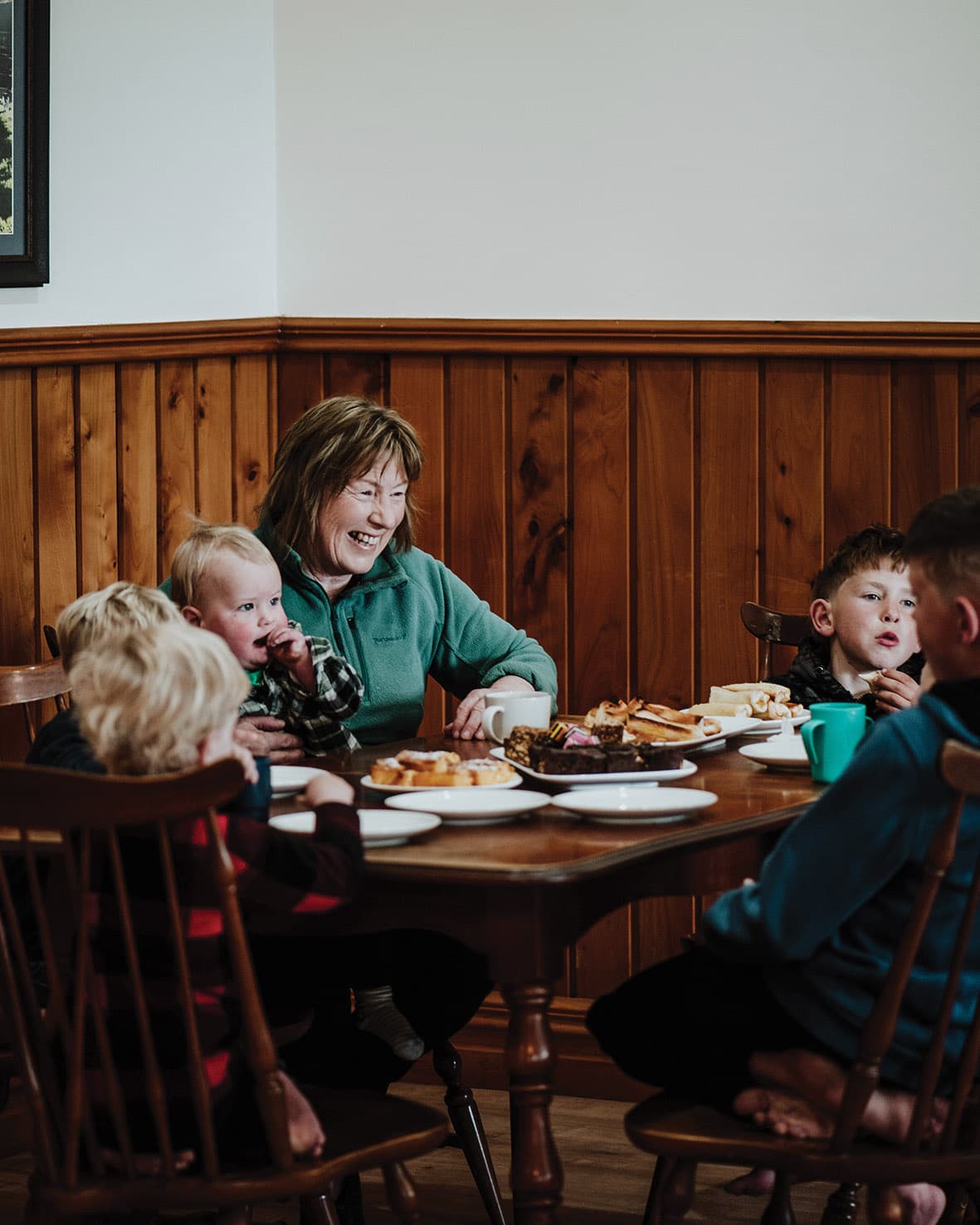
After leaving school, Rosie trained as a registered nurse and moved to Ngāmotu New Plymouth. It was there that she met her future husband, Robert, on a blind date organised by a close mutual friend. “Robert and I got married in 1985 and I continued nursing for quite some time, even after the children were born, but as the business grew so did the workload.” When juggling farm life and nursing became untenable, Rosie decided to dedicate her time to the family and the farm.
The Cartwrights have a long history of farming in the district. “We’re the fourth generation here and our children are the fifth,” Rosie explains. Their property in the rolling Kaimata hills is not your traditional flat dairy farming land, she says, and was originally a sheep farm. Robert’s family converted to dairy farming in the mid-1970s and took to breeding award-winning Jersey cows. “Robert manages the genetic side of things; he’s always had a real passion for cows, and I just love them too,” says Rosie. “Over the years we’ve named quite a few, and we all have our favourites. They have a quiet gentle temperament, and they’ve even become used to the grandchildren being about.” Friendly cows also make for better herd management, she says, describing their routine as they walk into the cow shed. “The same cows come on early every time, so you know there’s something not quite right if all of a sudden one’s at the back of the herd. There’s a hierarchy amongst them too – you have your bosses, that’s for sure.”
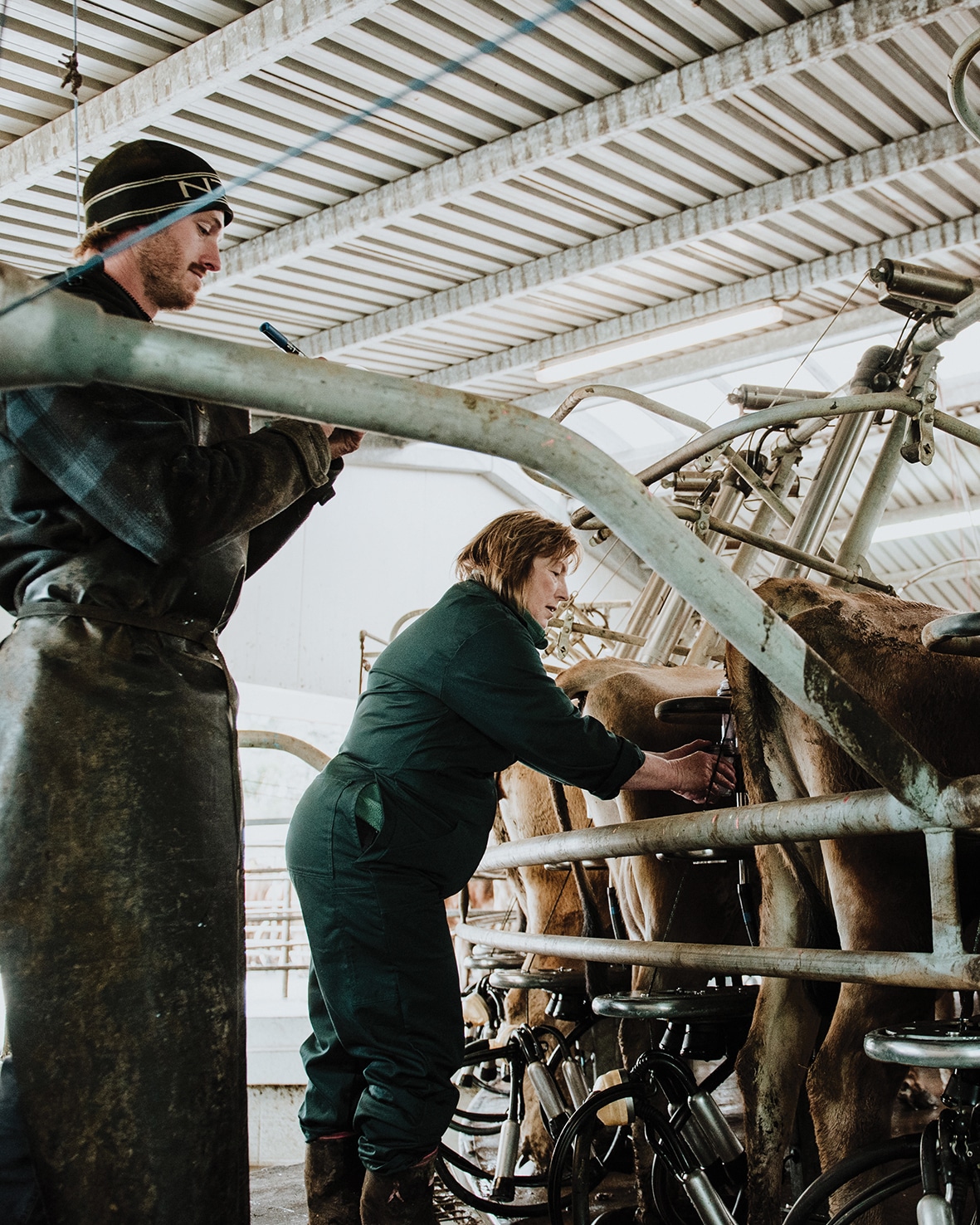
Bossy cows aside, routine on the farm is marked by twice- daily milkings from spring through to autumn, whatever the weather. “It’s very dry at the moment, Taranaki’s been in drought, and there’s not a lot of rain in the forecast,” says Rosie. “We’ve got quite a few cows on sixteen hours, but we’re still milking twice a day.” Like most farmers, a normal day starts early. “I usually make a cup of tea for Robert because he gets the cows in and then I meet him at the cups around 5.30. After milking, we do a run-off, and now – because it’s so dry – we’re feeding out, which is quite a big job. My son, Thomas, works with us and we all try to get a bit of a plan together before we leave the shed, so we know what everyone’s up to, then we just go about our day until the next milking at around three in the afternoon.”
Continue reading the full story in our Takurua Winter 2025 Edition.
If you enjoyed this story, please share with someone else.
This story appeared in the Takurua Winter 2025 Edition of Shepherdess.
Get your hands on a copy.
Related Stories
Championing the rural sector every step of the way
Rebecca Greaves, 38, is a rural journalist based in Pongaroa. She is a tireless champion of rural communities.
Māpiu
Kim lives with her husband David on his family farm in Māpiu, where she has planted roots and been enveloped by the town’s tight-knit community.
Where The Sun Shines
Liz and Andy Hayes count themselves lucky to call Hakataramea Valley home.