


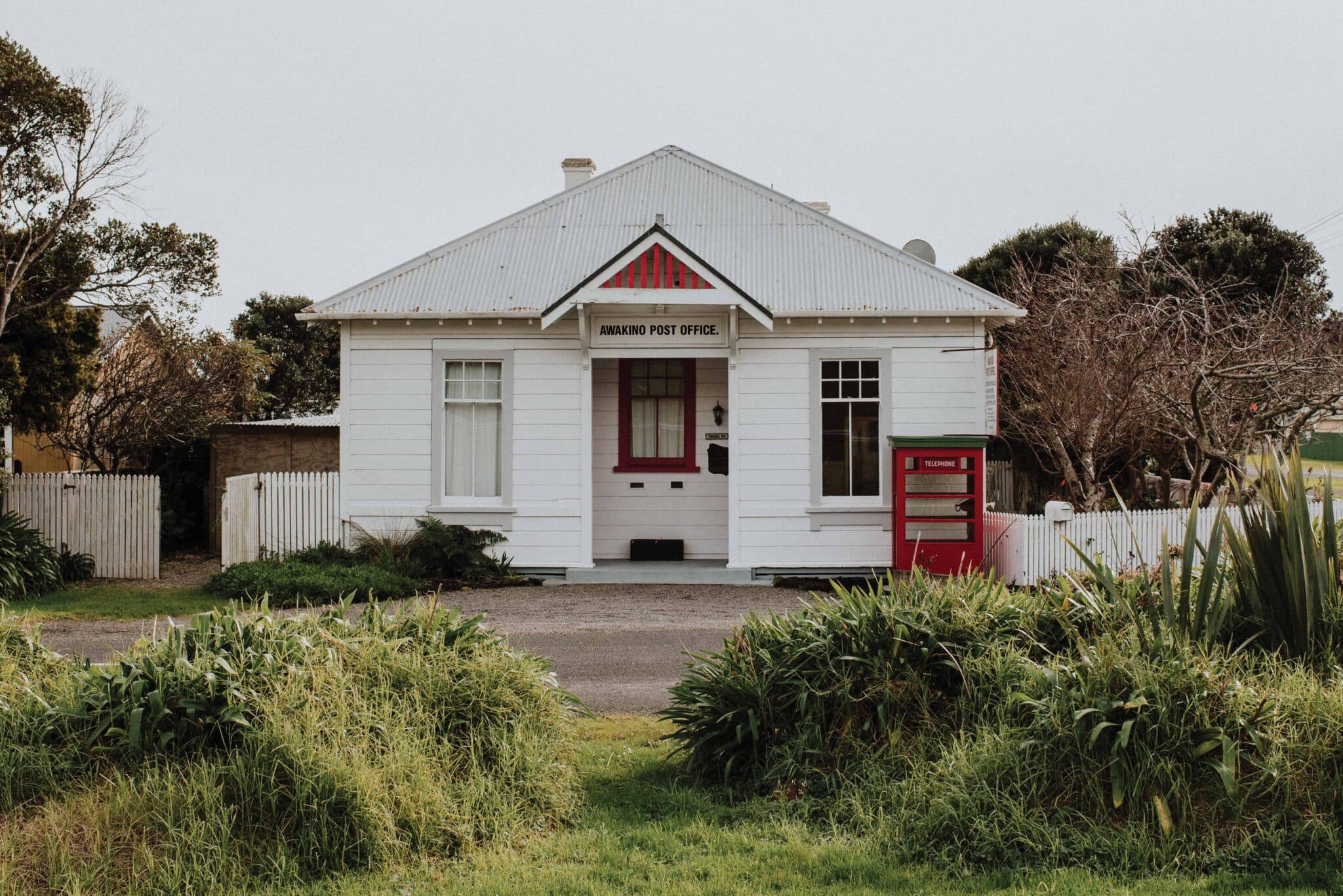
Awakino is an in-between place for me. It feels like it’s before Taranaki begins and the King Country ends. I feel a lot of connection to Taranaki because I attended St Mary’s Diocesan School, Stratford. I was identified as having dyslexia and some ADHD and autism traits. For the first time, my learning was supported in ways that encouraged me. It was life changing. My dad and uncles are still on the family farm in Waiuku, so it’s a place I’m very connected to. My heart, however, is in the King Country, where I still focus most of my solo wilderness adventures. Awakino is a place that brings these special regions together.
In my twenties, my family would rent a sprawling lodge that was originally a general store, the Awakino River Lodge, for the summer holidays. There’d be eight to ten of us – my mum, stepdad, we three girls, my younger brother and my sisters’ boyfriends. My siblings would always have friends with them. My mum is very welcoming, and people on their way to New Plymouth or Taranaki for their own Christmas holidays would stop in at Awakino for the day. That’s the most vivid thing in my mind – the family friends. It was quite busy socially, but the location also offered that peaceful aspect, where you could always take yourself off to the beach. At that stage, I was doing a lot of solo cycling, so I looked up what rides I could do from the Lodge. I started researching the Waikawau Beach Tunnel and announced to my family that I wanted to undertake a Christmas morning cycle there. I’m not sure why I chose Christmas Day. I had learnt to spring these things on my loved ones, allowing for as little interference and preventing as much parental stress as possible. I’d studied the road and done as much research as I could online. I had a head torch for the tunnel and all my bike gear ready.
I was on the road by 7am, and it was empty. Only a few feral goats crossed my path. It’s a thirty-two-kilometre journey along the scenic Manganui Road through the remote Hērangi Range. There was only one section of the road where I encountered stock, and they were quite different from the cattle on my family farm – timid and wild-looking. They’d probably never seen somebody on a bike before. Reaching the turnoff to Waikawau Road was the next significant point in my solo ride. The geography changed as I navigated west towards the coastline – I had a feeling of relief that the hard hill country was behind me.
Just before the beach tunnel, this child –between six and eight years old – stopped me in the middle of the road. I saw a family was camping beside the Waikawau River. That was my only interaction that Christmas morning – this small child approaching me, wondering where I’d come from, if I was lost and did I want a cup of tea? That was quite a beautiful experience.
The beach tunnel is really long – eighty metres. It’s rideable with the floor sealed in concrete. It’s well-worn, with a sense of history – marks in the sandstone walls indicating over one hundred years of movement of stock and people. The tunnel was constructed in 1911 by three men who carved it by hand with picks and shovels. They created a passageway to serve the Nukuhakare Station. It’s a really fascinating area – so remote. We’ve got roads now, but back then they had to create this tunnel to the coast to drive and transport stock.
My most vivid memory is coming out at the mouth of the tunnel and the ocean just being right there. It’s the West Coast, so it was really wild. It is truly breathtaking coming out into the light – the wild coastline, the black iron sand and pounding waves of the Tasman Sea. Because it was Christmas Day, I’d arranged for my stepdad and younger brother to pick me up at midday. I got therein plenty of time, so I had this really nice time at the beach before they arrived.
When I’m alone, I’m not having to worry about anybody else’s needs. That sounds a little bit selfish. I navigate my work environment very successfully, but it is very socially and emotionally taxing on me. Solo cycling or solo hiking is a break from that. A challenging hike or bike ride is a real emotional and physical release. Doing something alone, only having yourself to rely on – it builds resilience and a sense of being independent and capable. Those things ground you, and you can take them into other experiences. It’s how you then carry yourself in the world.
Related Stories
Succession Planning
In our new business advice column, Shepherdess asks an expert to share her thoughts on a matter worth knowing about – this edition, we look at succession planning.

Annie Chambers
Tuki Equine is Annie's universe, one hundred acres of Hawke's Bay flat, rolling and hill country that sits above the Tukituki River.
Time to Create
From a full-time career in the arts, Thelma Emslie has stepped back into a quieter life on the banks of the Ōwaka River in the Catlins.
Full Bloom
Drive south-east from Whanganui on State Highway 3 during the summer months and you’ll soon spot hundreds of roses blooming in a paddock along the roadside – home to Matthews
Out Now
Twenty-Sixth Edition
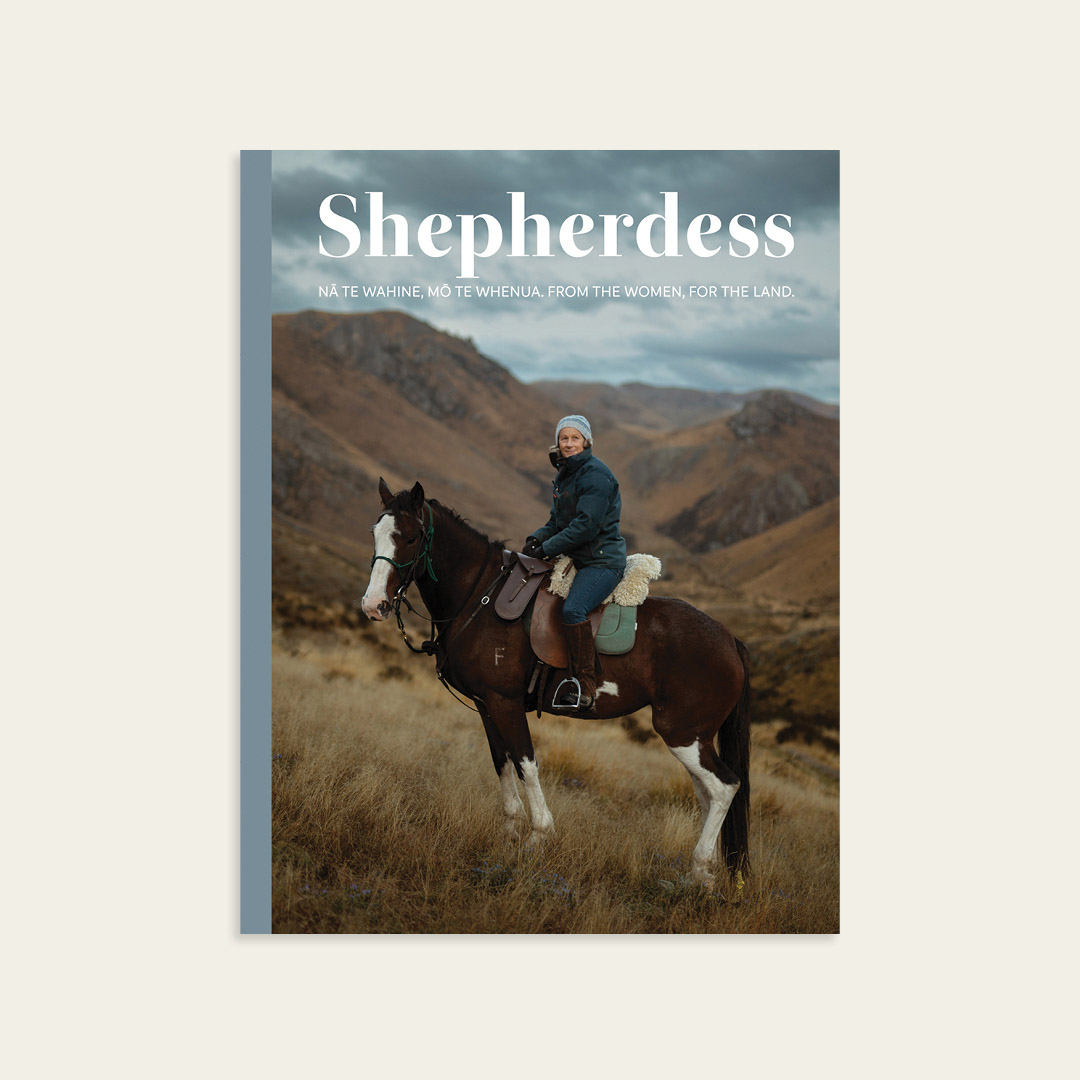
Our beautiful Takurua Winter 2026 Edition is out now.