25 February 2026
Forging a Path
Wahine. Ahuwhenua.
writer: Elise Cacace
photographer: Pippa Beamish
Forging hot steel, wielding sharp blades, and working with half-tonne horses at close quarters is no easy feat, but for Hawke’s Bay farrier Blythe Cruickshank, 32, it’s just another day at the office.
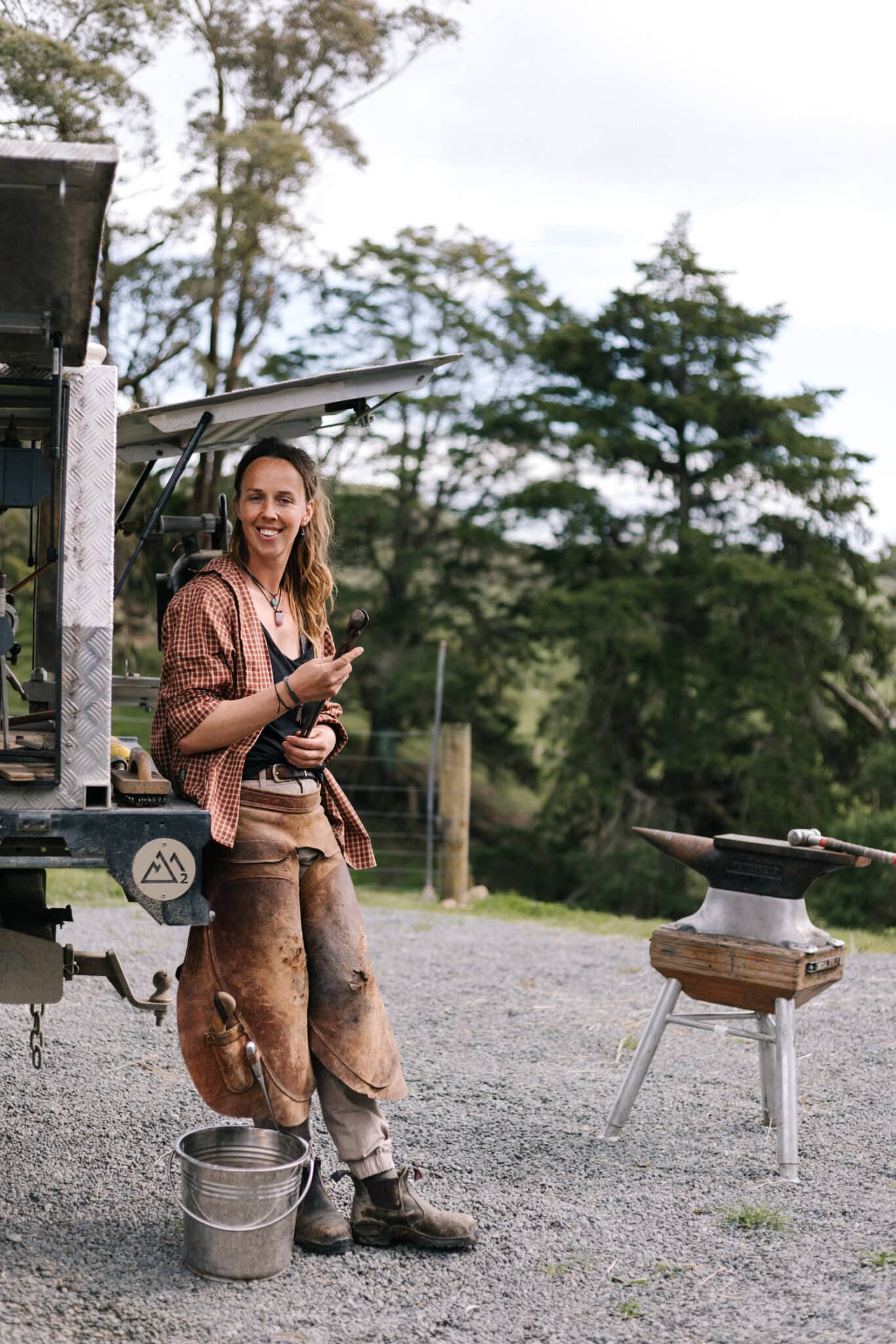
Having grown up riding horses over the hills of her home in Tuki Tuki, Te Matau-a-Māui Hawke’s Bay, stepping into the world of farriery felt like a natural extension. “I was very lucky with my childhood. We lived on this little farm bordering the Maraetōtara River. It was such a great place,” Blythe recalls. “Neither of my parents was horsey, so it was a learning curve for all of us. My sister and I started taking riding lessons when we were little, because what little girl doesn’t want to ride horses? From there, it was very much a learn-as-you-go kind of thing.”
Blythe was seven when she welcomed her first pony to the farm, an “ancient” mare named Coke. “She was super old and had hardly any teeth – she was very cheap – but she was great. I fell off her a lot, but I also remember teaching her to be naughty – like how to buck on command. My second pony was a lot naughtier, though!”
Blythe always knew she wanted to work with horses, but it wasn’t until after she left school that she considered farriery as a career. “It was something that just happened. I never planned it or thought, ‘I want to be a farrier.’ After finishing school, I started working for a horse trekking operation that also trained and broke in horses. The owner taught me how to shoe, more out of necessity than anything else. He used to shoe all the horses himself, but then he hurt his back, so he was like, ‘Well, you’re going to have to learn,’ and that was that. It just grew from there,” Blythe says.
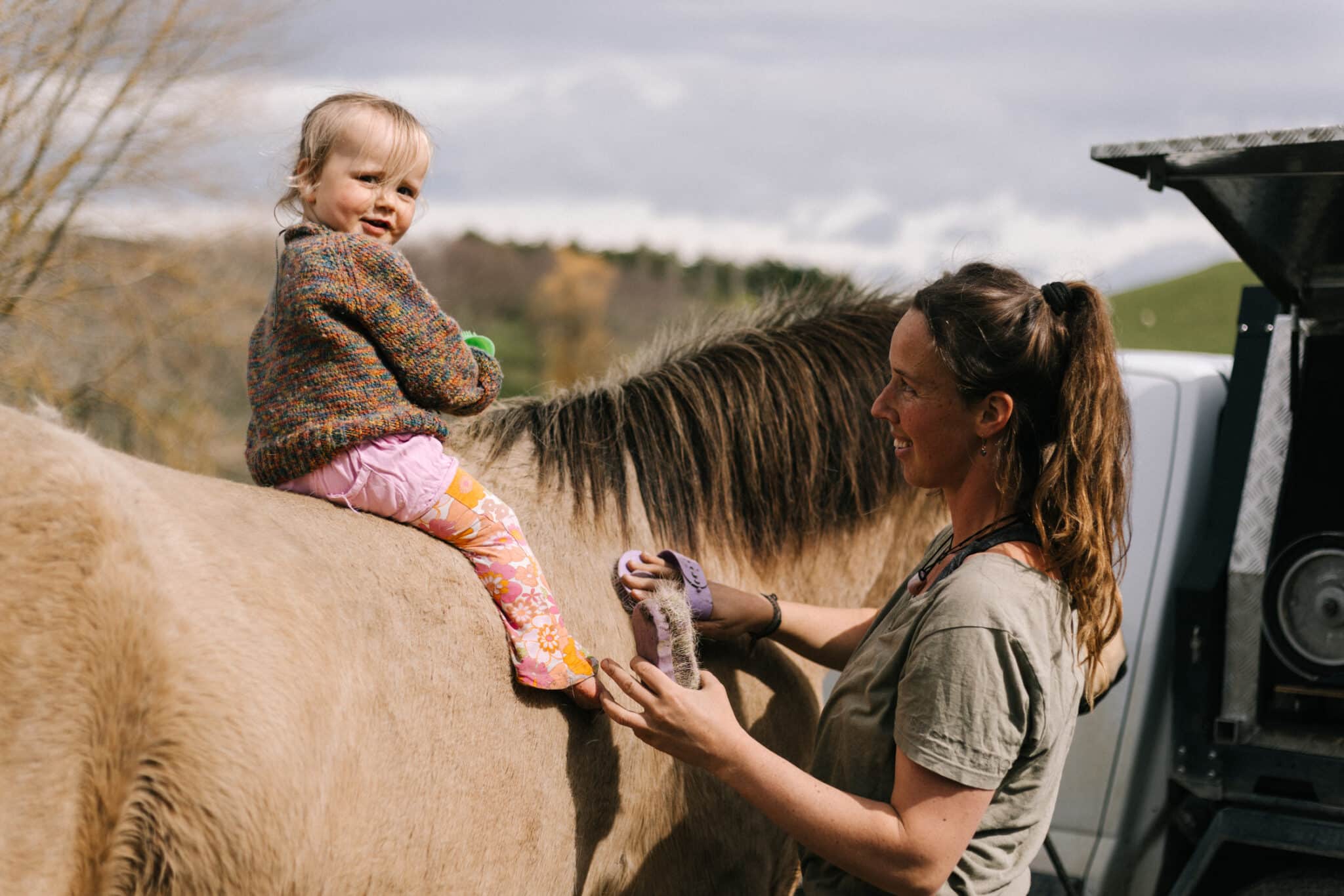
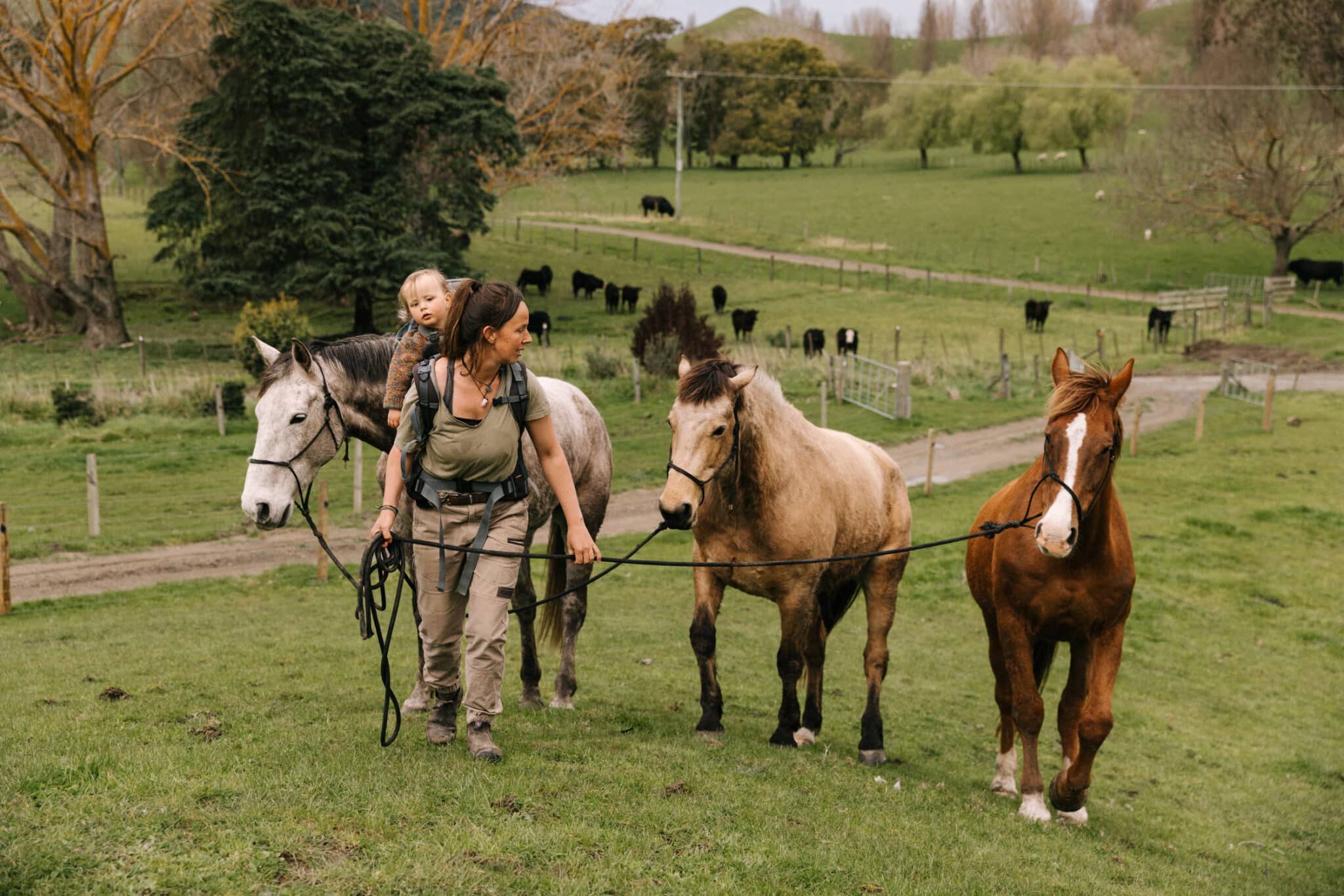
Above. “I’ve definitely faced some challenges along the way, professionally and personally. It hasn’t always been a smooth road, but things always seem to work out in the end, and I’m grateful for all my experiences.”
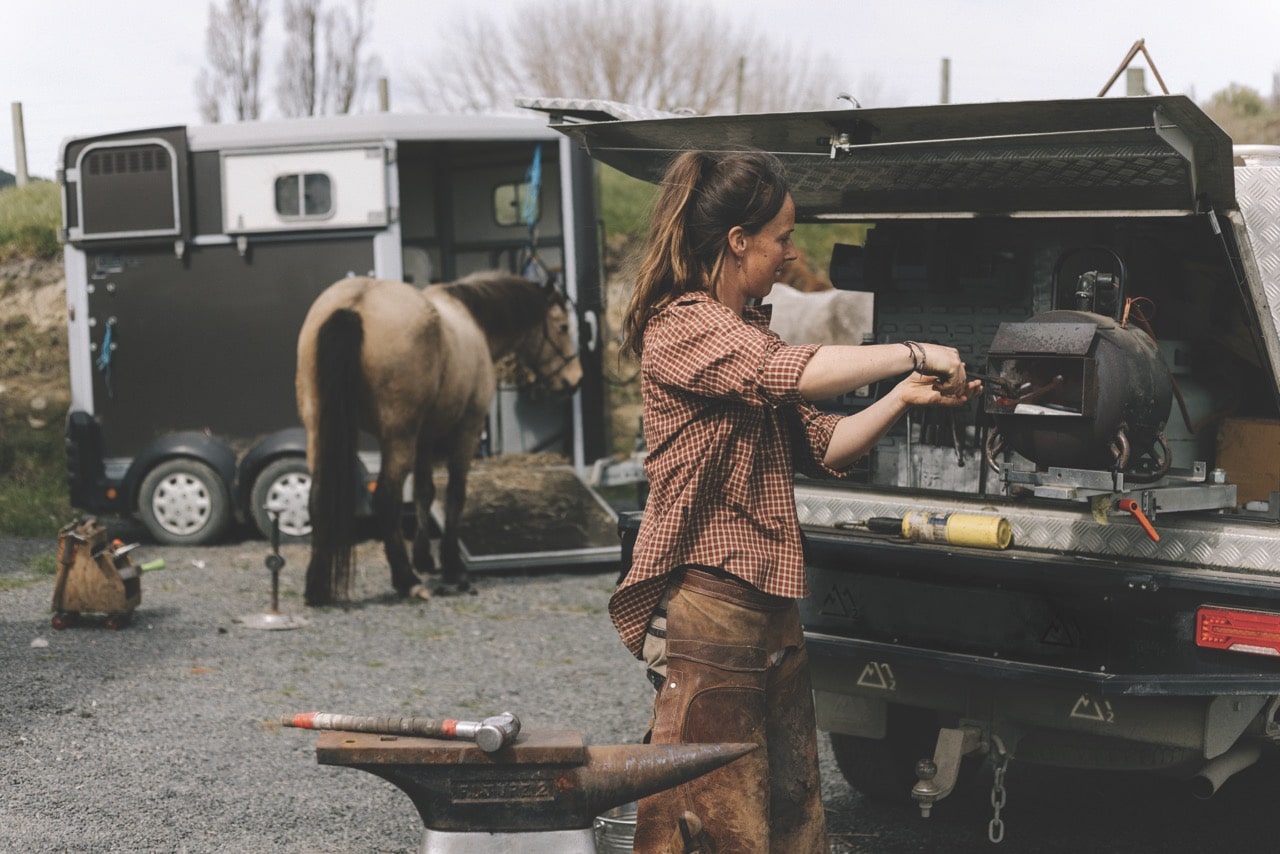
Blythe’s journey shifted from casual shoer to committed artisan in 2014, after a stint as a hunting wrangler and then, many seasons later, as a guide, riding through the Canadian mountains with a team of sixteen horses. To prepare for three months of riding off-grid, she needed to ensure every horse had a new set of shoes, ready to tackle the rough terrain. She says, “I did a lot of shoeing in Canada, and I ended up thinking ‘Oh, I can earn some money doing this back home.’ But it wasn’t until much later when I started working in Wānaka with Trevor Sutherland, who would become my mentor, that I realised what being a farrier meant, and how many different things you can do. Before, I was just nailing shoes on horses and thought I was doing it but, when I really dove into it, I realised just how much more there was to learn.”
Becoming a qualified farrier in New Zealand requires passing the New Zealand farriery exam, which, Blythe explains, is a demanding test of both knowledge and skills. Candidates must hand-forge and fit shoes under strict time frames, complete theory tests and present pre-made specimen shoes to demonstrate their skill. “You couldn’t just do three months of practice and pass the exam,” Blythe says. “You need to know a whole range of things and show your skill set.” Beyond exams and the forge, life as a farrier requires patience and precision. It isn’t just tacking on shoes, but observing the shape and balance of a horse’s hoof and making adjustments to improve how the horse moves."
Continue reading the full story in our Raumati Summer 2025/26 Edition.
If you enjoyed this story, please share with someone else.
This story appeared in the Raumati Summer 2025/26 Edition of Shepherdess.
Get your hands on a copy.
Related Stories

Weaving Together Four Families
On their wedding day, Amelia and Matamoana Nuku were able to honour their families – and their traditions – in a way that celebrated love.
All In
In the third of our series of feature interviews, Shepherdess Editor Kristy McGregor chats to Kate Acland, Chair of Beef + Lamb New Zealand. Along with her role as chair,
Jenna Smith
"I always thought I had to be everything in equal parts to be successful." - from dairy assistant to CEO and governance roles.