


14 February 2026
All In
Rakahinonga. Entrepreneur.
Interview: Kristy McGregor In Conversation With Kate Acland
Photographer: Francine Boer
In the third of our series of feature interviews, Shepherdess Editor Kristy McGregor chats to Kate Acland, Chair of Beef + Lamb New Zealand. Along with her role as chair, Kate and her husband, Dave, farm the 3,800-hectare Mount Somers Station. The station runs sheep, beef and dairy, but the family have diversified with honey and lambswool blankets. Prior to moving south, Kate, who grew up on a lifestyle block in rural Taranaki, founded a winery in Marlborough. Kristy says, “Kate has a high-profile role – I’ve seen her name in the newspaper, and have bumped into her a couple of times. I admire her leadership in what I imagine to be at times a male-dominated industry.” Here, in this conversation, they cover entrepreneurship, farming, family and leadership.
With thanks to Beef + Lamb New Zealand for supporting the production of this story.
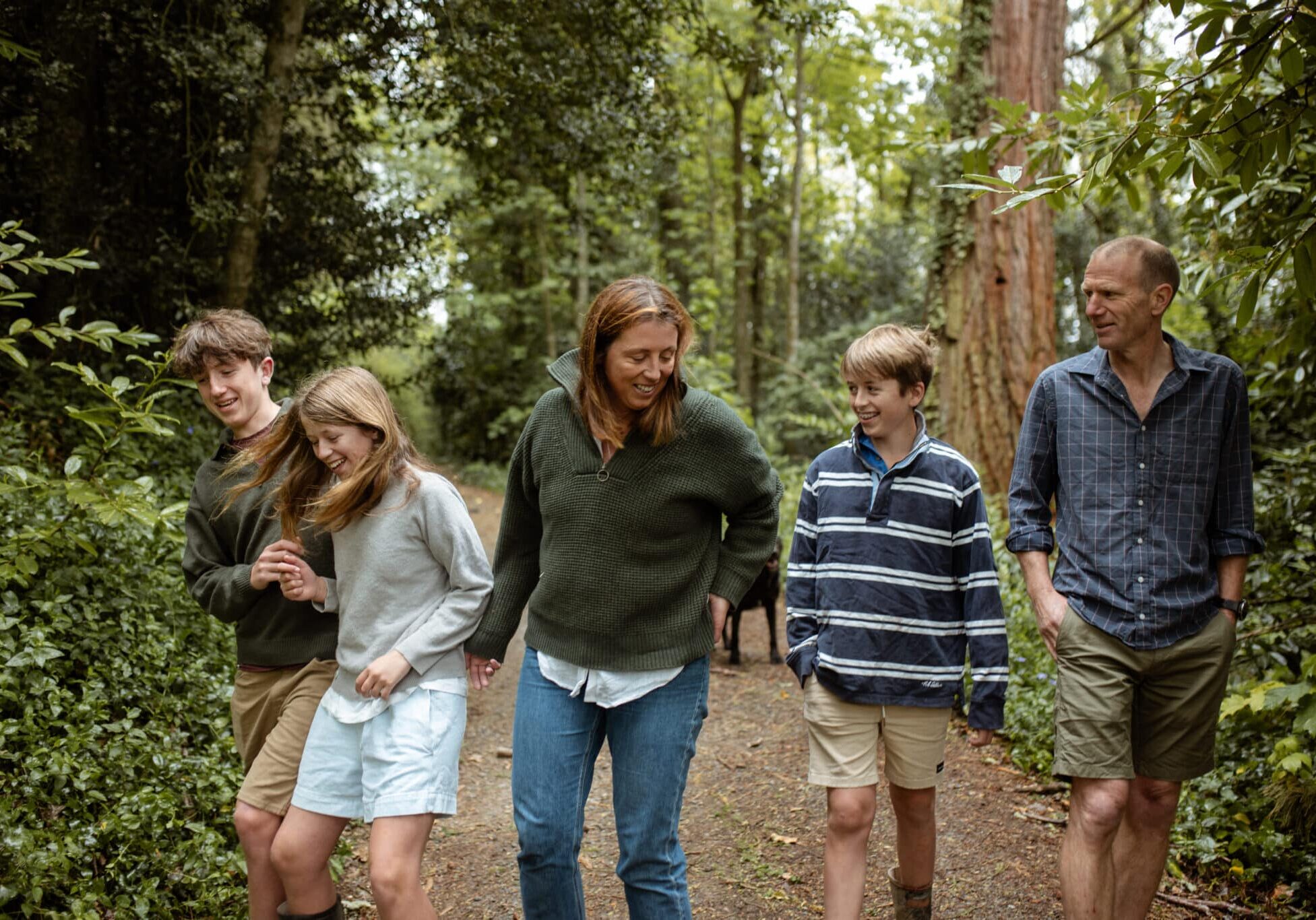
Top image. “We’ve got hundreds of hectares of native bush and native grasslands or tussock lands on the farm. All of this is important. Our values are around the people, the place, and the profit that pays for it. We wouldn’t have done our job if we hadn’t passed that set of values onto our kids.” Above. Kate and David with Leo, Harriet and Otto.
We all have different paths to get to where we are now. What was the start of your journey?
School was quite easy for me but I didn’t really know what I wanted to do when I left. I ended up going to Lincoln because that’s where my parents went. I started a Bachelor of Agricultural Science, and I got halfway through my first year and thought, “This is really not me.” One day I’d been in a very dry, boring animal science lab and walked out about the same time as the winemaking students were coming out of their wine tasting lab. And I thought, “Wow, I’ve made some wrong choices there.” Fortunately, I could cross-credit the entire first year of my agricultural degree to a winemaking degree. So that’s how I got into winemaking.
You started Sugar Loaf Wines in your early twenties, how did that come about?
Oh, I’ve always been scheming different things. After I finished my master’s in farm management consultancy, I was doing a little bit of work for my parents’ company, in the ag industry, and it involved going to China a few times. I used to go to the markets there and I would buy scarves and sell them back here at garden fetes and festivals. Then I started importing them. I also had a business catering winery meals. I went overseas and did some winemaking stints, as you do. Then, in my mid-twenties, I was looking through Trade Me one day, and I found an old winery and apple vinegar factory for sale. I wrote a very good business plan for the bank, and bought it. I was fortunate, I had a parent guarantee, but essentially I borrowed 110 per cent of the purchase price. Then the global financial crisis came, and suddenly my neighbour sold their vineyard for less than half per hectare than what I’d bought mine for a year earlier – there was this massive crash in the wine industry. I was in my twenties, in significant negative equity, and just really having to go flat out to try and make it work.
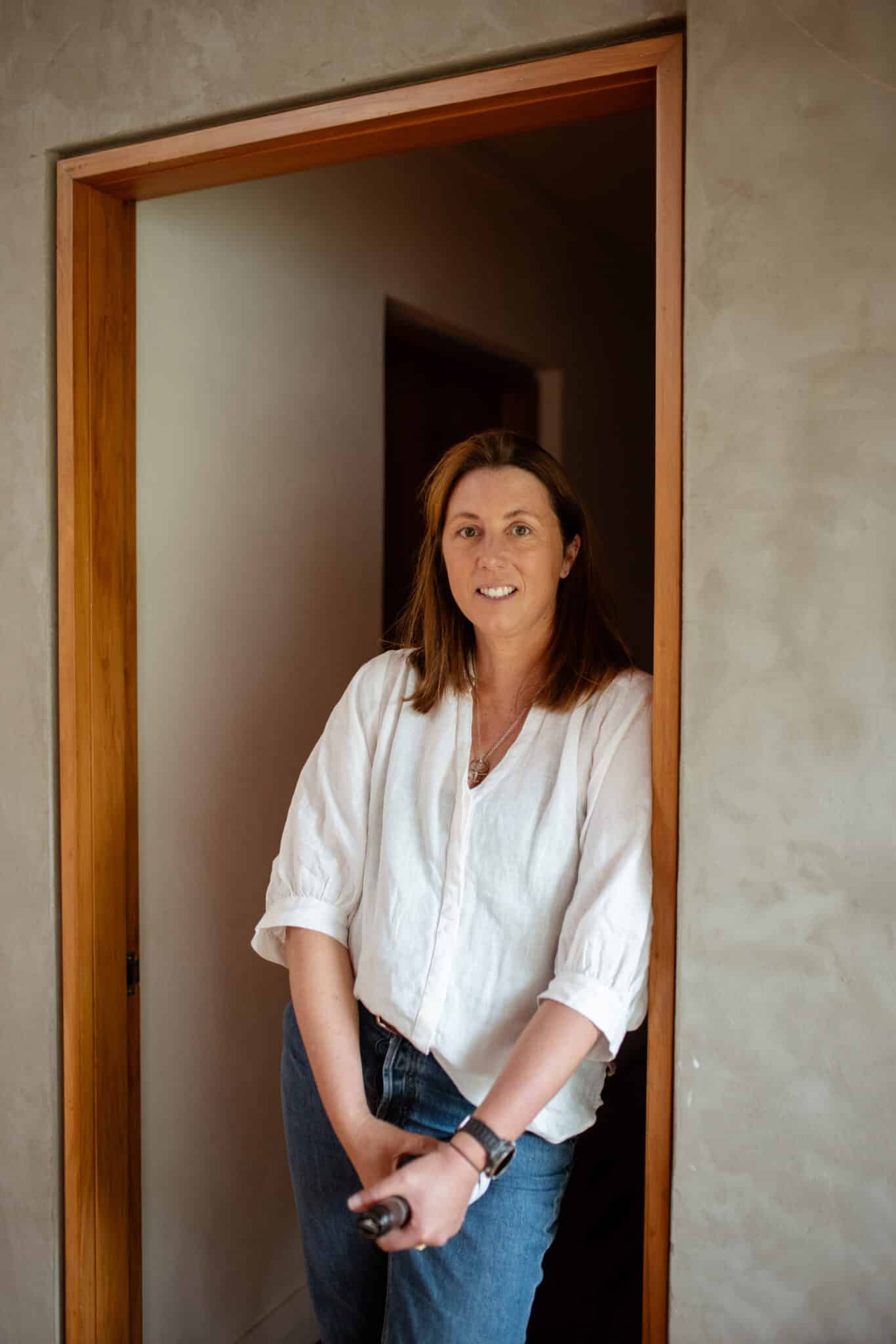
Above. “David is amazing. We are very fifty-fifty on parenting, so he picks up a lot of slack. I couldn’t do what I do if he wasn’t quite so active as a parent.”
How did you get through that? It’s different when you’re in your twenties, right?
You don’t have a family to support, and you’re not so worried about possessions. I’ve always been very good at unpicking problems. If a problem comes along, I immediately jump to, “How do I fix it?” The business plan obviously went out the window, and then it was around regrouping and going, “Right, what’s the part of the business that will make money?” So I pivoted to providing a contract winemaking service – making other people’s wine for them in my facility, and then charging them a per-litre rate. It allowed me to solidify the business, and then move back to producing my own wine. But it was just, “What’s the solution for right now to set us up for a longer term?” It was tough, but I learned a lot about what I could withstand and what I could get through. How did you meet your husband David? We have known each other for years and years. We used to kick around and go to the same parties. It just took us probably ten years to actually get together. We finally got together at a friend’s wedding. I was a bridesmaid, and it’s all very clichéd. Twelve months later we were engaged. Then six months after that we got married. And shortly after that we had our first baby.
Tell me about the history of Mount Somers Station. Has it always been in David’s family?
David’s parents, Mark and Jo, bought Mount Somers Station in 1983. It was actually an Acland property back in the 1850s. David’s great-great-great grandfather J.B.A. Acland came over from England with his business partner, Charles Tripp. They took up the leases of an enormous high-country area from Mount Somers all the way down to Orari Gorge near Geraldine. In 1861 they dissolved the partnership, and one drew the boundaries and the other flipped the coin as to how they split the landholding. The Aclands ended up at Mount Peel, and the Tripps at Mount Somers. David was born at Mount Peel – his father and uncle were farming there in partnership, so five generations. But then they split that partnership, and David’s father bought Mount Somers back. I think David was eight when he moved here.
Are your children interested in carrying on farming – do you encourage them to think about it as a career?
Our children all love the farm and are always out working. I’m fairly certain at least one of them wants to make it a career, but they have such a mix of interests, from creative and musical to practical and mechanical – it always amazes me how you can bring up three children in almost exactly the same way and have such different personalities. I think I’ve been saying since they were born, “One of you has to farm” – which is not very PC, because I think most farm owners now are like, “No, I just want my children to be happy.” I want them to want to do it, and I want them to love it as much as we do. You can’t force that, but it’s how you talk about farming, so I try to be overwhelmingly positive about everything we do. Even in the last couple of years when there’s been, financially, some quite tough times, I always try and dwell on the positive.
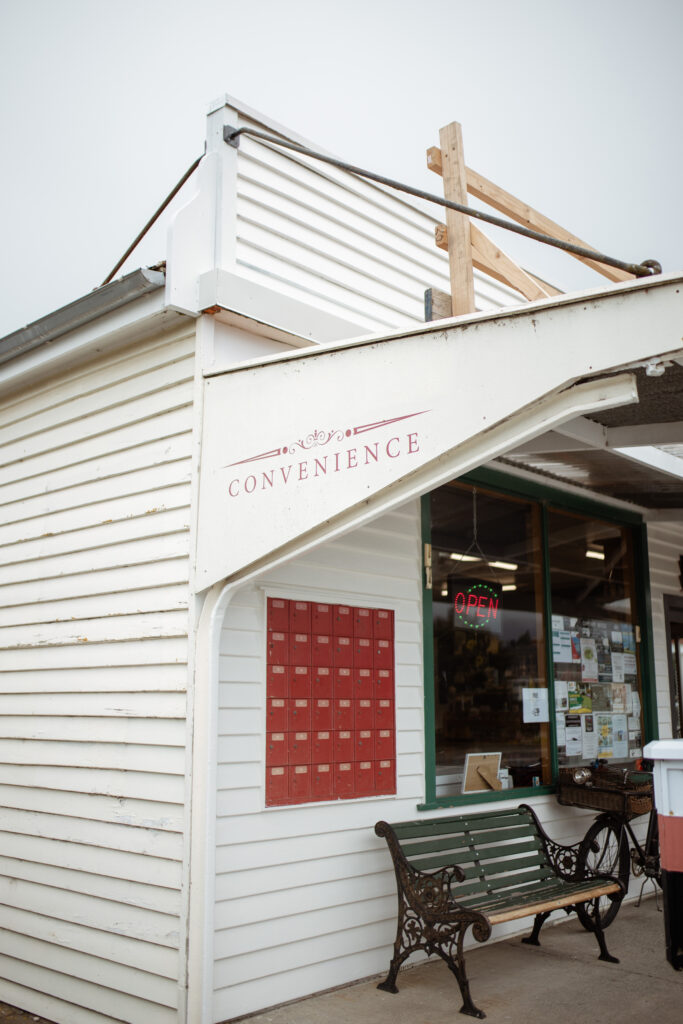
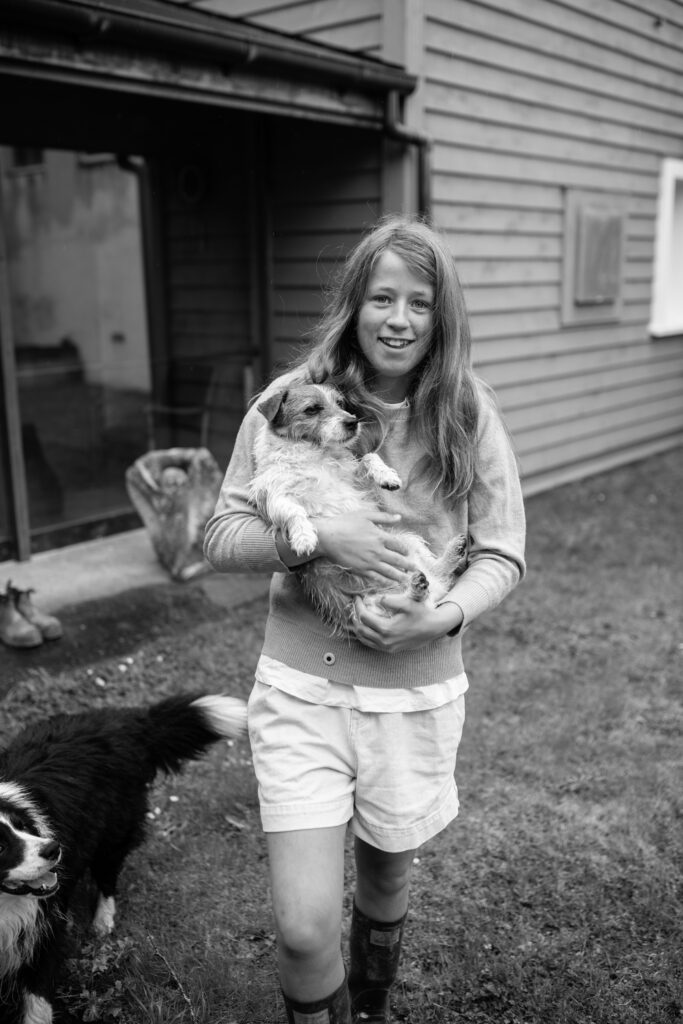
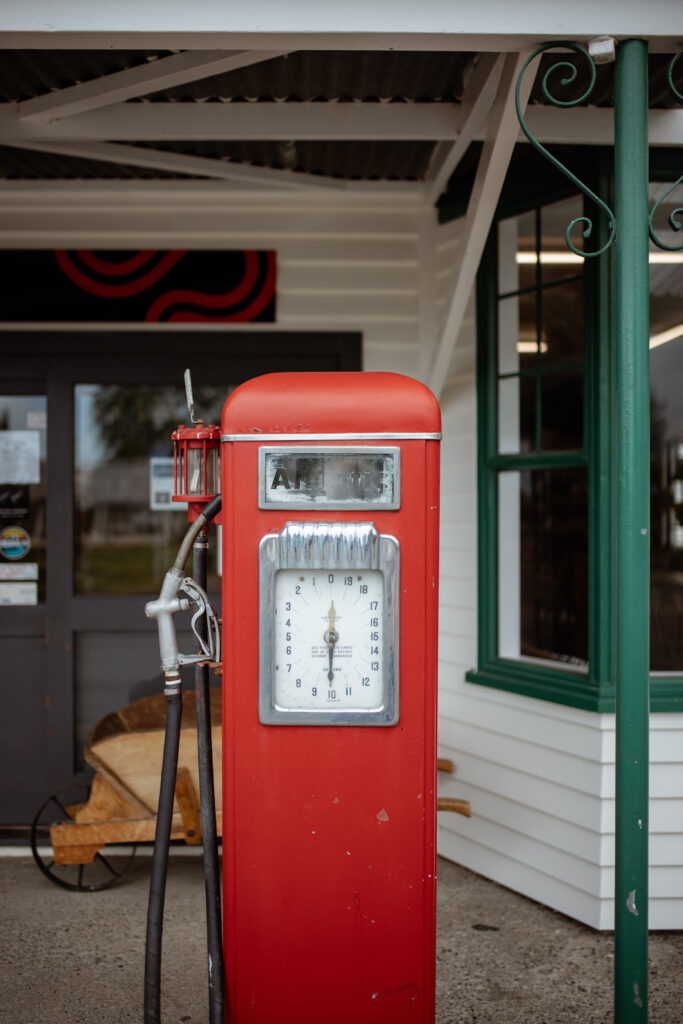

Top left. The Mount Somers General Store, owned by Kate and David. Top right. Harriet with Winnie the Jack Russell. Bottom left. The original store at Mount Somers opened in 1892, and the current building replaced it in 1924. Bottom right. “I’ve got friends who were adamant they weren’t going to farm, and went off and studied something completely different. And then they got to thirty, and went, ‘Oh, actually maybe the land is calling me.’”
When you came into the family business, was diversification already part of what they were doing, or did you bring some of your own entrepreneurial thinking into it?
I think most farmers are quite good at diversification. Sadly, David’s mother passed away before we got together, but, back in the nineties, she was doing bus tours and catering on the farm, and David’s father was very early into venison. So, they’ve always been quite diversified in what they do. A couple of years after we got married, we decided we wanted to make plans around the succession process. We put a plan together to convert 350 hectares of the lower river terraces into a dryland dairy farm. We did that because that was a way to actually drop out a decent cash return to David’s brothers, but also for us to start building equity in the farm. That was the first real diversification that we did. We’ve had years where dairy was terrible and beef was quite good. And the last couple of years when sheep and beef’s been a challenge, dairy has been good. David’s father sadly passed away in 2015. Then we had to fast forward the succession process and take on significant debt. David’s family has always been really good at talking. They’ve actually been talking about succession for about twenty years before it happened – which makes all the difference. Everyone knew where they stood. It was really good, actually. I’m not going to say it wasn’t hard at times, but the ability to talk about stuff – look, I can be quite blunt, but I’m also very open. I don’t sit and stew, so I think that helps as well. If it needs to be said, you can say it in a nice way, but it’s better to talk about it than not.
Tell me about the Mount Somers community.
We’re about an-hour-and-a-half inland from Christchurch. It’s a historic mining town, but a farming area as well. We’ve got a great little school in the village, and a shop and a pub, and we’re only five minutes from there. We have twelve houses on the farm, mostly filled with staff and their families. We employ up to seventeen people – we’re our own little community on the station. And if we want good staff, then actually we need a village that’s got good facilities. So we bought the Staveley Store, which we now lease to a young woman who runs it as a cafe. And then the Mount Somers store came up for sale – that’s more just sort of groceries, pies and coffees. We wanted to make sure the store stayed open, so we bought that too. I’ve always had a view that a good community needs a school, a pub and a shop. So we looked at buying the store from more of a community aspect. Same with the school and school buses. We don’t have any kids at the local primary school anymore, but need it to be really good and strong.
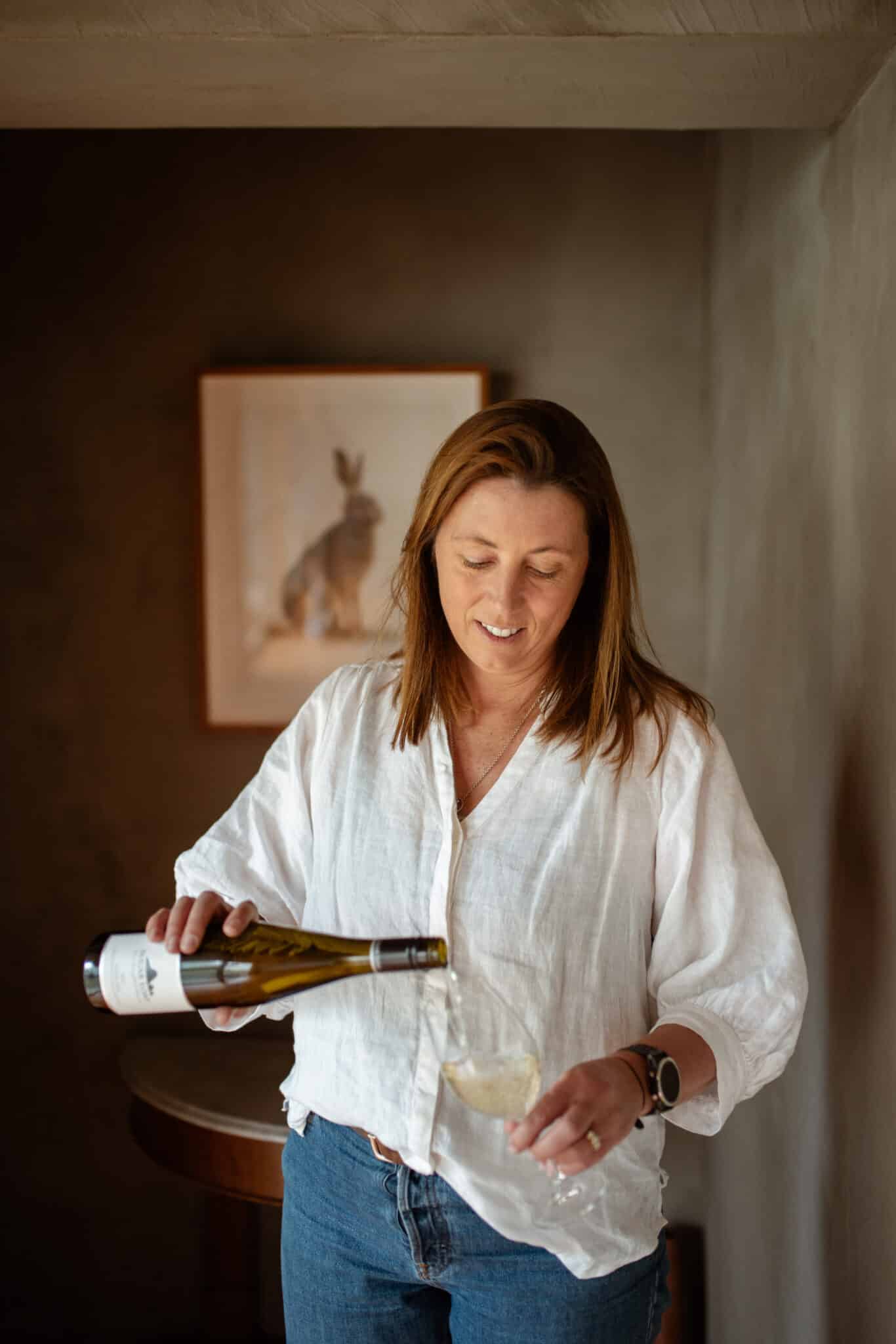
Above. “Initially, when people talked about leadership, it wasn’t a cloak that sat very comfortably with me because I’ve always been a rule breaker,” says Kate. “I was in all the nerd classes because school was quite easy for me, but I was quite naughty at school. I was certainly never a prefect or any of that, because I wasn’t the right sort of kid for that.”
How did the Beef + Lamb New Zealand role come about for you? Was it something you set out to do intentionally?
So I had my kids in 2010, 2011 and 2013 – a two-and-a-half-year gap between them! Then, in 2018, Harriet, our youngest, was about to start school. And I just had a bit of a moment – when you marry into this farming life, you feel you lose a little bit of your identity as a working woman. I still had Sugar Loaf Wines in Blenheim, but it was a six-hour drive from Mount Somers and I couldn’t be that involved because I was at home with three young children. And I hadn’t been doing a lot on farm – little bits and pieces where I could, but not heaps. I saw this advertisement for the Beef + Lamb associate director role. And I thought, “Oh, okay, that’s something I could do.” So I wrote a CV that basically said, “I’ve never really had a job, but I’ve done lots of things.” They had lots of applicants, and they shortlisted me. They flew me to Wellington for interviews, and I thought, “Oh, this is quite a good excuse to go shopping in Wellington for a day.” I think they chose me because I hadn’t done any specific training or professional development courses – I’d just been on farm and doing bits and pieces and running a business. So I got the job, and I just loved it. It was engaging with a bunch of people who are so passionate – not just within the organisation, but within the sector – who are working so hard to just to make things better for farmers. It was like another community. I loved my year and thought, “Oh, this is great – governance is for me.” A few years later, when the Beef + Lamb directorship in my region came up, I ran for that and won. Becoming chair was something I wanted to do because I thought I could do a good job of it, but it wasn’t something I wanted to do quite so early in my time on the board. It’s great and I love it, but there were so many moments of uncertainty and imposter syndrome, and “Am I doing the right thing?” Because you do have the ability to drive a lot of change or a lot of the thought process through the organisation as chair if you want to. There was a lot of doubt. But I feel like we’re on the right track. I won’t do it forever – it’s a lot. What I didn’t factor in is how much of me it would take. There’s a lot of media time, there’s a lot of time on the phone. Probably like any large job, you take so much of it home with you and into your communities. And I guess I hadn’t really factored on becoming a public figure.
What’s it like being a woman leader for an industry body in an industry that is quite male dominated?
It’s so funny you say that because that’s something I’ve been asked a few times. It’s a male-dominated industry, but ninety-five per cent of the farmers out there have a wife or a farming partner who is making decisions with them. The people who are visible and out the front in the agricultural industry are often very male. There are some seriously strong and impressive women across our agricultural sector – they are often just in the shadows. The only difference with me is that I’m out there and you see me. But I would say, I’ve not ever walked into a room and felt not welcomed by farmers. I have had some terrible phone calls and emails, but that’s nothing to do with me being a woman.
“Our children all love the farm and are always out working. I’m fairly certain at least one of them wants to make it a career, but they have such a mix of interests, from creative and musical to practical and mechanical – it always amazes me how you can bring up three children in almost exactly the same way and have such different personalities.”
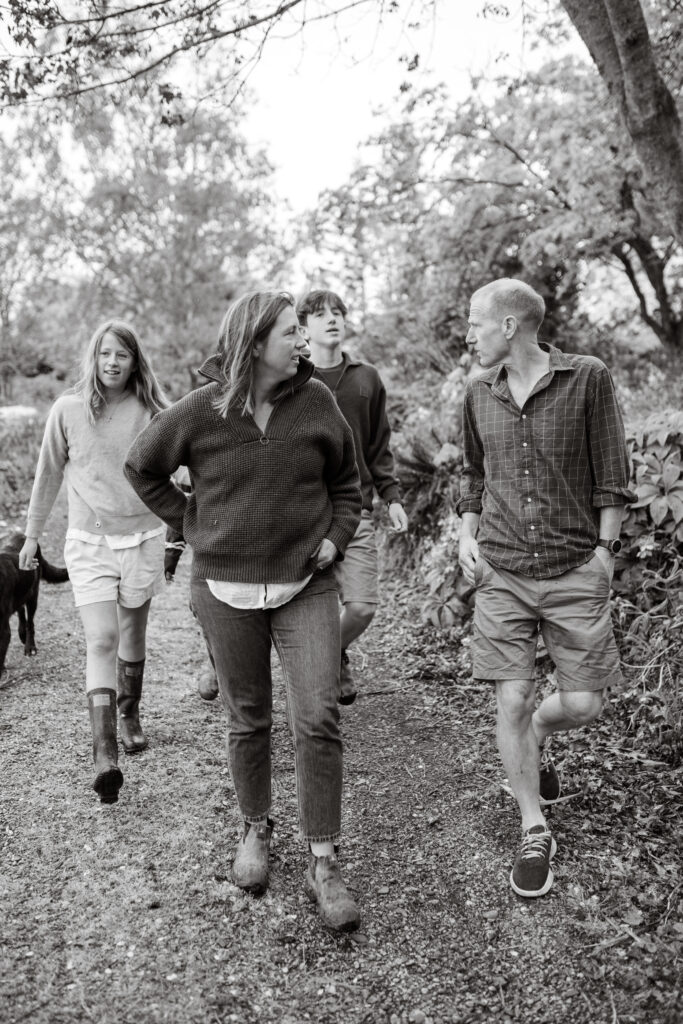
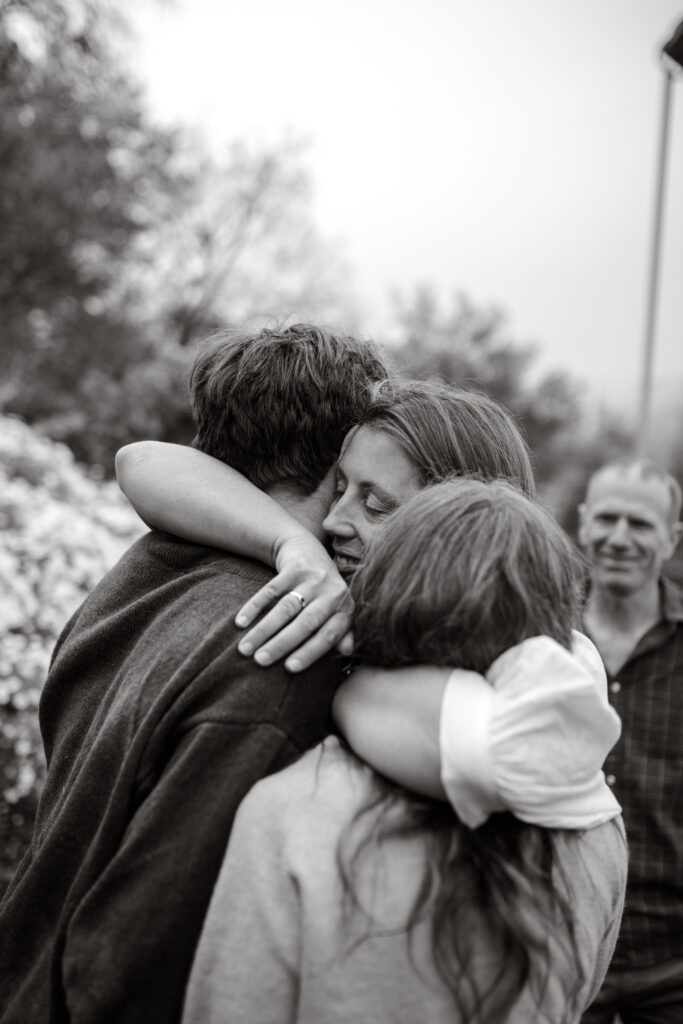
Left above. “When I knew that I was marrying a farmer, I deliberately chose to be all in,” says Kate. “I learned absolutely everything I could about our farm, about how it runs, and about the sector. I didn’t choose it as a career for myself, but by marrying into it, I deliberately chose to be all in and to embrace it.” Right above. “My kids all board now, and I’m away so much that I’m quite fierce about having good family time in the weekends,” says Kate.
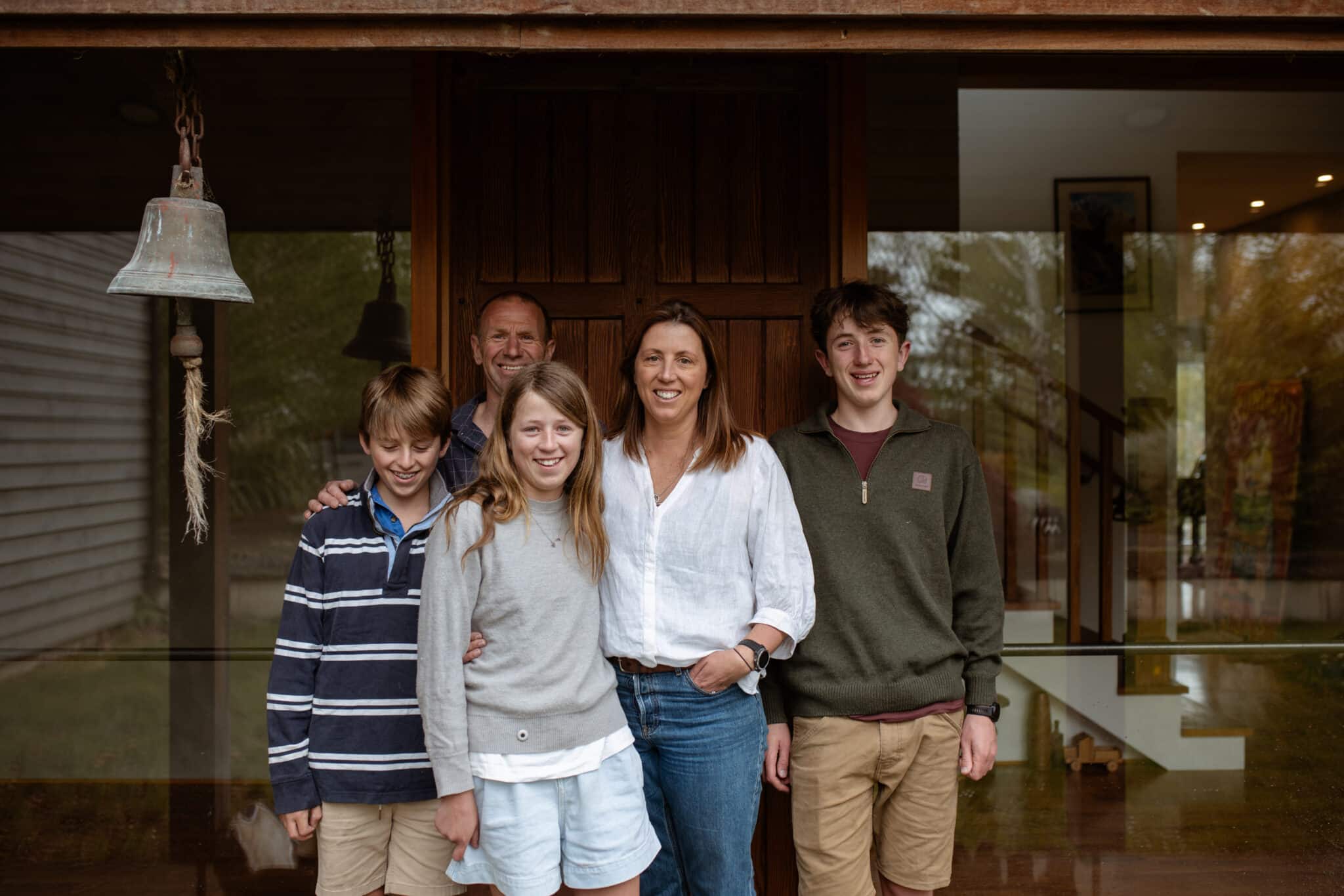
Above. “David is amazing. We are very fifty-fifty on parenting, so he picks up a lot of slack. I couldn’t do what I do if he wasn’t quite so active as a parent.”
Farming is a real partnership, right?
Yes! I chose my husband, and he came with this life. And I do also think that happiness is a choice. You can choose to wake up every day and choose to celebrate what you’ve got. I’ve always been very deliberate in that if I was going to marry a farmer, I was going to be a farmer. I’m not saying I’m helpful on the farm by any stretch, but there’s more to being a farmer than actually being out there with your dogs. There is so much more to it. And it’s around decision-making and support, and even just understanding what is happening. Like most farmers, my husband has times where it gets incredibly stressful. And so it’s making sure you’re actually understanding that, so you can share or be part of that.
Beef + Lamb New Zealand is a Shepherdess partner, and we are grateful for their longstanding support. The Beef + Lamb New Zealand Awards will be held in Christchurch on 20 May 2026. Finalists will be announced in February. For tickets and more information about the awards visit Beef + Lamb New Zealand.
If you enjoyed this story, please share with someone else.
This story appeared in the Raumati Summer 2025/26 Edition of Shepherdess.
Get your hands on a copy.
Related Stories

The High Road
Winter weather makes for wrapping up warm. We took the high road to Kawarau The Remarkables for this photoshoot – a place where sheep wander and a woollen coat proves
Emma Sage on Creating an Online Gardening Journal
Emma created an online magazine for the “garden-curious” when her two youngest children were small, after a previous career in marketing and brand management.
Smoky Split Pea & Bacon Soup
This is a lifesaver in the winter - it’s simple, makes a huge amount and freezes well.
Rose Shuttleworth
On the last page of Shepherdess, we celebrate memories and reminiscences. Here, from their home in Akaroa, Rose Shuttleworth, 78, reflects on over fifty years of marriage to her husband,