


24 November 2025
An Ordinary Day
Mano Whenua. Heartland.
WRITER: FELICITY CONNELL
photographer: FRANCINE BOER
It was just an ordinary day in the Strath Taieri Valley for Anna and Bevan Wilson when Bevan had an accident while working on their farm. Although it was serious, the couple are mindful that the situation could have been far worse. Now, one year on, Anna and a fully recovered Bevan reflect on how they handle on-farm risk.
With thanks to FMG for supporting the production of this story.
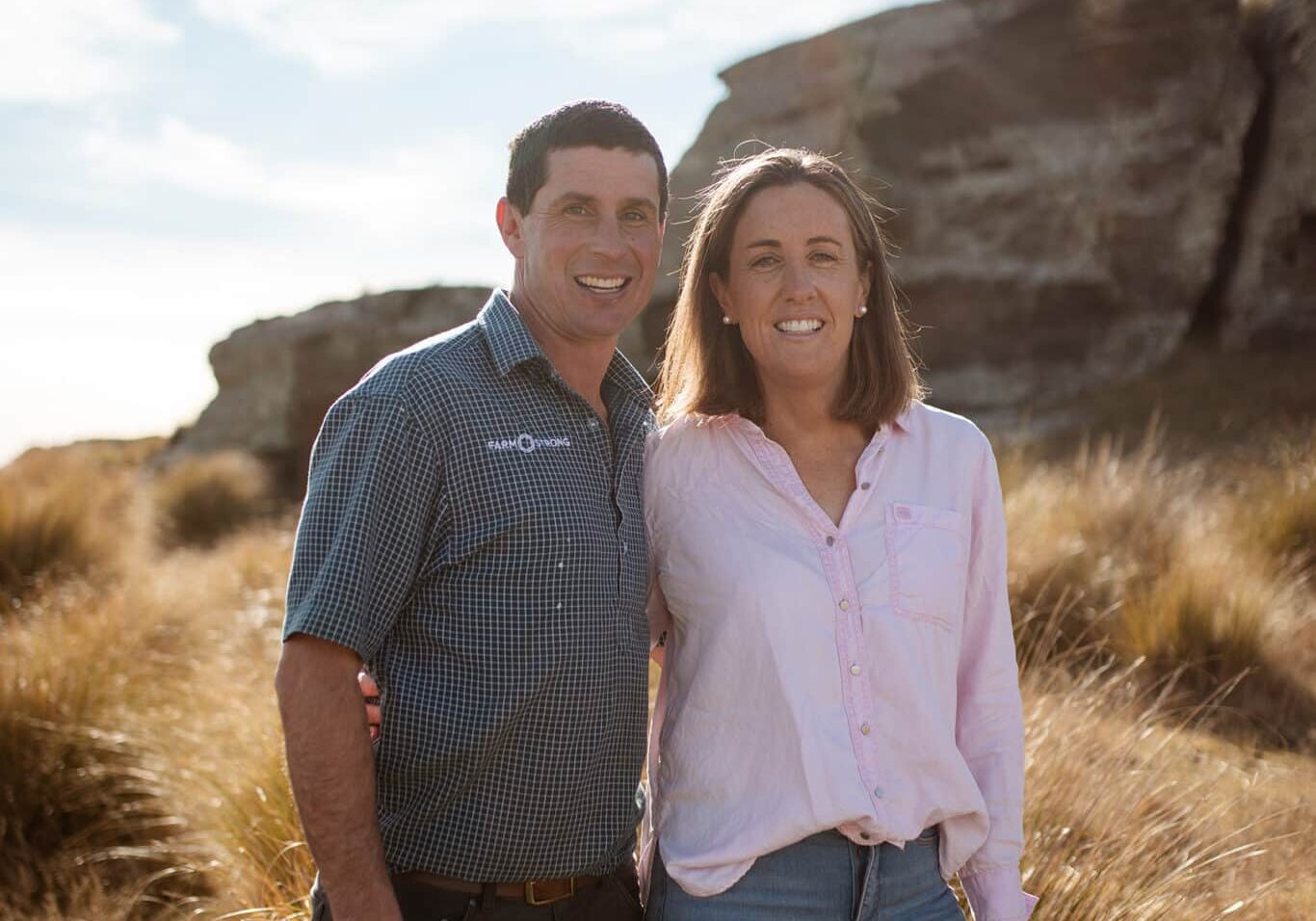
Top Image. Anna and Bevan love the unique landscape of the Strath Taieri Valley.
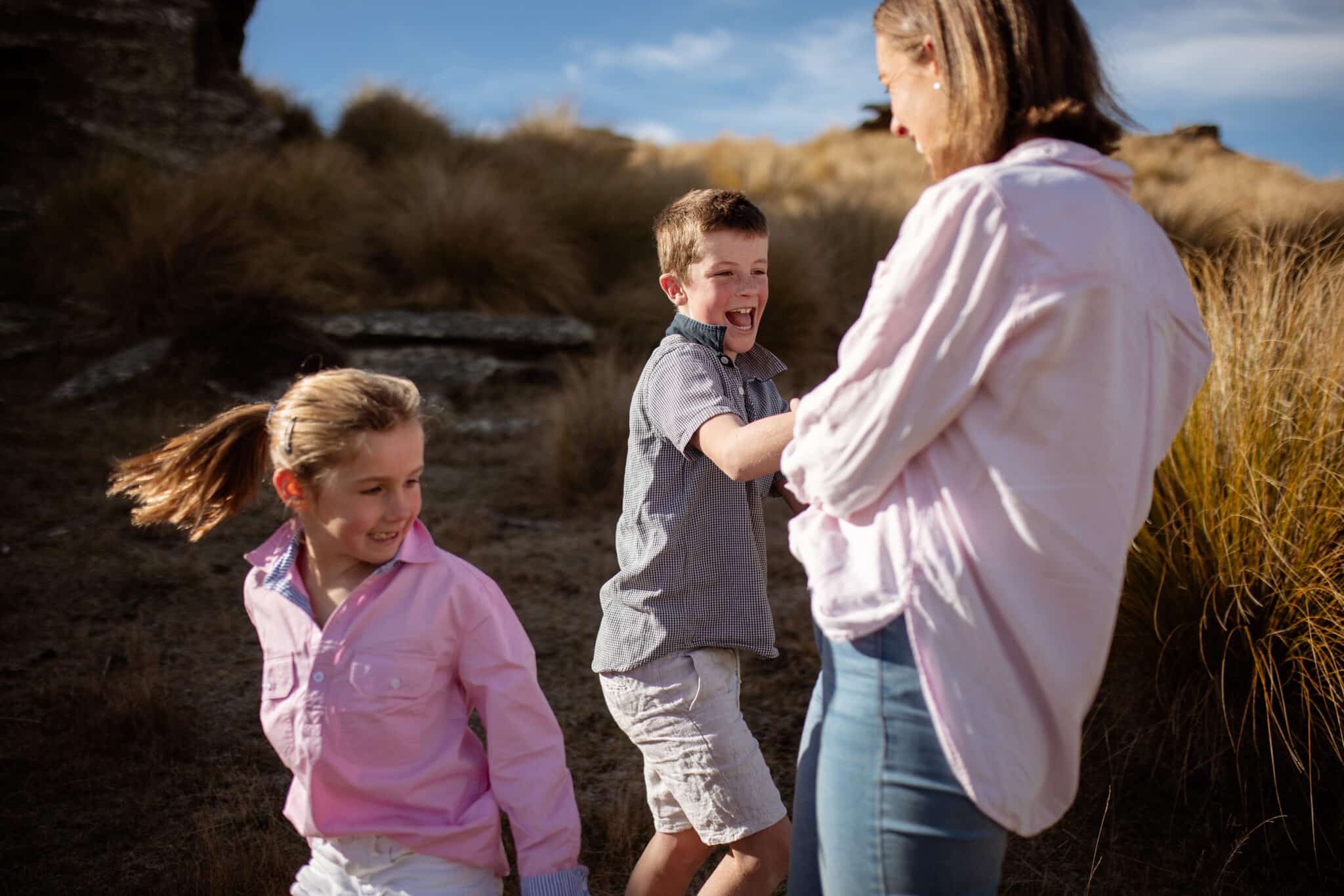
Anna, 39, and Bevan, 40, are a typical young farming couple with plenty on the go. Their children – Edward, 11, Arthur, 8, and Greta, 6 – go to school in nearby Middlemarch and love mucking around on the farm or riding their motorbikes. Life is busy: Anna and Bevan run sheep and cattle across two properties and offer boutique accommodation in a historic schist cottage on the banks of the Taieri – traditionally known as Taiari – River. Anna also juggles a full-time role off farm, and both are involved in numerous community groups.

Looking back, what started as an ordinary day in July had its roots months earlier. Bevan can trace back why it was just him and their Mt McKay farm manager Charlie Smith on the Strathavon farm that day. “We’d had a really dry year and started feeding out in March. By winter, all our lambs were gone and we were down to capital stock. Alistair Tisdall, our full-time fencer and tractor driver, was laid off for winter, and we decided to handle the feeding out ourselves. So between Anna, Charlie and me, we were doing everything. Anna and I would be up at five in the morning, out feeding silage, with Anna following in the truck with the grain. We’d aim to have everything done by eight so she could take the kids to school and get to work.”
That morning, Bevan hadn’t said where on the farm he was heading. “It was just our usual ‘See you babe, love you,’ and away you go. There’d been a bit of snow and rain, and it gets very greasy when it’s wet, so really only a side-by-side or a tractor can get in there,” he recalls. “Charlie and I had just gone up the hill to shift a mob of sheep. Charlie went down the ridge, because he’d found a niggly ewe on the other side of the rocks – he was quickly out of sight and earshot of me. I went up, and had a bit more speed than was ideal for the conditions – I hit a tussock and the Can-Am flipped, landing on top of me. I was partially thrown out on the passenger side. I had one arm free, but most of my body was pinned inside. I thought, ‘I’m not in a very good position here.’”
After about fifteen minutes, Bevan realised he could reach his phone – but accidentally called his accountant. “I was like, ‘I don’t want to talk to him!’ My mouth was all messed up, I had blood everywhere, and I couldn’t see. I had to hold the phone up high to get one bar, and when I brought it back down, there’d be no service. It took a while to find Anna’s number. When I got through, I just said, ‘I’m dying.’”
Above: Anna says that following the accident, “The support from our community and friends was amazing. We had people drop off firewood and baking. It was quite overwhelming, but it was lovely. It was really kind.”
It was lucky Anna picked up. “When I’m working, I don’t answer my phone,” she explains. “I was supposed to be in a meeting at 3pm, but it was delayed about five minutes. And that one time, just because the meeting was running late, I answered my phone.”
Adrenaline kicked in and Anna focused on what she could do. “You have to try and control the situation,” she says. “So I thought, ‘What’s the best thing I can do?’ And it was to get a helicopter to him, because I knew service is patchy up there.”
She rang 111 and said, “I need a helicopter. My husband just phoned to tell me he’s dying. I don’t know where he is, but he’s at the top of the farm.” She knew time was critical. “It had been snowing, it was muddy, so no ambulance or fire vehicle was going to get up there. And even if we could drive, I had no idea where on the block he was. The emergency call was frustrating. They wanted coordinates, and I was like, ‘I don’t know – can you just get a helicopter in the air?’” Through it all, one thought kept running through her head: “He’ll be okay. He’ll be okay.”


Left. Bevan says that you can have all the systems in place for managing on-farm risk, but the biggest shift is in your own thinking.
Right. “I’m not sure if our daughter, Greta, is going to be a farmer because she doesn’t like coming out with Dad on the farm. But the boys love it – that’s all they talk about,” Bevan says.
Above: Bevan and Anna with Edward, Arthur and Greta. Bevan says, “The kids knew that I’d gone in a helicopter to the hospital, and they were just, ‘Oh yeah.’ But then when I came home the following day, they said, ‘Hi Dad’ – and then just stopped and looked at me properly and said, ‘Oh, you look a bit funny with a big fat lip and missing teeth,’ and then they just carried on as normal.”
Anna figured out the GPS coordinates – and around the same time, Charlie heard Bevan’s cries for help. “Charlie was incredible. He’d actually been in an accident where he was pinned by the leg for six hours, so he knew what it was like. He took the weight of the Can-Am and I slithered out. He gave me his jacket – I just huddled next to a rock. He got on top of the rock, got signal, and knew how to work the GPS,” Bevan recalls. Charlie was also able to update Anna once the helicopter arrived. “Charlie said Bevan walked to the helicopter, so that was a good sign.”
Bevan was flown to Dunedin Hospital but was back doing light duties around the farm within days. “I got out of hospital that same night at midnight. I was diagnosed with broken ribs and had about fifty stitches around my mouth. I went back to hospital the next morning and got some wire around my teeth. Then I spent the next day sitting at home and all I got was ‘what ifs.’ And I was like, ‘Ah, this sucks.’ I wasn’t in that much pain. Mentally, it was better to just carry on. There’s nothing worse than sitting around – and my arms and legs were fine.”
“It was typical Bevan to want to get straight back into it,” Anna says. “He’s no good if he’s not busy. It was so much better for his recovery overall that he was able to be active outside.” Anna is mindful of others where the outcome wasn’t as positive as theirs. “We’re lucky – really lucky. We know of others who have had farm accidents that didn’t end well. Whether it’s farming accidents or something else, we are so aware that one moment can change everything. For us, it turned out okay – but we don’t take that for granted.”
Even before that day, health and safety was a priority. “At every staff meeting I always ask, ‘Is there anything that you see that could be a risk, or anything you’d like to bring to our attention?’ At a recent meeting, Bevan brought up the slippery tracks, so we’d had a discussion about just taking the extra time, and don’t go anywhere you feel uncomfortable.” Their fencer and tractor driver, Alistair, is now back on board, and they’ve recently taken on Jack Tisdall, an eighteen-year-old shepherd. Anna and Bevan believe it’s important that less experienced farm workers have access to training. “Some of the previous generations of farmers have that ‘they’ll be right’ attitude – but is it the right way? That offsite training helps build skills to support the practical stuff.”
“Whether it’s farming accidents or something else, we are so aware that one moment can change everything. For us, it turned out okay – but we don’t take that for granted.” – Anna
Bevan hopes others can learn from what happened to him. “When you’ve got a real-life example, people listen. They’re like, ‘Oh shit, this stuff does happen.’ And rurally, this stuff happens a lot. I was fortunate I came out all good, but the number of ATV accidents on farms is huge. My viewpoint is that yes, accidents happen. But if you can lower the likelihood – through your own attitude, systems and education – and also reduce the harm if they do happen, then you’re doing something right. I did notice the other day I was in a tough spot and I slowed down and reversed out and went a different way,” Bevan says. “It’s mainly just telling yourself, ‘Hang on, just slow down a wee bit.’”
Bevan was only out of action for a couple of days, but they’ve got systems in place if he’d been off farm longer. “We record a lot on Resolution. We’ve got great staff who’ve been with us for a while, so there’s continuity. We also work with good technical field reps – they know how everything works. And it was a good time of year – most of the work was feeding stock,” Anna says. They also take confidence from knowing they have the right level of insurance. “Insurance is something we do have a lot of,” Anna says. “Although it didn’t kick in after the accident because luckily Bevan was able to get back out on the farm almost straightaway. But it is good knowing we do have it as a backup if anything happens to either of us in the future.” A year on, Bevan remains pragmatic. “You can wrap yourself in cotton wool, but there’s always a practical side to farming, and a certain element of risk. At the end of the day, you’ve got to get the job done – but you’ve also got to be there tomorrow to do it again.”
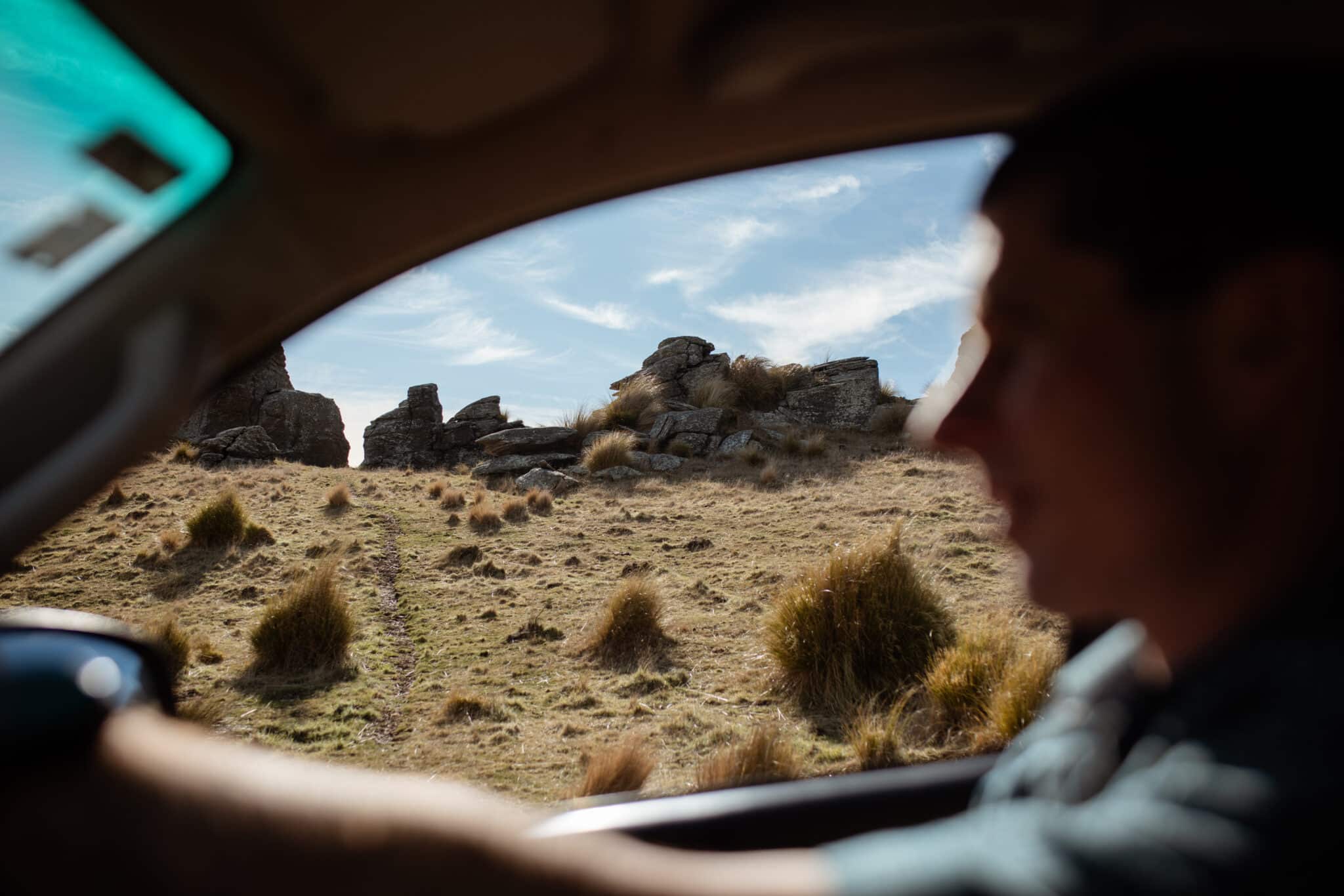
“It quite easily could have been worse – two inches different and the Can-Am could have landed on my head, rather than across my neck. If I had been thrown out the driver’s side, rather than across and out the passenger’s side, I could have hit my head on a rock,” Bevan says.
ACCIDENTS HAPPEN
Abby France farms sheep with her husband and two daughters on a small block in Woodbury, South Canterbury, and is a Client Advice Manager at FMG. She shares her top tips on caring for your greatest asset – your people.
Look after yourself. Farming is one of those jobs where the work doesn’t stop just because you’re hurt – or worse, gone. Stock still needs to be fed, crops still need to go in the ground, and the bills don’t pause while you’re laid up. That’s why ensuring your own wellbeing is just as important as keeping the tractor serviced.
Have a plan. The reality is that an accident’s impact goes far beyond the day it happens. There’s the immediate disruption of work, but also the stress on your family and team who suddenly have to pick up the slack or make big decisions under pressure. That’s why every farming business should have a plan for how the operation will keep ticking over if the unexpected happens.
Start with the basics. Provide clear instructions for daily tasks and contacts for contractors or neighbours who can help, and designate decision-makers for different aspects of the business. Ensure key documents and alternative authorities on accounts are accessible, not just in your head or locked in your ute’s glovebox.
Arrange insurance. Including insurance in your plan can make a significant difference. Life cover can help clear debt or secure the farm’s future for the next generation. Income protection or trauma cover can provide an income if an accident or serious illness sidelines you, ensuring bills are paid and daily operations can continue. Medical insurance can help you get treated and back to work faster.
Prevent accidents. Of course, prevention is equally important. Before starting any job, perform pre-start checks on vehicles and machinery, and check in with yourself. Are you focused, tired or distracted? Give yourself time to reset. Before turning the key or starting a job, count to sixteen – that’s one second for each New Zealand farmer who didn’t make it home from work last year. It’s a sobering thought to bring home the reality of what can happen if you cut corners to save time instead of putting your safety first.
Expect the unexpected. When you’re busy farming, it’s easy to forget that you are your farm’s most important asset. So plan for the unexpected, protect yourself, and keep your farm safe and sustainable, today and for generations to come.
FMG was formed 120 years ago by farmers for farmers. As a mutual insurer, they are one hundred per cent New Zealand owned and operated and here for the good of the country. FMG wants to create awareness that when accidents happen, the impact goes beyond claims – it disrupts farms, businesses, and takes a human toll. That’s why FMG have supported the production of this story, as part of their commitment to helping New Zealanders avoid the avoidable. For more information about FMG, visit fmg.co.nz
If you enjoyed this story, please share with someone else.
This story appeared in the Kōanga Spring 2025 Edition of Shepherdess.
Get your hands on a copy.
Related Stories
The Power of Planning
Mum-of-three Janelle Downs, 34, packs her days with raising a family, farming, teaching and community work from her farm near Strathmore in Taranaki.
On My Wall
Sue Ross talks about the story behind this painting of a street scene of old Dubai that hangs on her wall.
First Responder
Megan Shirley’s family has a long history of volunteering in the Lumsden community. It’s a tradition that Megan, 47, a former wool classer now working for PGG Wrightson, has upheld
Jessica & Courtney
Jessica Chamberlain and her sister Courtney (Ngāi Tahu) are the sixth generation of their family at Hadstock Farm in Selwyn and the third generation to have attended St Margaret’s College