


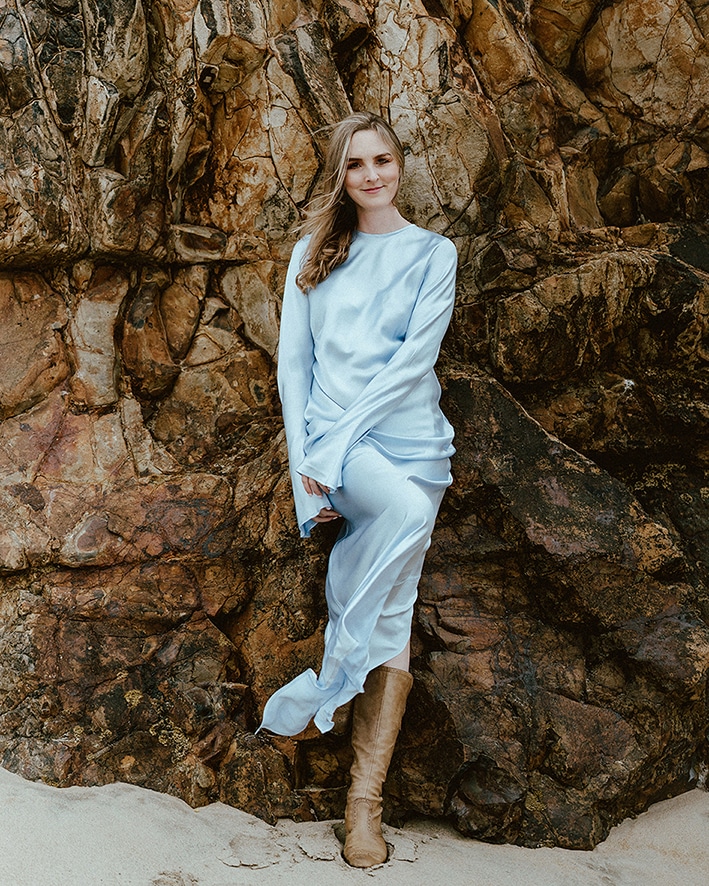
What first sparked your passion for problem-solving? As a student at Southland Girls’ High School I joined a Young Enterprise team. It lit a flame in me that has never stopped burning. Coming up with a business plan and pitching it to an audience combined my joy for performing arts and knack for mathematics. I got the opportunity to compete in national case competitions and was selected to compete internationally, travelling overseas for the first time to Singapore. It opened my eyes to new cultures and I made mates for life. Being awarded Southland Young Entrepreneur of the Year in 2010 reinforced that this is something I am good at.
Where did that motivation lead you in your community? When Mondelēz announced the closure of the Dunedin Cadbury factory, I went along to help livestream a community meeting. I have to confess that I wasn’t really paying too much attention until I heard the words “business plan” and my ears pricked up. I’m happy to be that person who comes up with a plan – when I did Young Enterprise, there was a newspaper article that referred to me as “Anna the planner” and the nickname has kind of stuck! So I volunteered to help retain chocolate making in Dunedin, using the motivation from the community to take action. We wrote the plan for an equity crowdfunding campaign that eventuated in two million dollars and thousands of shareholders who purchased a small craft chocolate maker and expanded it to a larger factory. I joined the team full time and got the chance to go cocoa sourcing in Papua New Guinea and the Solomon Islands, connecting with growers and establishing an ethical value chain. It was so rewarding. I learned about the power of the skills I learned at school and wanted to use them for the good of the community.
Your childhood was really nature based. How has that shaped the way you see your work in conservation? I grew up in Southland and spent time in the bush hunting, at the beach and doing a lot of fishing. When you grow up in the natural environment, you care for it deeply. I don’t think of my new role as a job in conservation – I am working in forestry, fishing and farming to find sustainable solutions for the benefit of the communities that are connected to the well-being of the hoiho. I did an interview once and got called an activist! Te Tautiaki Hoiho Yellow-eyed Penguin Trust started at a time when applying sustainable practices to strategic thinking was considered radical. Now that kind of approach is more common practice. It might feel like we’re all swimming in different lanes, as stakeholders will choose to approach conservation differently, but I think actually we’re all heading in the same direction. We all want a healthy ocean.
How does this vision come to life through the work of the Trust? The founding members recognised that it wasn’t just about the penguins – it was about protecting the land and coastal ecosystems. We protect nearly 1,000 acres rich in biodiversity – through eco-seed sourcing, reforesting, predator control, researching, and advocating for biodiversity. A holistic approach to conservation also means working together with other stakeholders, industry, and business partners like the Mainland brand, who have prioritised their support for what we do right from the start. The Mainland brand partnership has been key to promoting this cause nationwide and in making the yellow-eyed penguin a Kiwi favourite, earning the title Bird of the Year in 2024.
Who has helped to carry this forward through the years? We’ve had many hardworking volunteers, staff and trustees involved over the decades. Forty years ago, two of our founding trustees, Moira and Lala, were out for a walk at Red Beach in Waitaki, near Bobby’s Head, and they saw hoiho standing around amongst the cows. They said to each other, “We have to do something about this.” They put out a wool carpet for the penguins – who loved it! Moira and Lala got together with their friends, purchased that land and started planting trees, now known as Tavora Reserve. We continue with this way of working today – protecting land for ecological restoration and to provide access to the breeding grounds. Quite simply, if the Trust didn’t exist, we wouldn’t have hoiho walking our shores today.
What’s your vision for the future? I genuinely believe there is a generation that continues to push for sustainable change and challenge the status quo. This generation is looking at sustainable ways to collect kaimoana or diversifying farm ecology by beekeeping on the back block. The big question for me now is, “How do we continue to empower young people to create the change they want to see?” I honestly believe that it starts with our communities and the courage to be curious.
Glossary. Hoiho, yellow-eyed penguin. Kaimoana, seafood.
This story is supported by Te Tautiaki Hoiho Yellow-eyed Penguin Trust. To learn more about how the Trust works alongside the rural community to protect the hoiho, visit yellow-eyedpenguin.org.nz.
This story appeared in our Takurua Winter 2025 Edition.
Related Stories
Gardening in Omau Cape Foulwind
A chance to flee the confines of our suburban Richmond home to remote Cape Foulwind in Buller ignited a fire in my husband, Rowan, and me. The windswept coastline and
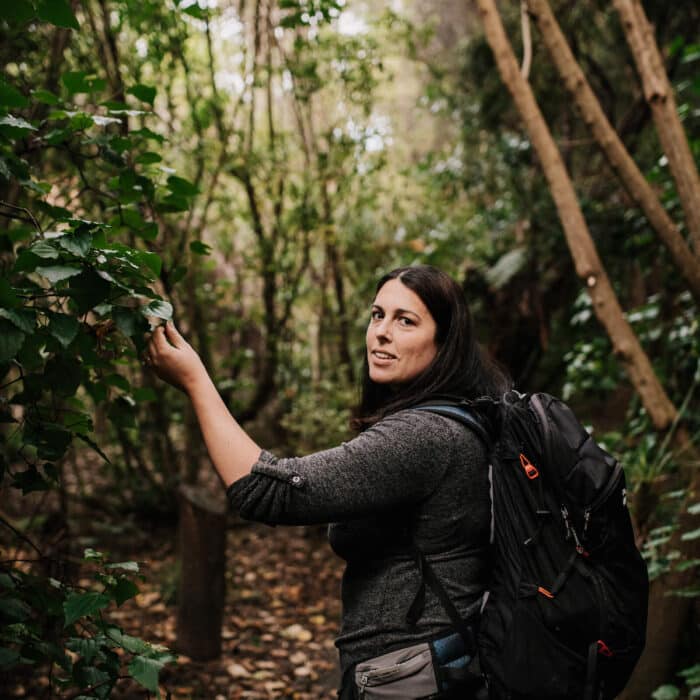
“Let’s put a boardroom table in the middle of the bush and clear the clutter of every day.”
Kylie loves to share the wonders of the Aotearoa bush through her two businesses, Nourish & Nosh Tours and The Bush Boardroom.
Out Now
Twenty-Sixth Edition
Our beautiful Takurua Winter 2026 Edition is out now.