03 May 2026
Finding The Strength
Wāhine Whāmamao. Far From Town.
Interview: Arpége Taratoa-Rangikura (Ngāti Raukawa, Ngāi Te Rangi, Ngāpuhi And Ngāti Rārua) in conversation with Jenny Sandford
photographer: FRANCINE BOER
Shepherdess recently visited Mātāwai sheep and beef farmer Jenny Sandford, 40, for our new podcast, Far From Town, made in collaboration with RNZ. Here is some of her conversation with podcast host Arpége Taratoa-Rangikura.
Note: this story includes discussion of pregnancy loss and grief.
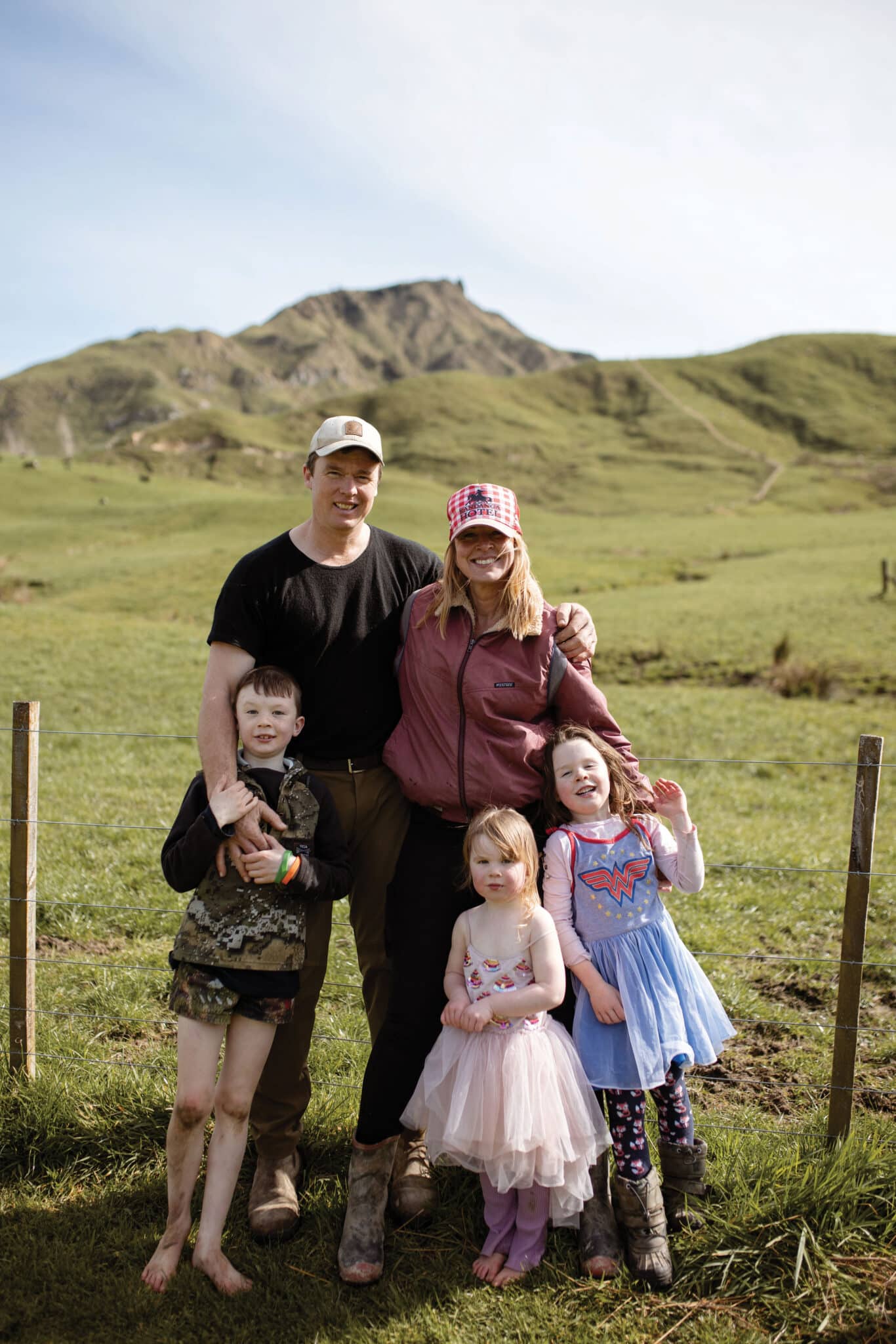
We first met Jenny when she came to The Shepherdess Muster at Mōtū, where she impressed us with her energy on the dance floor. But there was more to Jenny than being a dancing queen – she shared with us that she and her husband Anthony had lost their first daughter, Nina, twenty weeks into the pregnancy. As she had felt quite isolated during that experience, she was willing to talk about her journey of grief and healing in the hope that this might help someone else. So photographer Fran and I spent a day on their farm at Mātāwai, Te Tairāwhiti, with Jenny, Anthony – known as Ants – and their children, Darcy, 7, Ada, 5, and Grace, 3. Jenny shared with us what losing a baby has meant for her and how being able to visit Nina’s grave has helped her and her family grieve.
I don’t visit Nina’s grave as much as I would like or thought that I would. I guess I’ve got to a place in my grief, or as a mother to Nina, that I know that it doesn’t matter whether I go to the cemetery or not because she’s not really there. She’s in my heart and she’s everywhere – I don’t have to be there for my love to be there for her, if you know what I mean.
Ants and I were at the cemetery a couple of days after she was buried – we would go there all the time, like every single night. And in my head, I was like, “This is unsustainable – when I have more kids, I’m not going to be able to get here as much as I would like.” That’s a thought I had soon after we buried her. And it’s obviously come to fruition – we have more kids now and we just can’t get there like we would like to, but we drive past and we have a wave. Obviously, every birthday we do, or if it’s a special occasion, like Mother’s Day, or sometimes if I’m just feeling low and I want to connect with her, I’ll wander over. It’s just different all the time.
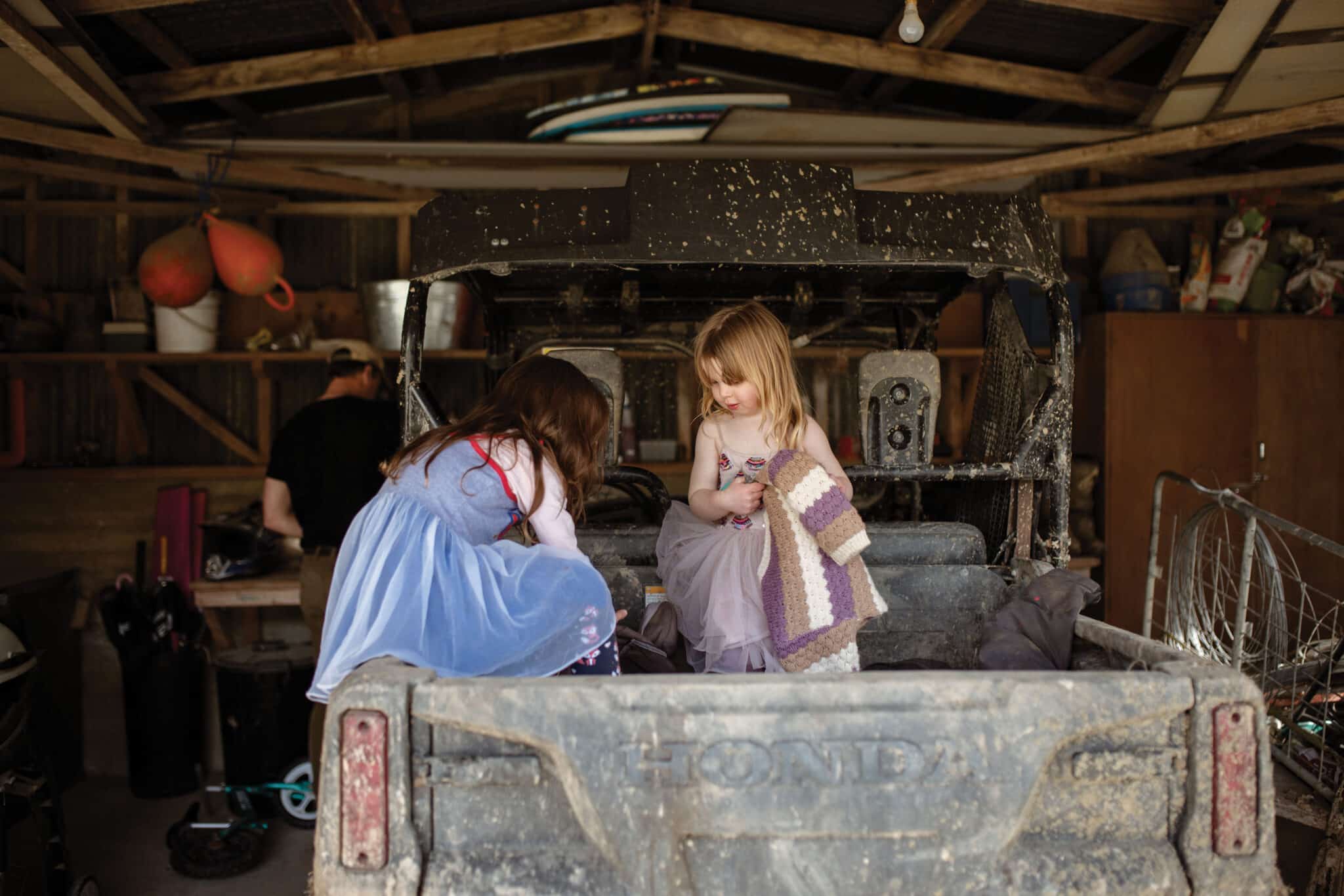
The way I deal with grief and the loss of Nina has changed. When I first lost Nina I knew one other mother who had lost a child during pregnancy. I had no idea that it was actually just like the loss of a child. It’s not the loss of a pregnancy, it is the loss of a child. And you can only know that when you’ve gone through that or when you’ve had children yourself. Before that I just had no idea. Obviously it is the most horrible thing, because I think to love a child is the highest form of love. To lose a child, it’s the worst thing that I think could happen to someone. I would rather die than her die. So I was very vocal about losing her, and I would post things online and I would share about Nina. And that to me was – is the word cathartic? So hearing other people’s loss, or hearing about how they understood, or mothers reaching out, was healing to me. And then that got to a point where it wasn’t – I felt like I then kind of owned my grief. It wasn’t about how other people viewed Nina – it was my connection with her. I got to a point, well, I’m almost at a point – I honestly thought that I would never be able to feel joy again. And it is a bit of a catch because the times when you feel the most happy are when you look around and you want your family or your friends with you. Then immediately sometimes you’ll feel sad, because when you feel the most joy is when you want to share that. And that’s when you think of your babies or the people that you love who aren’t there.
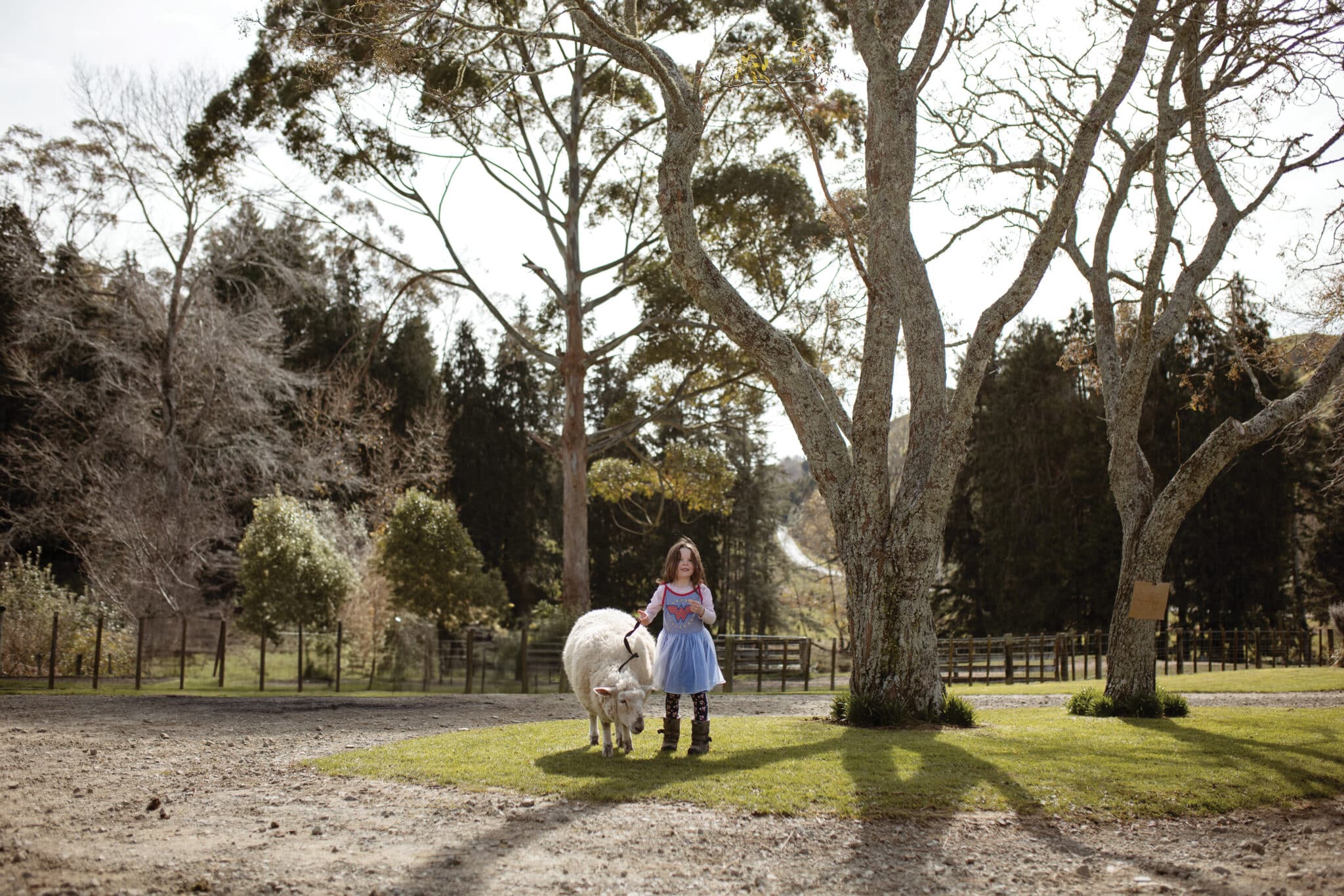
Above and below. The children play with the pet lamb they named Jumpsuit Popcorn. “I loved how I grew up, and I wanted that for my kids,” says Jenny. “I know that we are very lucky. I mean, obviously the opportunity happened with us being in farming, but I just still feel so lucky that they get to have this to run around in.”
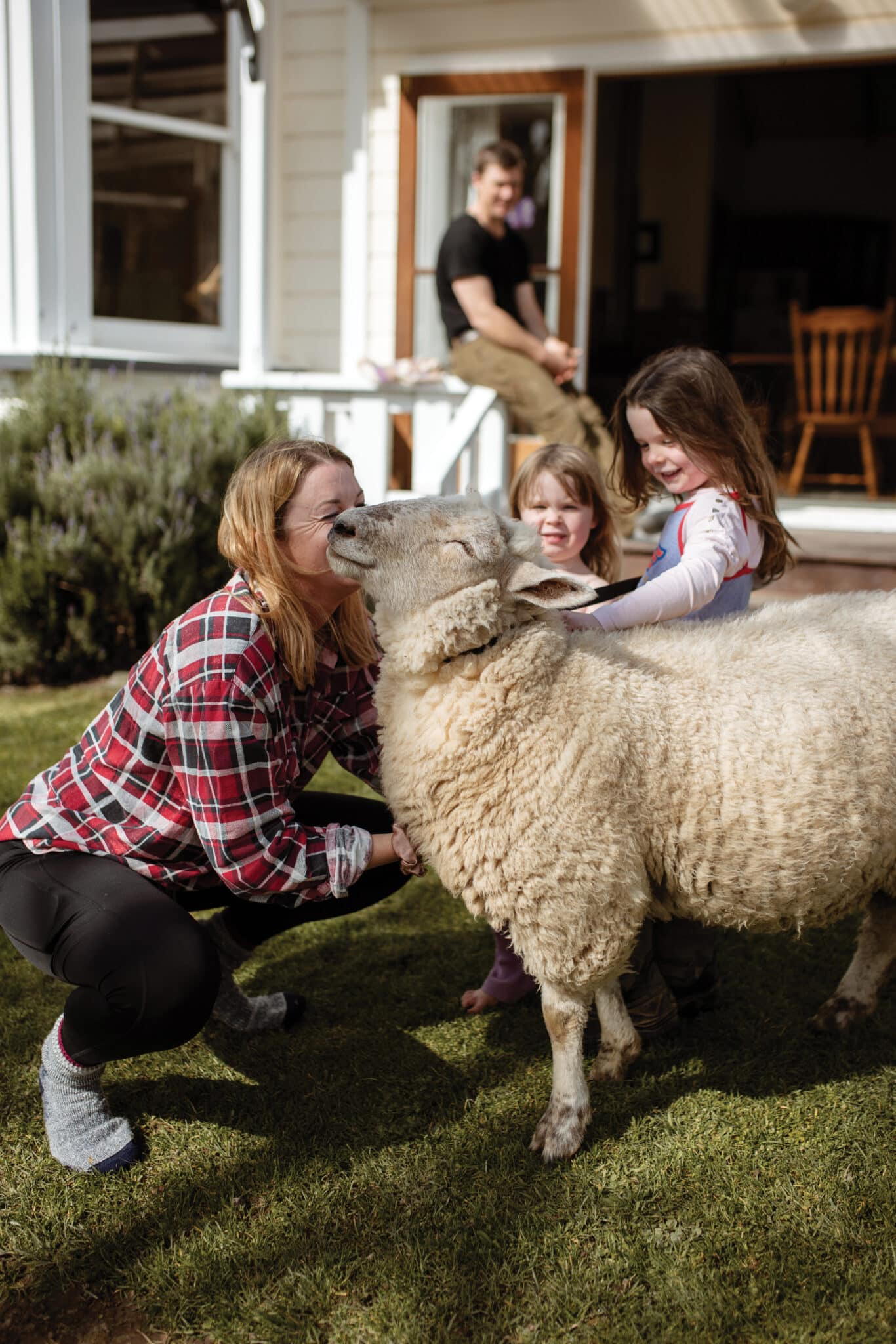
But again, it comes down to self-preservation, and I’m just learning that. What is a life where you can’t experience joy? So you just have to try your best to do that and know that that’s okay. It doesn’t mean you don’t love them, it doesn’t mean you forget them. But, also, it doesn’t matter if other people think you have forgotten and you are enjoying your life, because it’s not about others. You know you have that strong connection with your child – that it will never be gone and you can still live this life and find happiness. I would like other mothers or people who have gone through grief to know that it truly is possible. And it’s also ever-changing – some days you’re like, “Sweet as,” and then all of a sudden it hits you hard, like the first day.
I used to hate it when people say time heals, because it used to be so raw. But it really does feel like time just does help. Also, you have to have a strong mind – you have to stop letting your body and your mind relive it. And I guess each of us has our own journey to find what helps us. Everyone is different and you just have to find what works for you.
I’m just at a place where I know that she will always be a part of me. And science proves that – when you’re pregnant with someone their DNA mixes with your DNA. So I always knew, as soon as I had her, I was like – I am changed forever. I could never explain why that was. But I love how science proves that you are actually physically changed forever. I knew I was spiritually changed forever and mentally changed forever, but physically changed forever – that kind of secures that connection that I’ll always have with her and that will never be taken away.
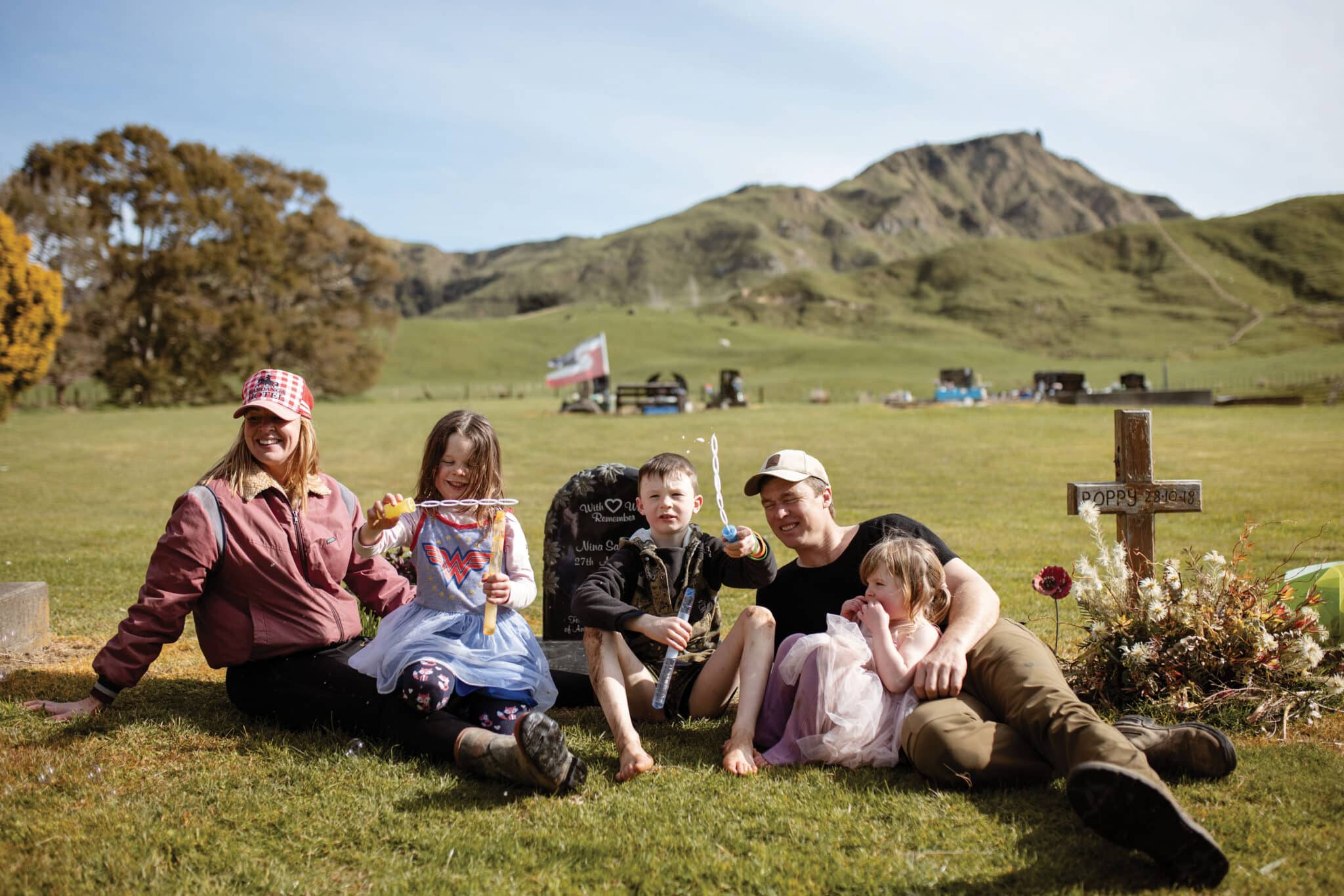
Above. The council-owned cemetery where Nina is buried. A ten-minute motorbike ride across their farm, it feels really personal to Jenny and Ants – Poppy, Jenny’s sister’s baby, is buried there, too. “I remember a long time ago, my dad said to me, ‘When you have kids, you’ll change your perspective.’ And I said, ‘On what?’ And he said, ‘Everything,’ and he was so right,” Jenny says. “But I think it’s just happened organically for us to be like this. I think Nina taught us so much about ourselves and about others and empathy and just figuring things out.” Jenny says of the cemetery, “It’s the perfect place. When she was buried here, Dad made sure that there were sheep all up there in the paddock, you know, behind. And that was just special in itself to me that he had put all the sheep up there. I’ve got so many photos of her with the hill in the background – well not of her, of her headstone – of us together. Just knowing that she’s here with that mountain behind her, it feels so nice.”
Continue reading the story in our Ngahuru Autumn Edition 2026 or listen to Jenny's episode on Far From Town.
Need to talk? Free call or text 1737 any time for support from a trained counsellor. There’s also a list of services and resources at Perinatal Anxiety and Depression Aotearoa. See pada.nz
If you enjoyed this story, please share with someone else.
This story appeared in the Ngahuru Autumn Edition 2026 of Shepherdess.
Get your hands on a copy.
Related Stories
Going with the Flow
When community members share success stories, trade best practices and encourage others in protecting the health of their river, sustainability actions become more than a sum of their parts.
Bruschetta
Three plant-based bruschetta toppings for whenever you need a quick and easy starter for a summer meal.
Fiona Collis on Reaching Beyond Her Local Patch
Fiona is a fibre and textiles artist using traditional knowledge and practices handed down by her ancestors to experiment with traditional Māori textiles.