


27 May 2026
Generations of Care
Wahine Ahuwhenua.Woman Of The Land.
Writer: As Told To Arpége Taratoa-Rangikura (Ngāi Te Rangi, Ngāti Raukawa, Ngāpuhi, Ngāti Rārua)
photographer: Maija Stephens (Rongomaiwahine, Ngāti Kahungunu Ki Heretaunga, Ngāti Rangi)
Robyn Stephens, a Te Rohe Pōtae King Country farmer and grandmother of nine, took up dog trials at the age of fifty-nine, following in her father’s footsteps, and at seventy-six is still working as a casual musterer. Here, she reflects on her connection to the past and how her whānau Māori has influenced her.
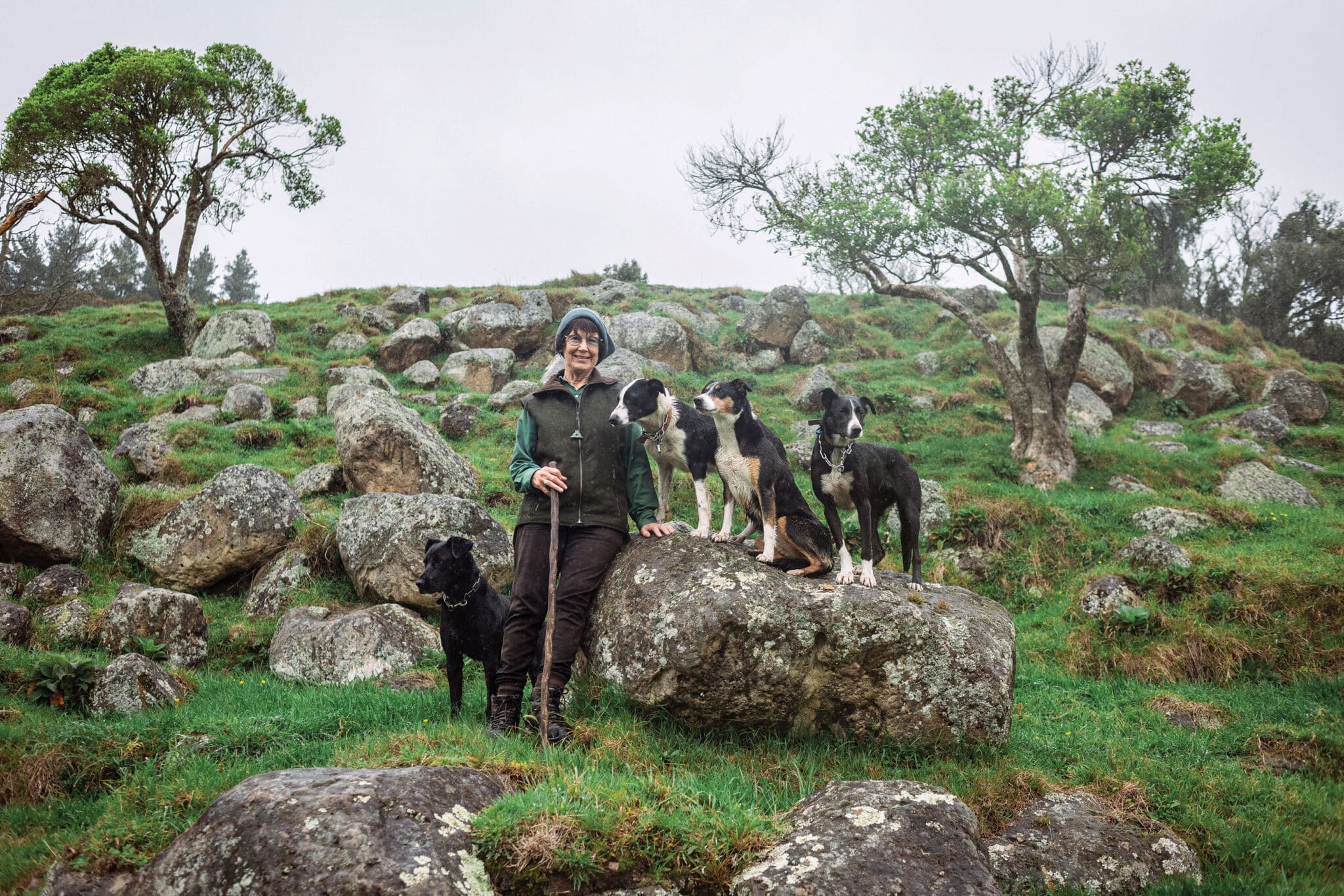
I’m Robyn Stephens, formerly Robyn Knight, and I grew up exactly where I’m living now. It’s quite a remarkable story, our farm. My maternal grandfather was a Boer War veteran – he went to South Africa, taking his horses with him, and upon return, he was granted, or balloted, seventy-three hectares of land which was covered in fern. He was in close contact with the original custodians of the land, and as a young bachelor, he’d share his resources with Māori still living there and they would share theirs – there was a mutual respect. He eventually married and raised six children with my grandmother. My mum, Peggy, was the youngest, and she was very deeply connected to the land. The others drifted off and got married, and she remained, marrying my dad, Les Knight, who was a shepherd in the district at the time. He was a Second World War veteran, and they, in turn, raised six children – three girls, then three boys.
I think Dad was impatient to have a son, so he called me Bob. I was a tutū kind of kid, and my mum used to say, “Oh, Les, can you get this child out of my hair?” So he took me everywhere – on his horse and in the old army jeep. We would go shifting stock and fencing and doing all the chores that you just did on a farm. My sister Carol and I spent a lot of time with puppies, kittens, chooks and whatever – just outside in the paddocks, climbing trees, exploring and just taking risks how children used to do. I was outside every day, really, and I still am, apart from when we have family visit.
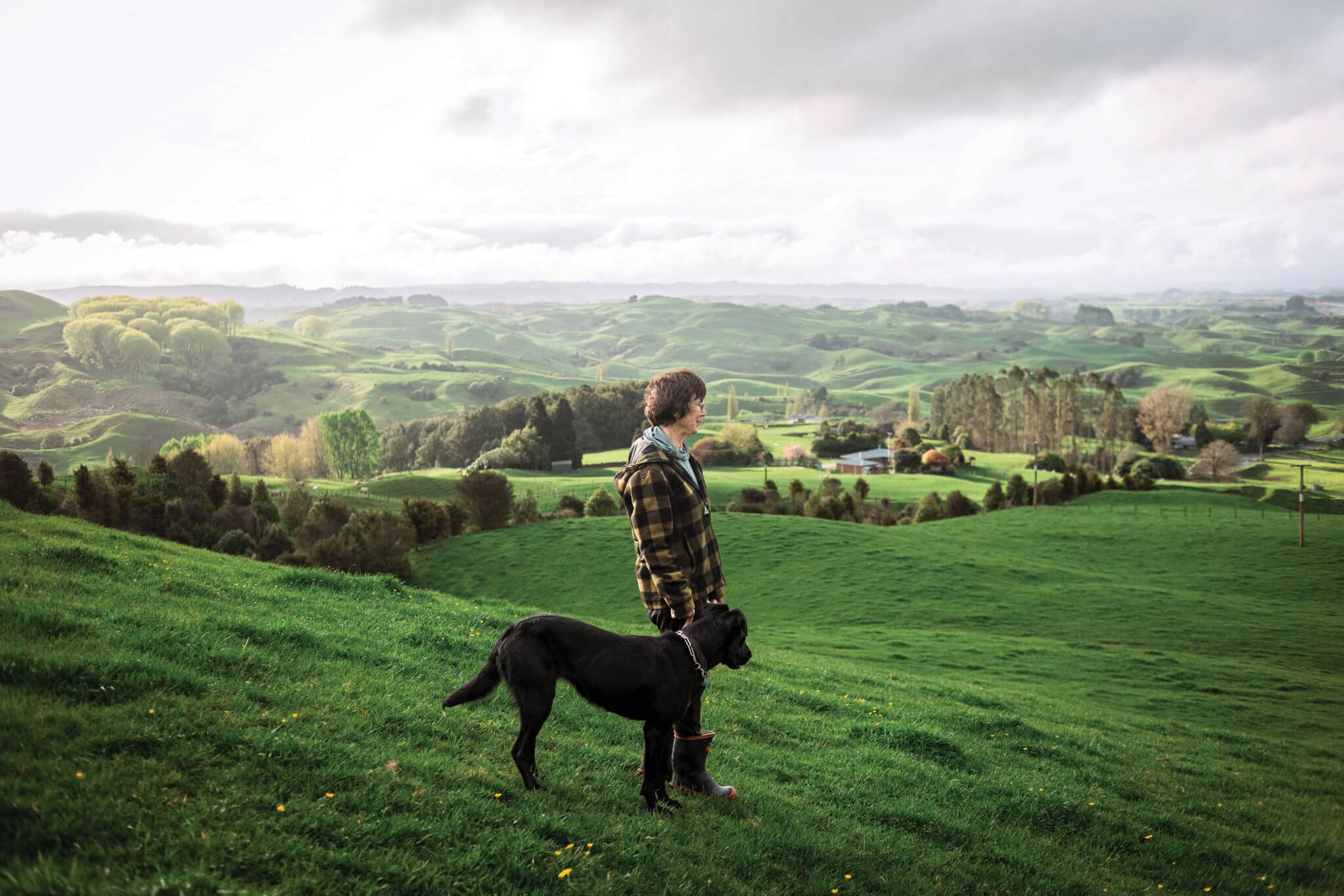
When my parents decided to sell the land in the early 1970s, my husband, Bruce, and I were sitting up in this bare paddock in the grass, and we thought, “Oh, wouldn’t it be wonderful to raise our family here?” So, we asked if we could purchase twenty hectares before they sold. We gradually built it up and now have an eighty-hectare farm, which is just a beautiful spot – north-facing, looking down the Oparure Valley and out upon my parents’ home.
We raised our children, Scott, Lara (now Lara Hania), and David, known as Rāwiri, here – they went through primary and secondary school in Piopio, and one of the things that was so important to me was to open the doors for them to learn the Māori language and culture, because that was something that had been lacking in my life. We’re Pākehā, but that’s just the way they grew up – they became immersed in it. I remember there was a certain amount of criticism about my children learning the language, but it has enriched their lives beyond belief. All three learned it, but two of them are now fluent and Rāwiri, our youngest, now teaches te reo Māori at Karamū High School in Hastings. Lara lives down in Māpua, Tasman, and is passionate and dedicated to the revival of te reo Māori. Both Rāwiri and Lara have married Tangata Whenua, so five of our grandchildren are of Māori descent, and they’ve taught us a lot.
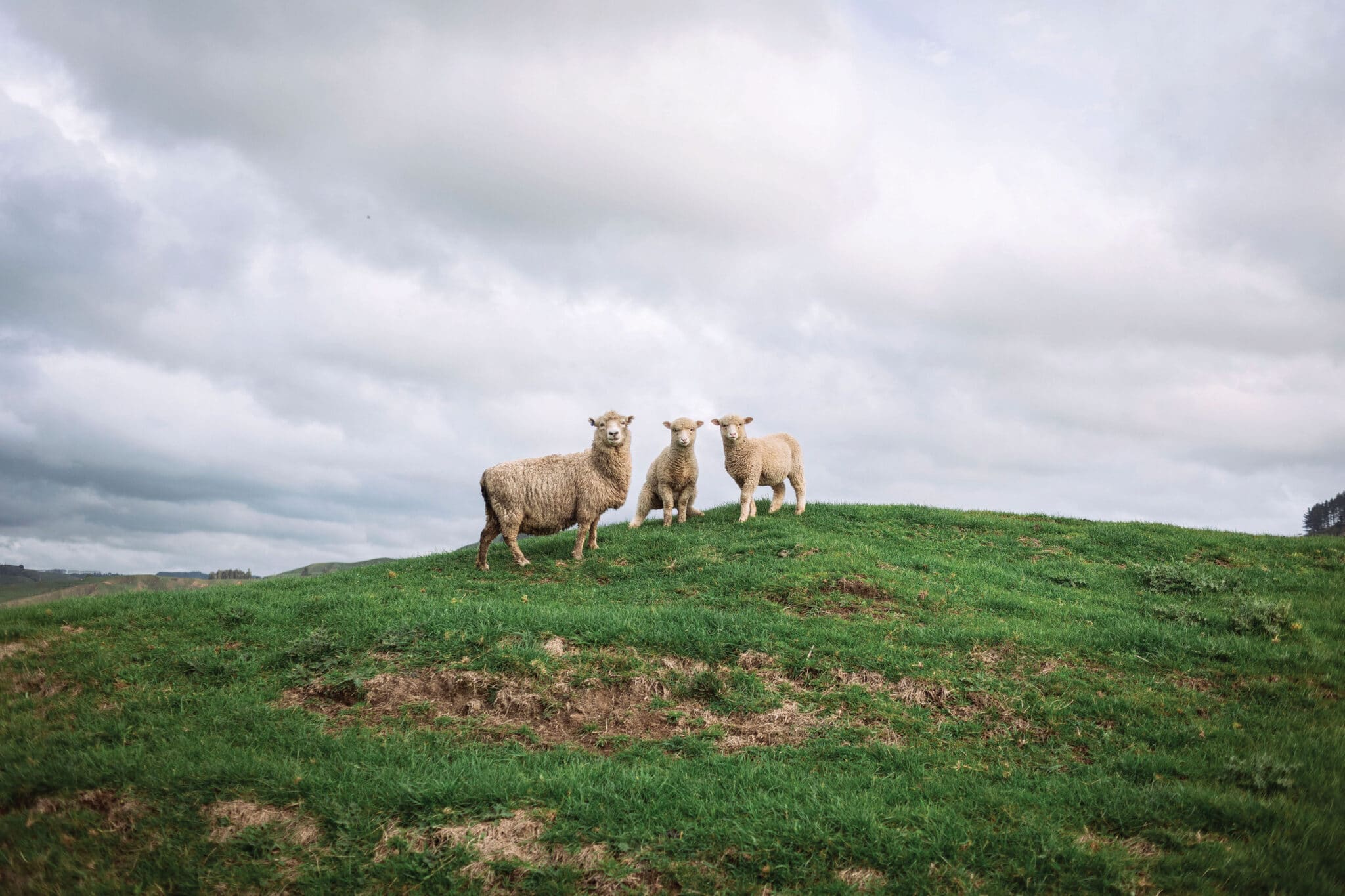
Above and below. “I think your first open you always remember. You remember every detail of that run, because, as it’s occurring, you know, it’s really good, and you just hope that it’ll be acknowledged – but it doesn’t come without hard work. I mean, you have to put in the hours of training. It’s a sport like everything else – you become good with practice. It was hard case when my grandson Quin was little – I’d come in the door and he’d say, ‘Did you win?’ And I’d say, ‘No, I didn’t.’ And he’d go, ‘Oh,’ and move on.”
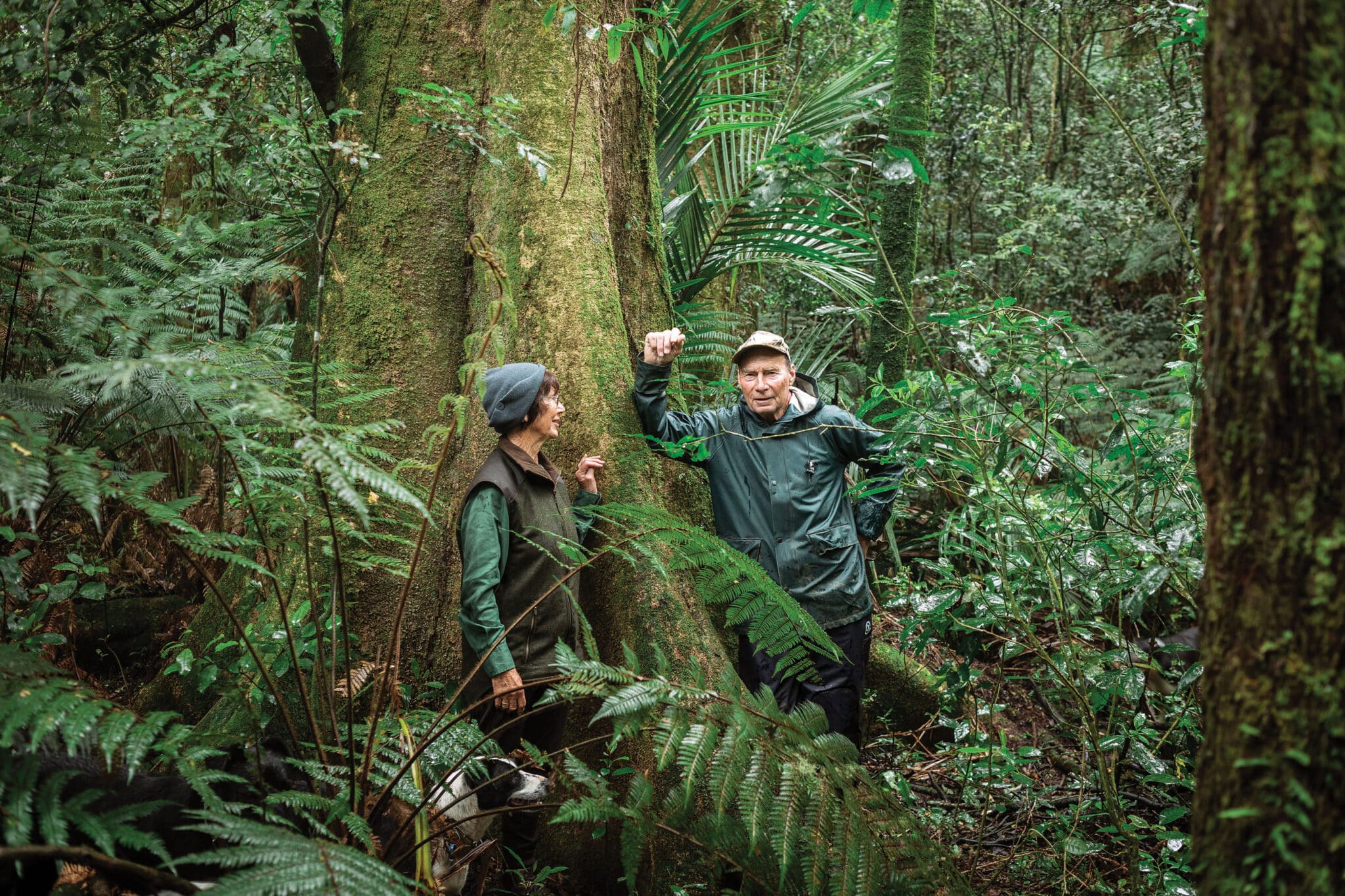
Above. Robyn and Bruce at the base of a large tawa tree. “Bruce and I met at university. He was from Tauranga, and he was a great rugby player in his day – very well known. He played five or six seasons for Waikato – captained Waikato – and when we moved down here, I think his friends and colleagues thought he was burying himself in the back blocks!”
My grandmother lived with us when I was little. Dad passed twenty years ago now, and Mum in 2017, but my children grew up right next door to them, and they were involved in their daily lives – very much so. Likewise, we’ve carried on that caring for the next generation. Rāwiri and his wife, Kristy, reared Maija and Quin, their two children, here – the family was living with us for seventeen-and-a-half years, which was very enriching for us.
My dad was a nationally revered dog trialist and champion. His kaupapa was always passing his knowledge on to younger people – there was a succession of visitors through our house. He passed on this knowledge freely in an era where his competitors jealously guarded their knowledge. Likewise, I now have young people here all the time and try to pass on my knowledge.
Although I was working dogs on the farm, and I’d been training puppies from a young age, I didn’t take up the sport until three years after Dad passed away, because I thought people would expect too much of me. I was pretty hopeless to begin with, but I had some very good mentors. It took me five years to win my first open trial. Since then, I’ve had a succession of open dogs – dogs that have reached the highest level of competition by winning a standard open sheepdog event – and have been qualifying for North Island and South Island New Zealand dog trials, which is quite awesome.
Continue reading the story in our Ngahuru Autumn Edition 2026.
If you enjoyed this story, please share with someone else.
This story appeared in the Ngahuru Autumn Edition 2026 of Shepherdess.
Get your hands on a copy.
Related Stories
Nature’s Medicine
With the help of her enterprise, Hau Botanicals, Mahuru Wilcox is a mana wahine helping others to connect to nature and te ao rongoā Māori.
A lifetime of delivering babies: “At every single birth, through all the years, it was always amazing, just as it was that first time”
Brenda decided she wanted to be a midwife after witnessing something quite spectacular when she was just twelve years old – the birth of a baby and the beginning of
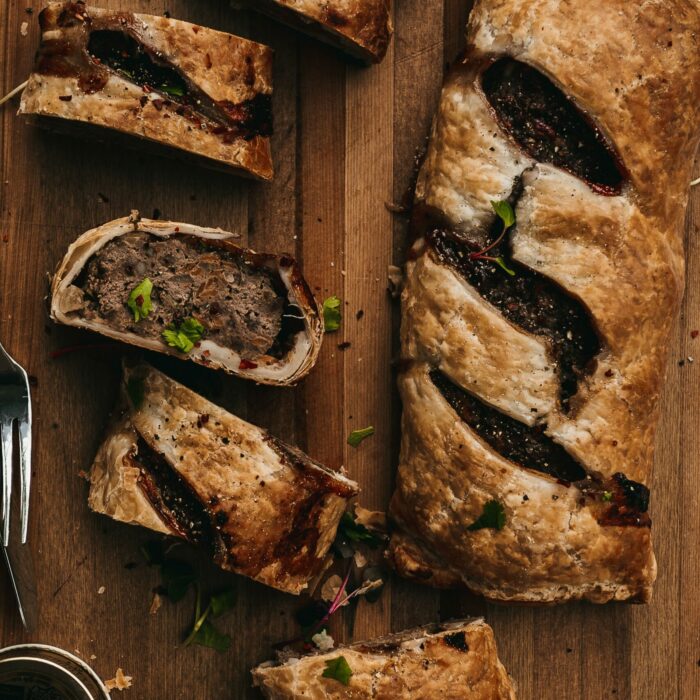
Coriander + Beef “Sausage Rolls” with Spiced Plum Sauce
This recipe is great for a weekend lunch or as dinner with a salad.
Pine Nut Dukkah With Foraged Fennel Seeds
Sophie Merkens set out across Aotearoa in Zephyr, her converted van, in search of the wild – both in terms of food and the people who gather, forage, fish and