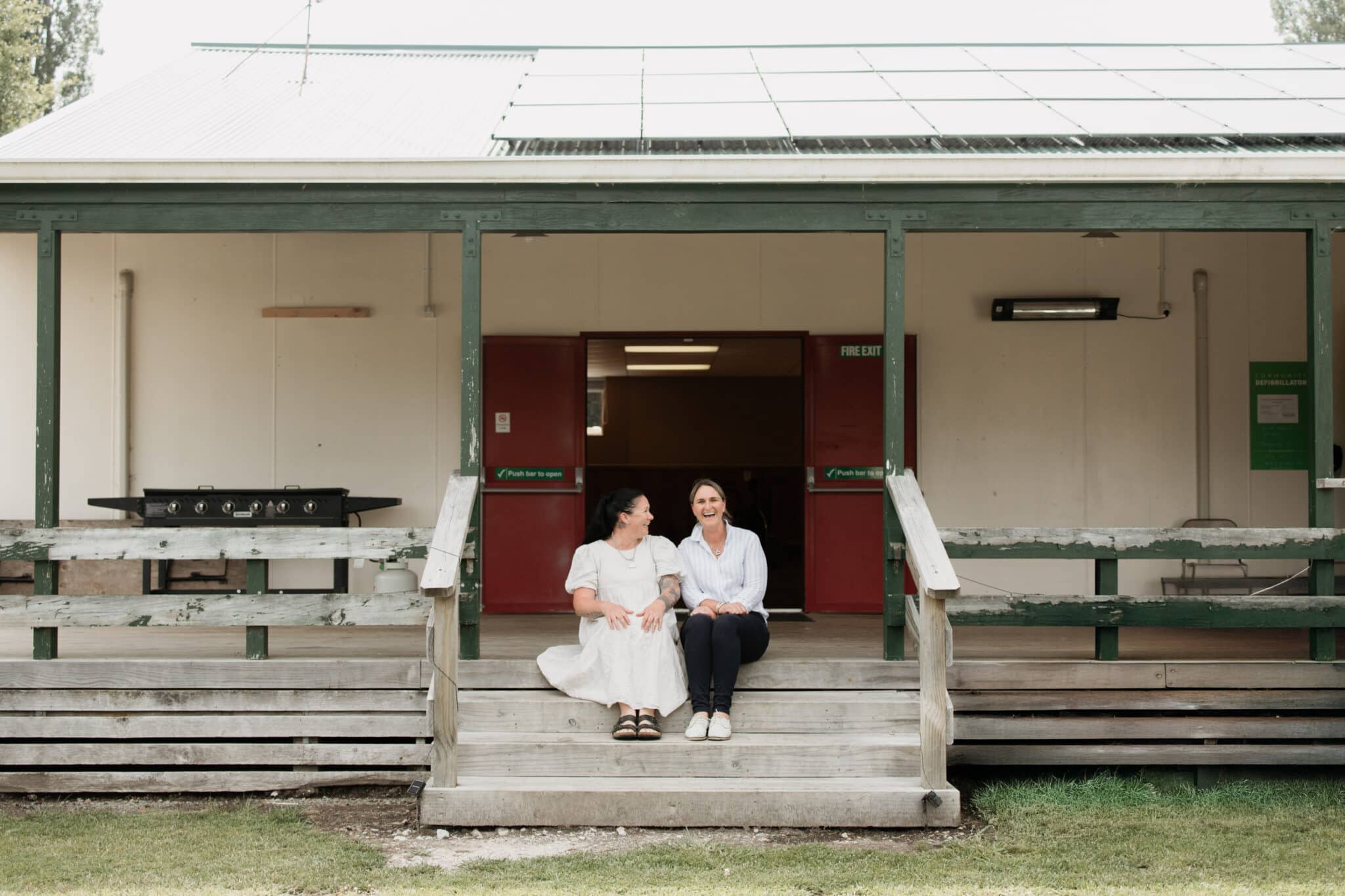
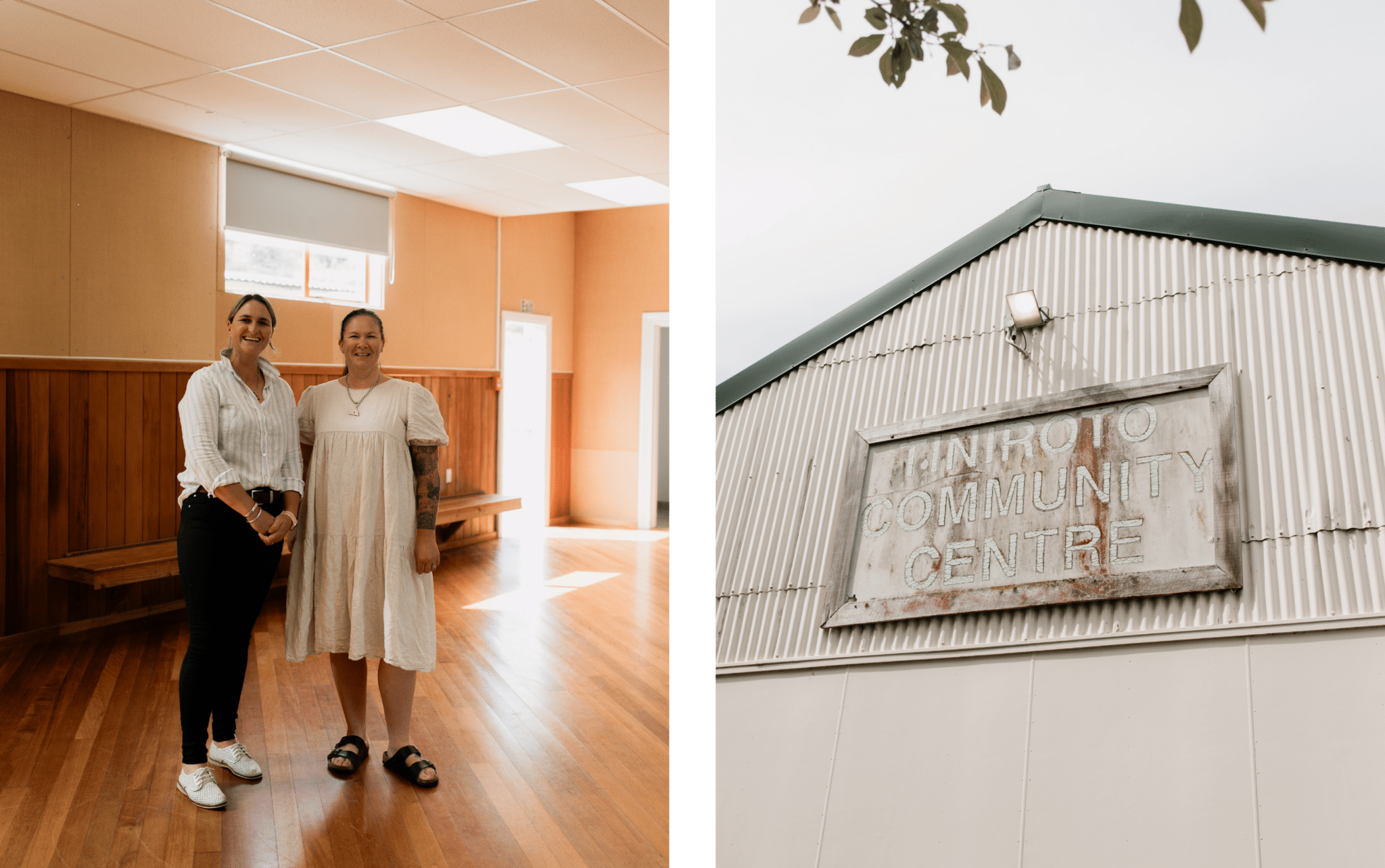
Kirsty. I’m a Gisborne girl originally. I moved to Tiniroto about ten years ago. We live on my husband Steven’s family’s sheep and beef farm and arboretum, known as Hackfalls, with our two children – Lucy’s six and Tom’s five. We’re the fourth generation to live on the farm – there’s quite a rich history of family farms in the area.
There’s also quite a lot of history behind the hall. It was originally an old wool storage shed back in the 1920s, I believe. In the late 1990s the hall was moved down the road to the Tiniroto Reserve. We’ve done some massive infrastructure projects just to get it all weatherproofed and kitted out.
One of the older locals, Graeme Cameron, told us that there used to be quite a few dances held at the hall. It’s always been an important connection for Tiniroto. Of course, you still go to people’s houses, but when you gather at the hall you can get more people, and people feel a bit more comfortable – it’s their place as well. It’s a welcoming place.
After Cyclone Gabrielle we were all trapped here. We were living in each other’s pockets for a solid two weeks with no power. We were meeting at the hall, having dinner all together. That’s what drove us to get it even more self-sufficient. We made a list of things that we need, and we’re chipping through that. So when Stacey got the Rabobank grant for double glazing, we were like, “Awesome.” We had all this awesome stuff in there, like the new kitchen and upgraded appliances, and then we were like, “Hmm, our doors and windows aren’t that great” – weathertightness was an issue, but also security. So the Community Hub money went towards that. It’s made a difference already. It’s going to be a lot warmer in wintertime and we can lock it, so that’s always handy – and it just looks really good, too. The work couldn’t have been achieved without the help of local trusts and funders and the hard work from the community.
There’s a whole lot of facilities there for the Tiniroto playgroup. It’s used as a gym about three times a week. We run different community events – we’ve done all sorts, including make-up lessons, knife carving, butchery, pottery, leather-making, and paint and sips. You name it, we’ve done it – just to bring people together and keep the hall in use. It’s a place where we go a lot, even if we just want to hang out, and the kids can head up to the school and go for a swim. When you’re new to the area, the hall is somewhere you can go and meet people. It can get lonely here – and loneliness is the worst thing for your mental health, so you need to stick together and do things together.
Stacey. This is my second stint in Tiniroto – we arrived back here about eight or nine years after moving to Castlepoint. We’re also on my husband Grant’s family farm – he’s the fourth generation. We have four kids altogether – three are mine, and he’s got an older son who lives in Australia. I’m originally from Te Reinga and I was born in Wairoa and my family are all from here. Our family farm bordered my husband’s family farm – I pretty much jumped my grandparents’ fence to marry the neighbour’s son.
The information about the Rabobank Community Hub competition popped up on my Facebook and I was like, “That would be really handy.” Kirsty’s very humble in the work that she’s done for the hall. We actually had a significant weather event a year before Cyclone Gabrielle. We were cut off for a substantial amount of time, and after that Kirsty was this massive driving force to get the hall up and running. If it wasn’t for the work she put in, and the grants she got, we would’ve been stuck again come the cyclone – by then we had solar, we had generators ready to go, we had the facilities to be able to feed and cater for everybody when everybody’s freezers were defrosting.
We don’t want to see the hall sitting there gaining dust. We want people to use it. My husband Grant and I got married six years ago and our reception was in the hall – we had close to 120 people. It’s rustic, with wooden floors and the rimu tongue and groove on the walls. Our drive is to future-proof it, to make it sustainable. You see lots of rural halls that have kind of gone to rack and ruin, so having the support to finish off tasks like the double glazing was amazing.
We can have social events – getting farmers off farm and socialising. Having a few refreshments does some wonders. You need it in a rural setting – I think the get-togethers are a real lifesaver for people. And it’s not just our farming men, it’s our mums, it’s our kids who love just getting together. We’ve got feral farming children and having them all together just tearing around the place – it’s good for them. Then they pull the projector down, and put all the bean bags and the cushions in front to watch a movie. They’ve burnt their energy off and the movie gets the better of them and half of them go to sleep.
We’ve got quite a few older people in the district who worked really hard with the hall back in the day and we want to acknowledge their hard work. It’s just a privilege to be picking up that baton and carrying on.
Glossary. Marae, sacred meeting place. Rimu, native tree.
Rabobank has supported the production of this story. Their Community Hub Competition first ran in 2025 and provides rural communities with funding towards the improvement of their community hall, clubrooms or marae. For more information, visit rabobank.co.nz.
Related Stories
MAKE, a workshop series by Shepherdess
We're very excited to announce something we've been working away on for a little while now...
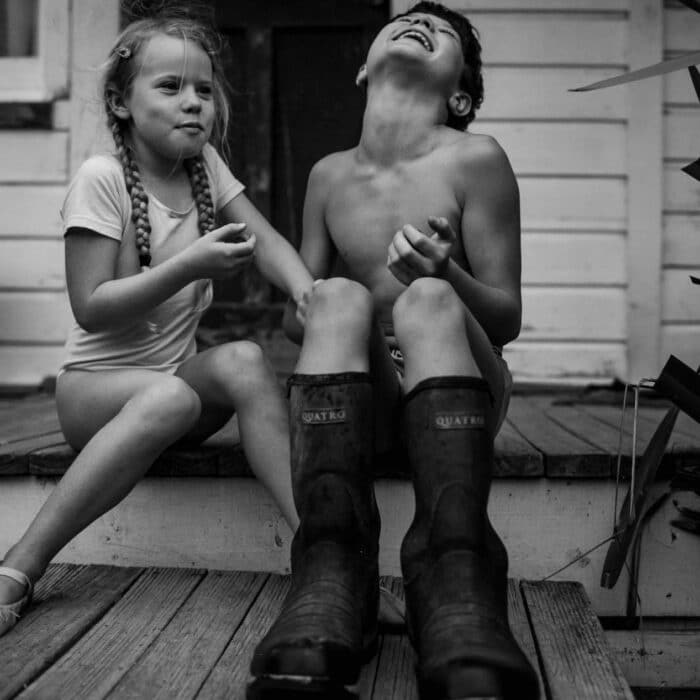
Moments, Takurua Winter 2023
These are my two youngest children, who have always had a close and playful relationship. It looks to me like they are laughing about something Anton has in his hand.
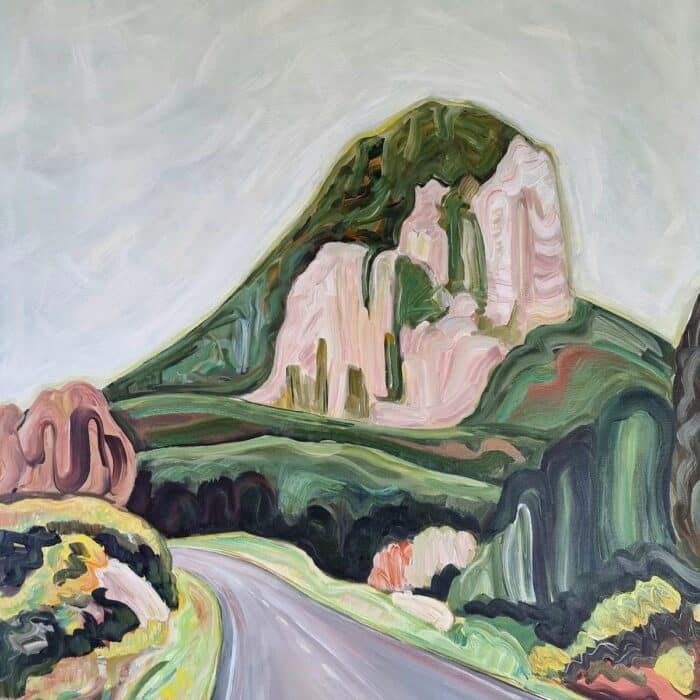
The Gallery, Kōanga Spring 2023
I see this beautiful dome every time I drive to our gallery in Taupō. Pohaturoa is an ancient volcanic dome that holds a unique part of New Zealand’s pre-colonial past.
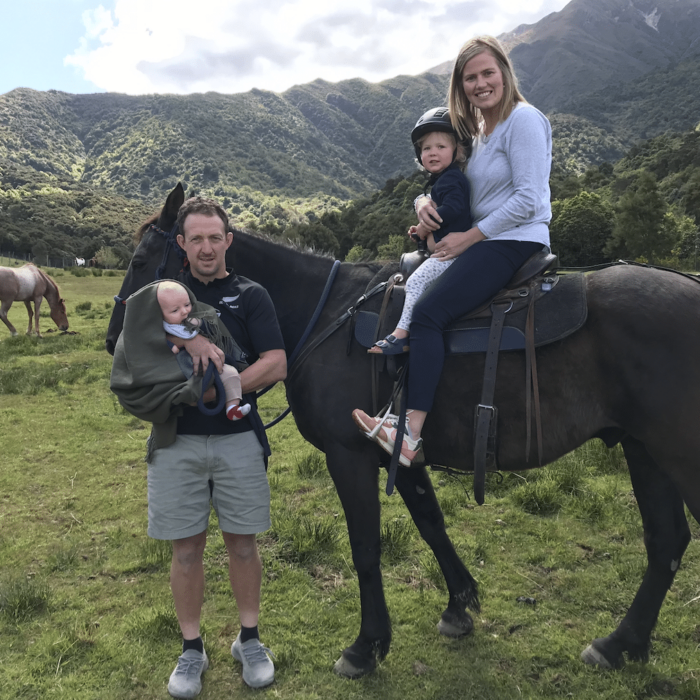
Opening the gate – a new way into farming
Sarah How, 33, is the co-founder and general manager of Landify, a platform which connects farmers with potential partners and investors to explore collaborative opportunities in farming. Sarah was a