


20 January 2025
Land Girl
Wahine Ahuwhenua. Woman of the Land.
writer: ANNA BRANKIN (KĀI TAHU, KĀTI MĀMOE)
photographer: NANCY ZHOU
From studying at Lincoln as a Land Girl during World War II to working on farms throughout Waitaha Canterbury, Jill MacKenzie looks back on a lifetime of connection to the land. Over a cup of tea from her home in Kaikōura, she shares with Shepherdess her memories of a long life well-lived.

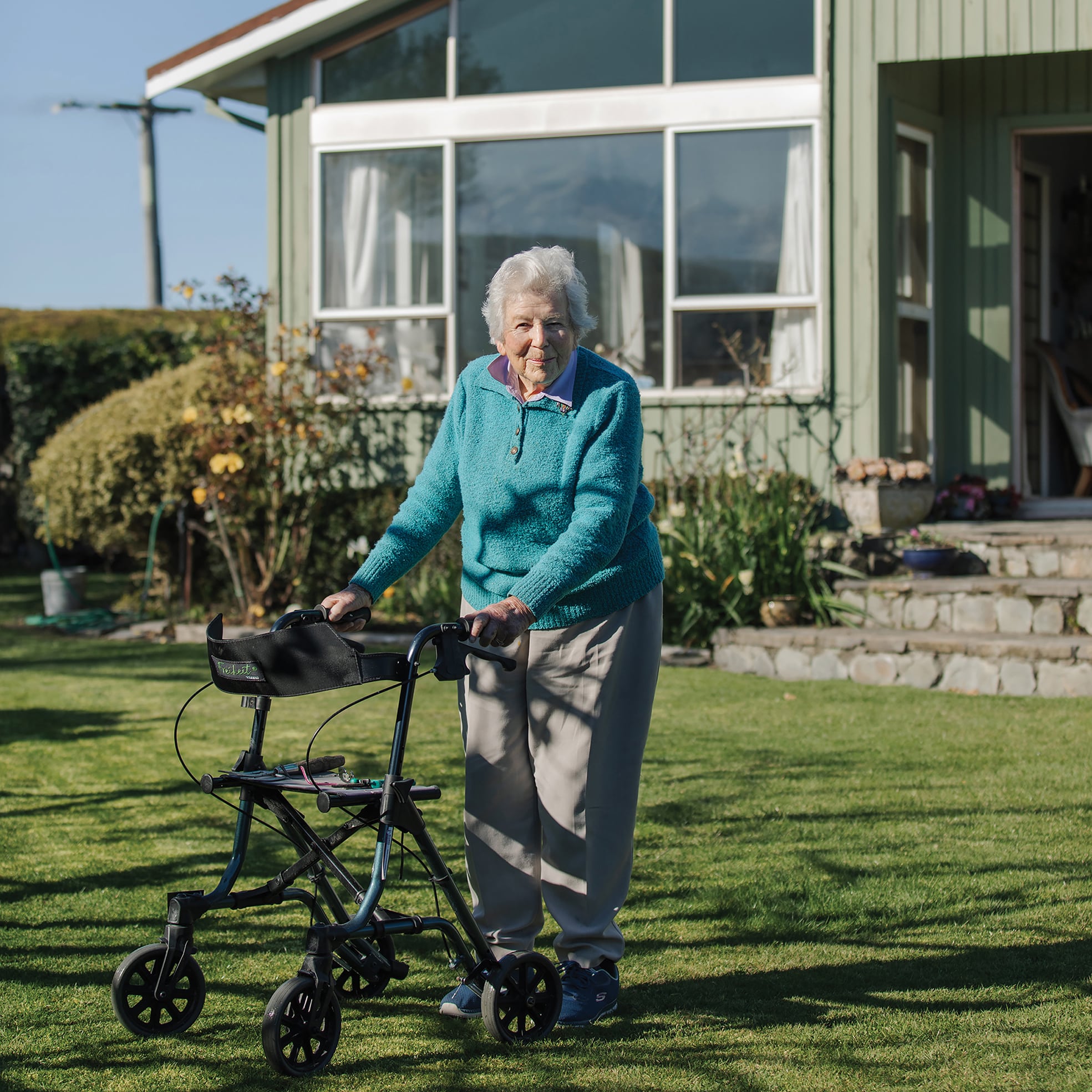
High up on the Kaikōura Peninsula, with panoramic views of snowcapped mountains, lush farmland and sparkling ocean, lives a remarkable woman whose life stretches across more than a century. Jill has packed an awful lot of living into her 101 years. These days, you’ll still find her zipping around town in her trusty car, Bluebell, or whipping up a batch of cheese scones in the kitchen – and she’s always happy to sit down with a cup of tea and share some of the stories she’s collected over her lifetime
“I have very happy memories of my childhood,” Jill says fondly. “I was born in Christchurch, but the first years of my life were spent at Balmoral Station in the Mackenzie.” Jill’s father drew Balmoral Station when the high country sheep runs were cut up and balloted after World War I, and the family enjoyed several years there before deciding to sell up. They moved to Te Pātaka o Rakaihautū Banks Peninsula for a short time, before eventually buying a farm in the small settlement of Cave, just inland of Timaru. “I remember going to school at Diamond Harbour for just a little while, before we moved to Cave,” Jill says. “After that I did go to the little school in Cave until it closed down and we all had to catch the bus to Pleasant Point. Then for high school, I boarded at Rangi Ruru in Christchurch for a couple of years and then at Craighead in Timaru.”
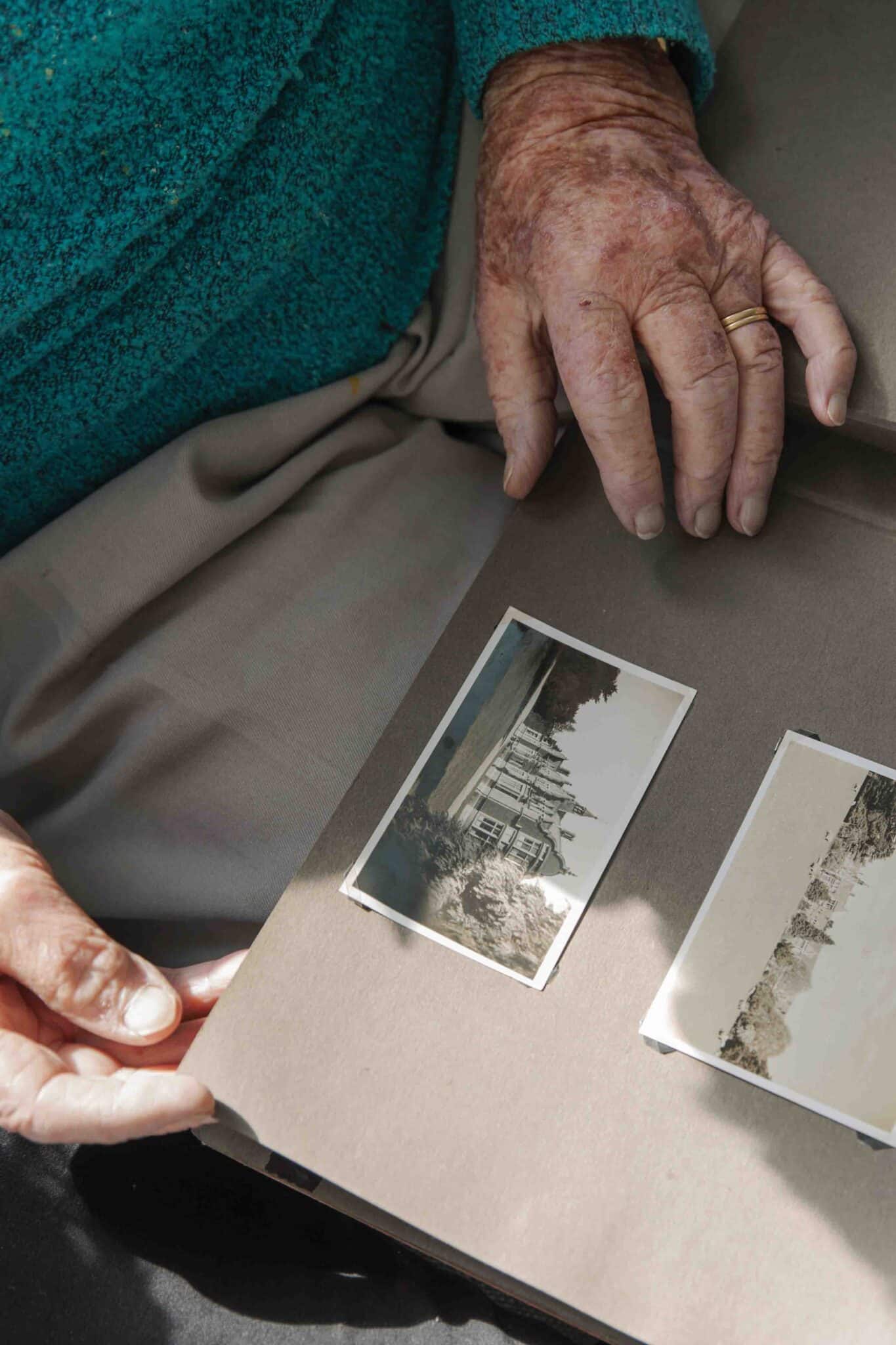
Jill’s rural upbringing instilled in her a profound sense of connection to the land, and she was never happier than when she was outdoors working with animals. These days, she says she probably would have pursued a career in farming straight from school, but there were fewer options open to young women back then. So, against the backdrop of World War II – which began around the time she finished high school – Jill found herself back in Ōtautahi Christchurch for a short-lived stint at nursing school. “I got through the first part of my course but then I got scarlet fever very badly, and spent about three months in Burwood Hospital,” says Jill. “It was ghastly. They sent me back to nursing school when I was recovered and I promptly got chicken pox. So the nursing career didn’t last.”
“I’m still on my feet, although I use a walking stick or a walker when I’m at home. I’ve got about three – there’s one inside, one in the garden and one at the front door.”
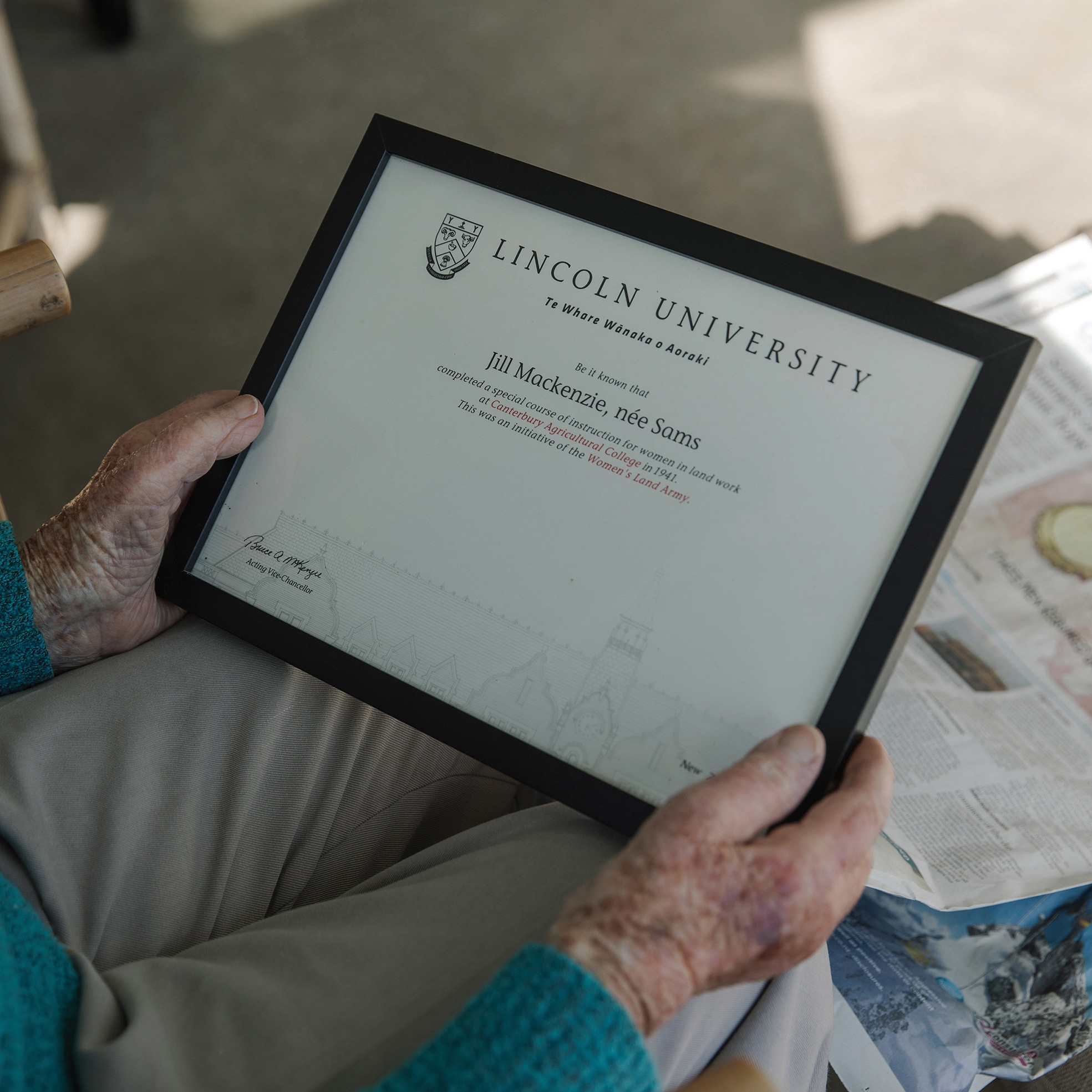
Although the war years weren’t without their difficulties – Jill remembers petrol shortages, and her mother fretting when she wasn’t able to travel to Christchurch when Jill was in hospital – they also brought opportunities for young women. In 1941, with so many men otherwise occupied with the war effort, the Canterbury Agricultural College at Lincoln offered a six week course in farm instruction for women. The twenty-two women who participated – Jill among them – became known as the Land Girls. They learned everything from managing and feeding animals, milking cows, driving tractors and other farm machinery and harvesting crops.
At just eighteen, Jill was the youngest of the Land Girls. “I really loved my time at Lincoln. I enjoyed the sheep work most of all, and I wasn’t so keen on the dairy,” Jill says. “When the course finished, the chap who’d taken it actually wanted me to stay on. He could see it would be useful, because all the boys were still away at the war.” The request for Jill to stay on and look after the sheep on the farm was duly made to Professor Eric R. Hudson, the director of the college, who reportedly replied that it would be far too much responsibility to have a woman. “I thought, ‘how feeble,’” Jill says.
Continue reading the full story in our Raumati Summer 2024/25 Edition.
If you enjoyed this story, please share with someone else.
This story appeared in the Raumati Summer Edition 2024/25 of Shepherdess.
Get your hands on a copy.
Related Stories
Full Bloom
Drive south-east from Whanganui on State Highway 3 during the summer months and you’ll soon spot hundreds of roses blooming in a paddock along the roadside – home to Matthews

Frolic Frocks
As the weather shifts and the sun warms cool skin, our clothes reflect the optimism in the air – light, colourful garments in cotton and linen that raise the spirits.
Going All In
Dairy farmer Marianne Tye, 39, knows the importance of setting goals and planning. She and her husband, Will, had a long road to farm ownership – a journey that led
Championing the rural sector every step of the way
Rebecca Greaves, 38, is a rural journalist based in Pongaroa. She is a tireless champion of rural communities.